Whale tail above ocean
1344×768 · AVIF · CC BY 4.0
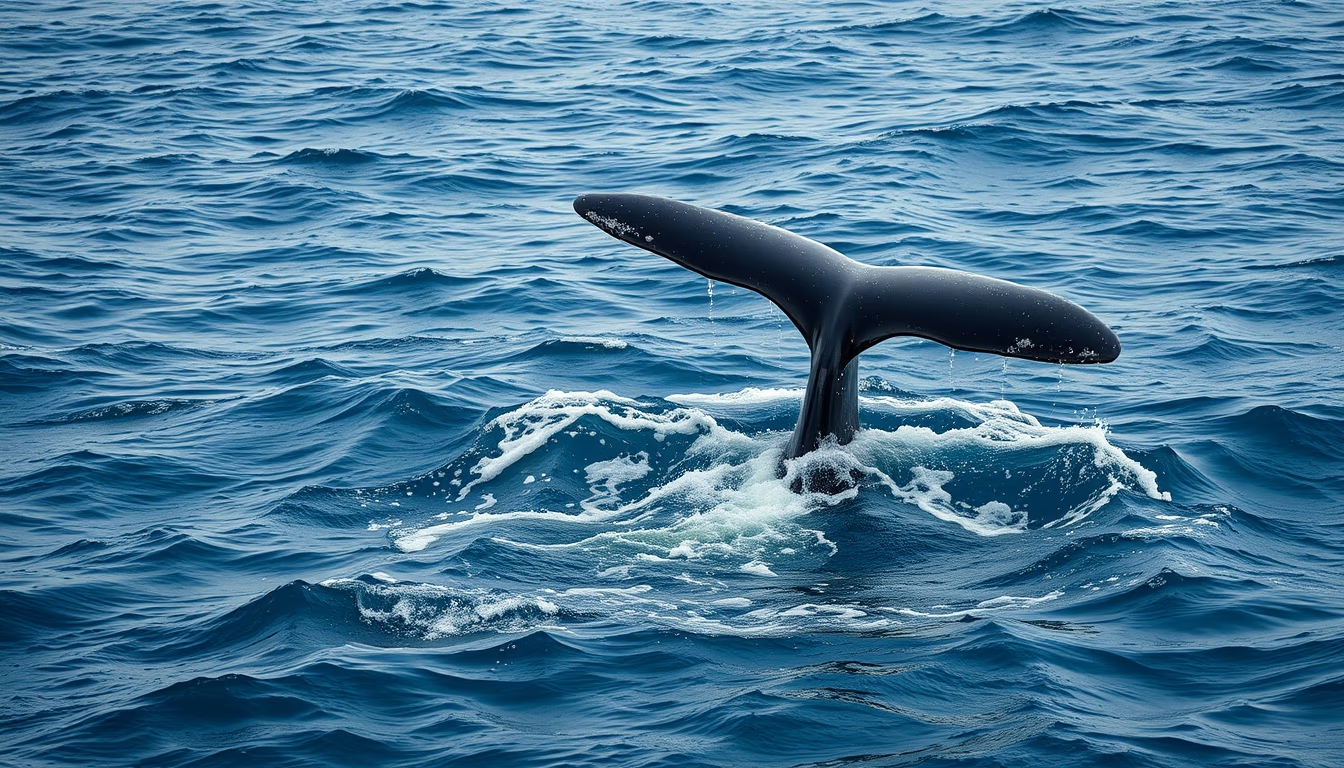
A humpback whale tail emerges from the ocean, displaying unique patterns that scientists use to identify individuals.
About this subject
The tail of a humpback whale, known as the fluke, is one of the most recognizable structures in the marine world. Each fluke has unique markings and pigmentation patterns, comparable to human fingerprints. Researchers from the Humpback Whale Project in Brazil catalog thousands of individuals by photographing their tails during the breeding season off the coast of Bahia, from July to October. This non-invasive technique allows scientists to estimate population sizes, migration routes, and even relatedness among individuals.
Humpbacks migrate annually from feeding grounds in Antarctica to the tropical waters of Brazil, where they mate and give birth. The fluke, which can span up to 5 meters, is used to propel their massive bodies, weighing up to 40 tons. During breaches, whales lift their tails above the surface, a behavior called "peduncle arch" or "tail dive." This act may serve for communication, parasite removal, or simply play.
In Brazil, whale watching has become a major tourist attraction in cities such as Praia do Forte (Bahia) and Anchieta (Espírito Santo). The species, once endangered by commercial whaling, now has an estimated population of 30,000 individuals in the South Atlantic. This recovery is a conservation success story, driven by international moratoriums and the creation of the Brazilian Whale and Dolphin Sanctuary.
Frequently Asked Questions
Why do humpback whales show their tails above the water?
This behavior, known as a tail dive or fluke up, may serve various purposes: communication among individuals, removing skin parasites, or simply play. It also signals that the whale is about to dive deeply.
How do scientists identify each whale by its tail?
The underside of the fluke has unique patterns of white and black pigmentation, along with scars and notches. Photographs of these patterns are compared in catalogs, allowing researchers to track individuals over time.
What is the best season to see humpback whales in Brazil?
The breeding season runs from July to October, peaking in August and September. Prime locations are the coast of Bahia, especially Praia do Forte and Abrolhos, as well as Anchieta in Espírito Santo.
Direct URL
https://pub-c7d6a6ea828543ac903a74a341ccb2e1.r2.dev/imagens/whale-tail-above-ocean-national-geographic-style-p3.avifHow to credit
Include a visible link back to UtilizAí. Copy one of the snippets below:
<a href="https://xn--utiliza-eza.com/en/midia/imagens/whale-tail-above-ocean-national-geographic-style-p3">Whale tail above ocean</a> by <a href="https://xn--utiliza-eza.com">UtilizAí</a>, licensed under <a href="https://creativecommons.org/licenses/by/4.0/">CC BY 4.0</a>.
[Whale tail above ocean](https://xn--utiliza-eza.com/en/midia/imagens/whale-tail-above-ocean-national-geographic-style-p3) by [UtilizAí](https://xn--utiliza-eza.com), CC BY 4.0
License: CC-BY-4.0