Whale tail above ocean
1344×768 · AVIF · CC BY 4.0
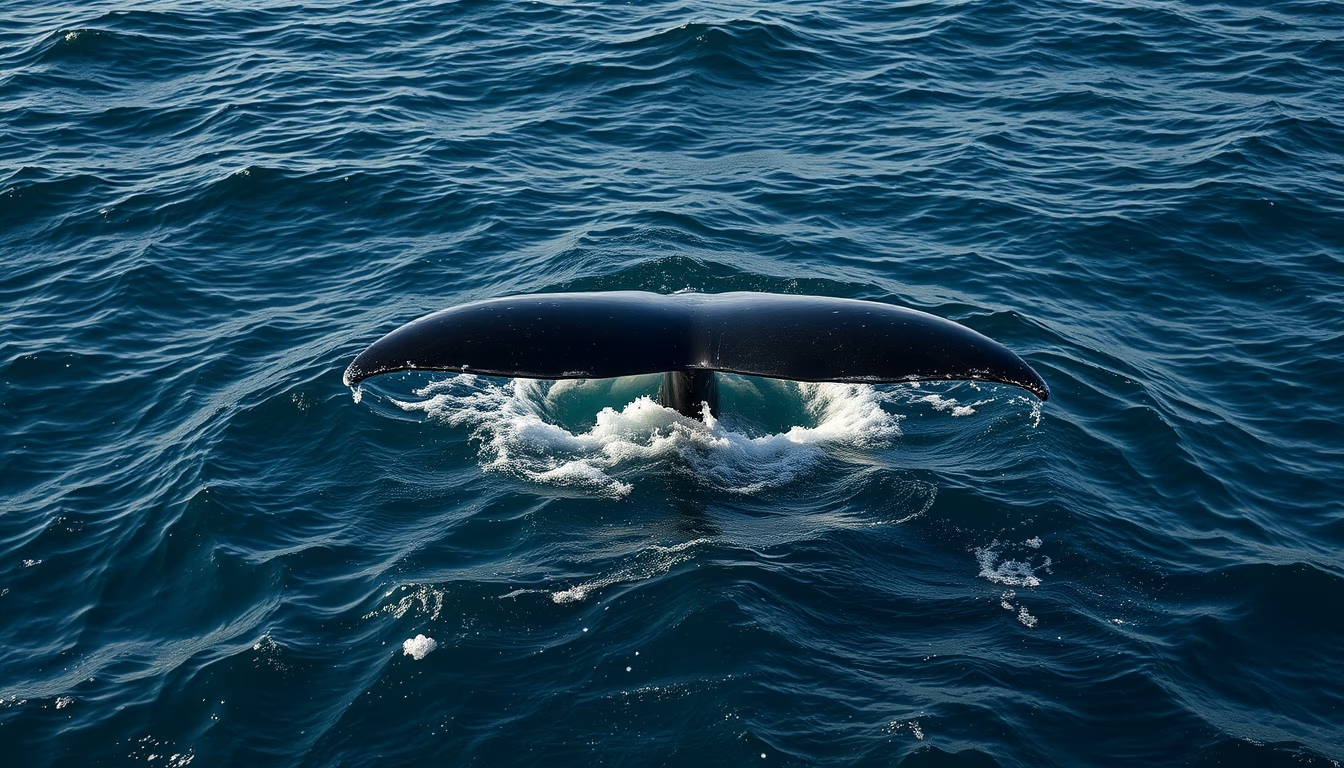
A whale's tail, known as the fluke, is one of the most distinctive features of these marine mammals and is essential for identification and locomotion.
About this subject
A whale's tail, technically called the caudal fin or fluke, is the main propulsive structure of these ocean giants. Composed of two large lateral lobes, the tail can measure up to one-third of the animal's total length. In humpback whales, for example, the fluke span reaches 5 meters, equivalent to the width of a car. The vertical movements of the tail generate the necessary force to propel a body of up to 40 tons out of the water during breaches.
Each whale has a unique pattern of spots and scars on the underside of its fluke, similar to a human fingerprint. Scientists use photographs of these patterns to identify individuals and monitor populations along migratory routes that can exceed 8,000 kilometers annually. In Brazil, the Abrolhos Archipelago off the coast of Bahia is the main breeding area for humpback whales in the South Atlantic, where they gather between July and October to mate and give birth.
The behavior of showing the tail above the surface, known as a "peduncle dive" or fluke-up dive, occurs when the whale prepares for a deep dive. This gesture allows the animal to increase its descent angle and is frequently observed by tourists on whale watching expeditions. Whale watching in Brazil generates millions of reais annually, especially along the coasts of Bahia, Santa Catarina, and Espírito Santo. Beyond tourism, studying whale tails contributes to species conservation, as photo records help estimate population sizes and the effectiveness of marine protected areas.
Unfortunately, whales still face threats such as ship collisions, noise pollution, and entanglement in fishing nets. The tail, being the most exposed part during close approaches, can show marks of human interactions. Initiatives like the Projeto Baleia Jubarte (Humpback Whale Project), founded in 1988 to protect the species in Brazil, use individual recognition by tail photos as a scientific and educational tool, promoting the importance of these animals for ocean balance.
Frequently Asked Questions
What is the function of a whale's tail?
The tail, or caudal fin, is responsible for the whale's propulsion through water. Its vertical movement propels the animal forward and enables leaps and deep dives.
Is it true that each whale's tail is unique?
Yes, the underside of the tail has a unique pattern of pigmentation, scars, and edge contours, allowing scientists to identify individuals much like human fingerprints.
Where can I see whales with their tails out in Brazil?
The main whale watching spots in Brazil are the Abrolhos Archipelago (BA), Praia do Forte (BA), and the coast of Santa Catarina, with peak sightings from July to October.
Direct URL
https://pub-c7d6a6ea828543ac903a74a341ccb2e1.r2.dev/imagens/whale-tail-above-ocean-magazine-editorial-p0.avifHow to credit
Include a visible link back to UtilizAí. Copy one of the snippets below:
<a href="https://xn--utiliza-eza.com/en/midia/imagens/whale-tail-above-ocean-magazine-editorial-p0">Whale tail above ocean</a> by <a href="https://xn--utiliza-eza.com">UtilizAí</a>, licensed under <a href="https://creativecommons.org/licenses/by/4.0/">CC BY 4.0</a>.
[Whale tail above ocean](https://xn--utiliza-eza.com/en/midia/imagens/whale-tail-above-ocean-magazine-editorial-p0) by [UtilizAí](https://xn--utiliza-eza.com), CC BY 4.0
License: CC-BY-4.0