Whale tail above ocean
1344×768 · AVIF · CC BY 4.0
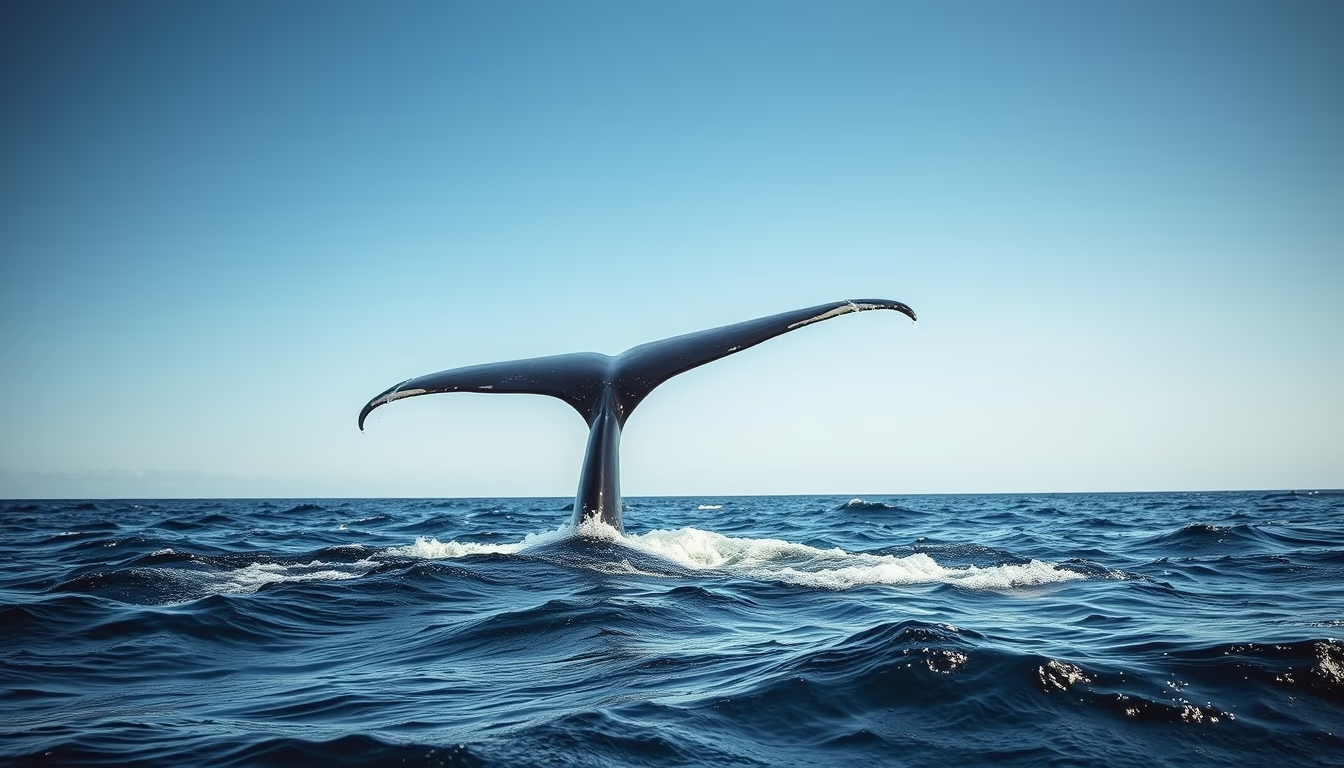
The whale tail is one of the most iconic symbols of the oceans, revealing the individual identity of each animal and inspiring contemporary fashion and art.
About this subject
The tail of a whale, also called the caudal fin or fluke, is the primary propulsive organ of these marine mammals. It moves vertically to propel the animal, unlike fish which swim with lateral movements. Each species has a characteristic shape: humpbacks have broad, scalloped edges, while killer whales have more rounded flukes with a pronounced notch at the center.
Scientists use the tail as a fingerprint to identify individuals. Natural marks, scars, and pigmentation patterns on the underside of the fluke are unique to each whale. Projects like HappyWhale and photo-identification catalogs allow researchers to track whales over decades, providing crucial data on migration, longevity, and behavior.
Culturally, the whale tail is a symbol of power, freedom, and connection to the ocean. In fashion, it appears in prints, jewelry, and high-fashion editorials, such as the concept behind this image. This aesthetic appropriation reminds us of the importance of protecting these creatures and their ecosystems, which face threats like ship strikes, pollution, and climate change.
A curious fact: a whale's tail has no bones; it is made of fibrous connective tissue called collagen. The surfacing motion, when the tail emerges before a deep dive, is called a peduncle and can last several seconds, making it one of the most photographed moments by whale watchers worldwide.
Frequently Asked Questions
Why are whale tails used to identify individual animals?
The marks and scars on the underside of the fluke are unique to each whale, similar to human fingerprints. This allows scientists to identify and track individuals over the years.
Which whale has the largest tail?
The blue whale (Balaenoptera musculus) has the largest tail, reaching up to 7.6 meters (25 feet) in width, equivalent to the wingspan of a small airplane.
What does it mean when a whale slaps its tail on the water?
This behavior, called lobtailing, can serve as communication between individuals, an alert signal, or even to remove parasites. It is common in many species, especially humpbacks.
Direct URL
https://pub-c7d6a6ea828543ac903a74a341ccb2e1.r2.dev/imagens/whale-tail-above-ocean-high-fashion-editorial-p4.avifHow to credit
Include a visible link back to UtilizAí. Copy one of the snippets below:
<a href="https://xn--utiliza-eza.com/en/midia/imagens/whale-tail-above-ocean-high-fashion-editorial-p4">Whale tail above ocean</a> by <a href="https://xn--utiliza-eza.com">UtilizAí</a>, licensed under <a href="https://creativecommons.org/licenses/by/4.0/">CC BY 4.0</a>.
[Whale tail above ocean](https://xn--utiliza-eza.com/en/midia/imagens/whale-tail-above-ocean-high-fashion-editorial-p4) by [UtilizAí](https://xn--utiliza-eza.com), CC BY 4.0
License: CC-BY-4.0