Whale tail above ocean
1344×768 · AVIF · CC BY 4.0
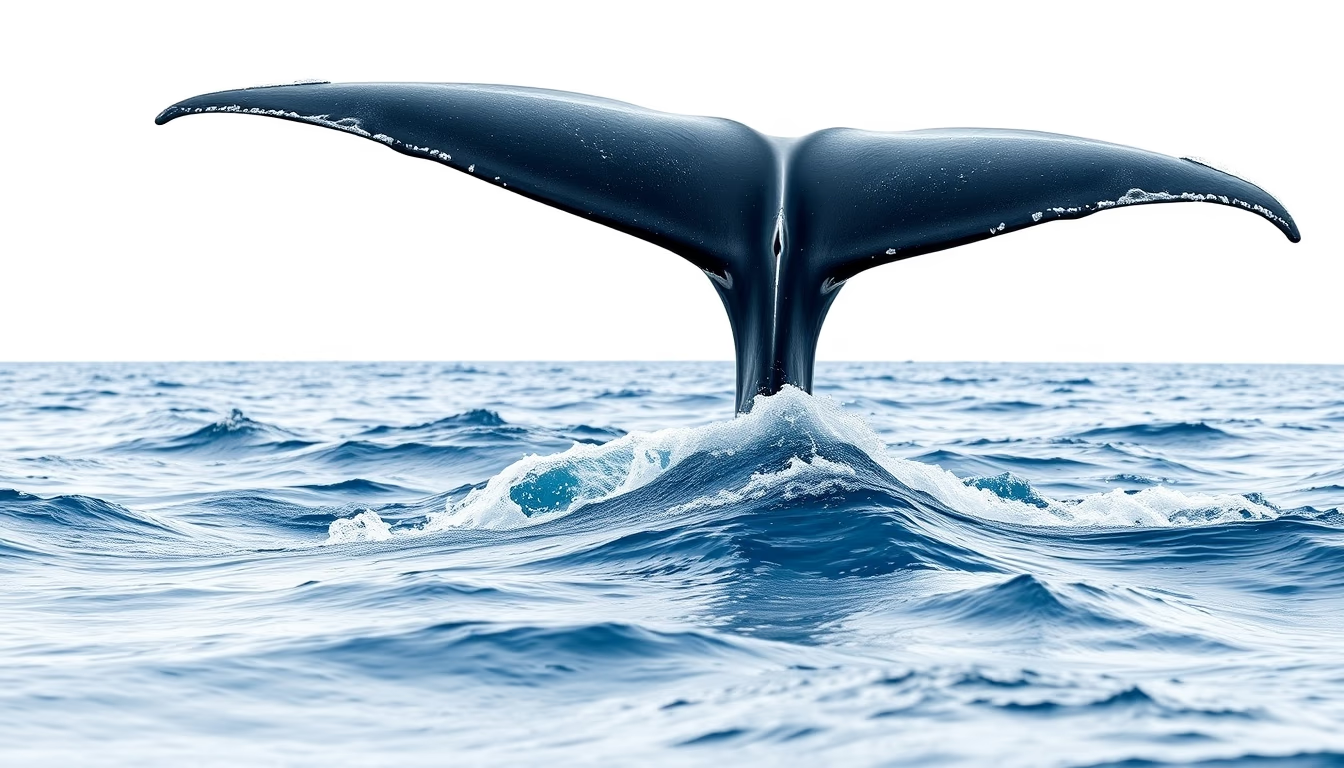
A whale's tail emerges from the ocean, a natural spectacle revealing the strength and elegance of these marine giants.
About this subject
Whales are marine mammals belonging to the order Cetacea. The tail, or caudal fin, is composed of two lobes called flukes. When a whale prepares for a deep dive, it lifts its tail into the air, a behavior known as "fluke-up." This is commonly observed in species such as the humpback whale (Megaptera novaeangliae) and the blue whale (Balaenoptera musculus), the largest animals on Earth. The shape and pigmentation patterns of the flukes are unique to each individual, allowing researchers to identify and catalog whales over time, akin to human fingerprints.
Sighting whale tails is one of the most anticipated moments for tourists in regions like the coast of Santa Catarina, Brazil, where southern right whales (Eubalaena australis) come to breed. These giants can weigh up to 40 tons and measure up to 16 meters. Every year, thousands of whales migrate thousands of kilometers between feeding grounds in cold waters and breeding grounds in tropical waters. The tail is essential for propulsion, generating enough force to propel the massive body through water at speeds up to 50 km/h in short bursts.
Beyond its biological significance, the image of a whale's tail above the ocean has become a cultural icon of marine conservation efforts. After centuries of whaling driving several species to the brink of extinction, many populations are slowly recovering thanks to international moratoriums and protected areas. Responsible whale-watching tourism contributes to local economies and environmental education. Each sighting is a reminder of the need to protect the oceans and the biodiversity they sustain.
Frequently Asked Questions
Why do whales lift their tails before diving?
The fluke-up movement allows the whale to gain momentum for a deep dive by exposing the flukes to generate vertical propulsion. It also helps orient the body in the desired direction.
How do researchers identify whales by their tails?
Each whale has unique patterns of spots, scars, and fluke shape, functioning like fingerprints. Researchers photograph these markings and compare them in catalogs to recognize individuals and study migrations and populations.
Where can you see whale tails in Brazil?
Best locations include the coast of Santa Catarina (southern right whale), the coast of Bahia (humpback whale), and the Fernando de Noronha Archipelago. The season runs from July to October in the south and June to November in the northeast.
Direct URL
https://pub-c7d6a6ea828543ac903a74a341ccb2e1.r2.dev/imagens/whale-tail-above-ocean-commercial-product-photography-p1.avifHow to credit
Include a visible link back to UtilizAí. Copy one of the snippets below:
<a href="https://xn--utiliza-eza.com/en/midia/imagens/whale-tail-above-ocean-commercial-product-photography-p1">Whale tail above ocean</a> by <a href="https://xn--utiliza-eza.com">UtilizAí</a>, licensed under <a href="https://creativecommons.org/licenses/by/4.0/">CC BY 4.0</a>.
[Whale tail above ocean](https://xn--utiliza-eza.com/en/midia/imagens/whale-tail-above-ocean-commercial-product-photography-p1) by [UtilizAí](https://xn--utiliza-eza.com), CC BY 4.0
License: CC-BY-4.0