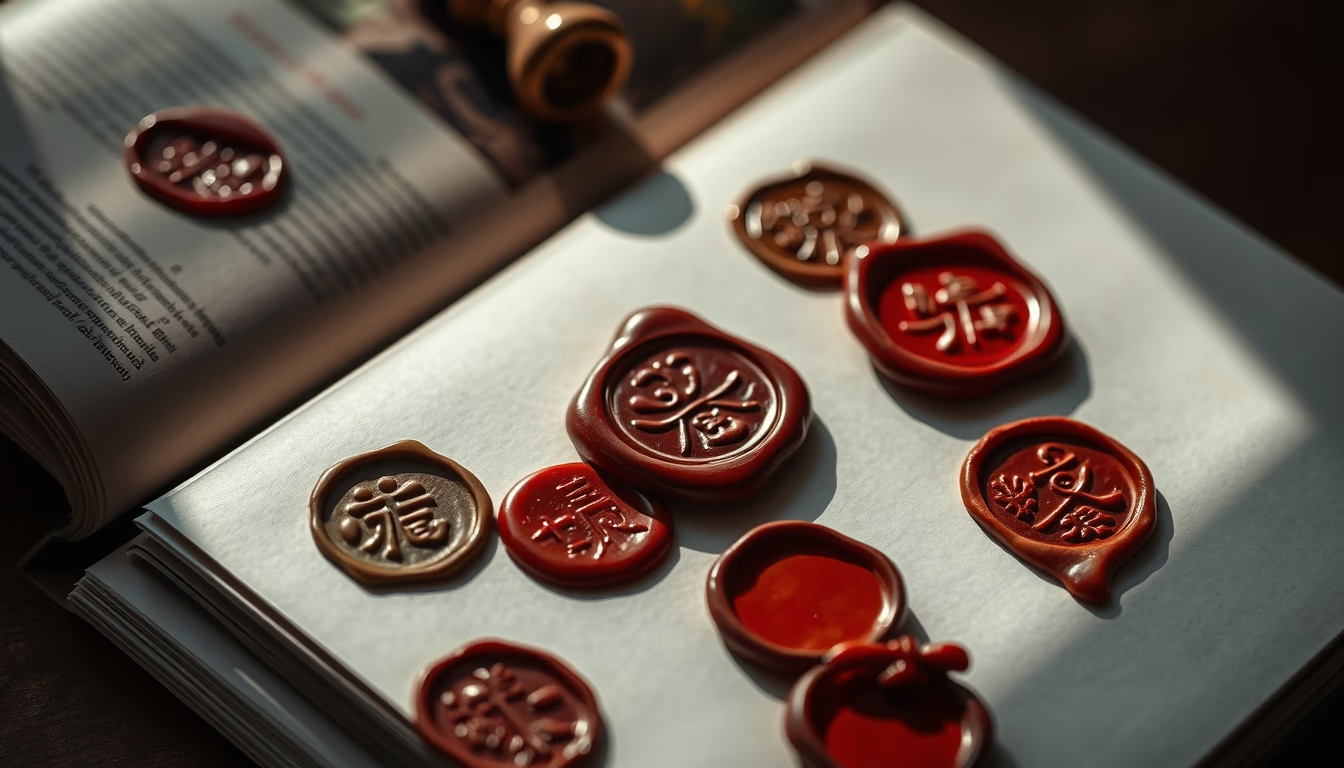
Wax seal collection
1344×768 · AVIF · CC BY 4.0
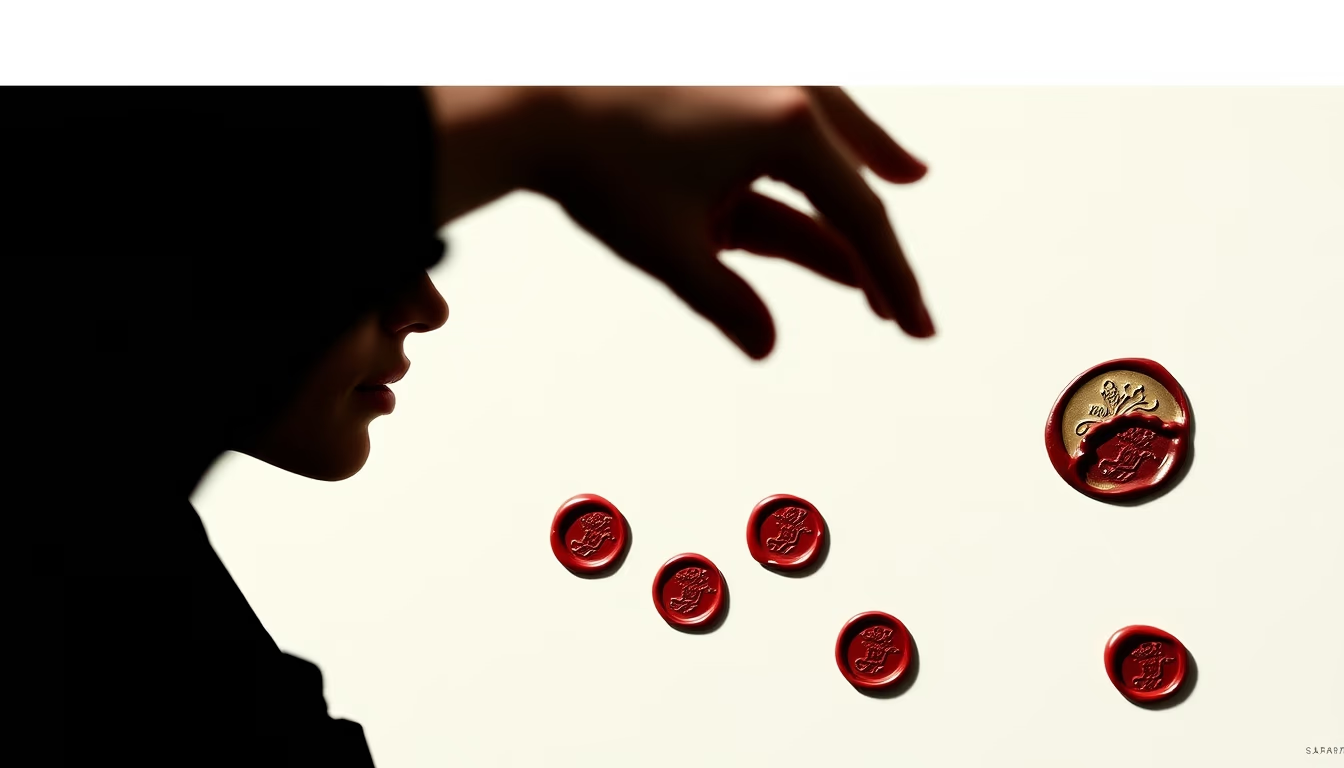
Discover the history and cultural significance of wax seals, from ancient times to their contemporary use in luxury stationery.
About this subject
Wax seals, also known as lacre, have ancient origins. Archaeological records show their use in Mesopotamia around 3000 BCE, where cylinder seals authenticated documents in clay. In ancient Rome, letters were closed with melted wax and impressed with signet rings, ensuring privacy and sender identity. During the European Middle Ages, the practice became widespread among nobility and religious institutions; the color of the wax conveyed specific messages: red for legal documents, black for mourning, and green for ecclesiastical matters.
Artisanal seal making involves beeswax, natural resins, and pigments, melted in a double boiler and poured onto paper. Once the wax begins to harden, a metal or wooden stamp is pressed to create a personalized relief with coats of arms, monograms, or symbols. This manual technique contrasts with modern industrial production, which uses synthetic wax sticks, but still preserves the charm of customization. Today, wax seals are prized in wedding invitations, love letters, luxury stationery, and even lettering and DIY projects.
Interestingly, European royalty and nobility maintained the official use of lacre well into the 20th century, with the British royal coat of arms being one of the most iconic examples. Collecting wax seals has become a hobby for history and stationery enthusiasts, with antique pieces fetching high prices at auctions. In Brazil, the practice of sealing letters was introduced by the Portuguese and persisted during the early centuries of colonization in official documents and family correspondence. Today, the technique is experiencing a revival combined with modern design, attracting a new generation that values handmade craftsmanship and historical connection.
Frequently Asked Questions
What is the difference between lacre and a wax seal?
In English, "lacre" is often synonymous with wax seal; "lacre" refers to the wax used, while "seal" can mean both the stamp and the impression. In historical contexts, they are used interchangeably.
How can I make a wax seal at home?
Melt beeswax or a sealing wax stick in a double boiler, drip it onto paper, wait a few seconds, and press a stamp lightly coated with vegetable oil. Allow it to harden completely.
What was the historical importance of wax seals?
They ensured authenticity and privacy for official documents and correspondence until the 19th century, being essential for validating treaties, wills, and royal letters.
Direct URL
https://pub-c7d6a6ea828543ac903a74a341ccb2e1.r2.dev/imagens/wax-seal-collection-high-fashion-editorial-fresh1.avifHow to credit
Include a visible link back to UtilizAí. Copy one of the snippets below:
<a href="https://xn--utiliza-eza.com/en/midia/imagens/wax-seal-collection-high-fashion-editorial-fresh1">Wax seal collection</a> by <a href="https://xn--utiliza-eza.com">UtilizAí</a>, licensed under <a href="https://creativecommons.org/licenses/by/4.0/">CC BY 4.0</a>.
[Wax seal collection](https://xn--utiliza-eza.com/en/midia/imagens/wax-seal-collection-high-fashion-editorial-fresh1) by [UtilizAí](https://xn--utiliza-eza.com), CC BY 4.0
License: CC-BY-4.0