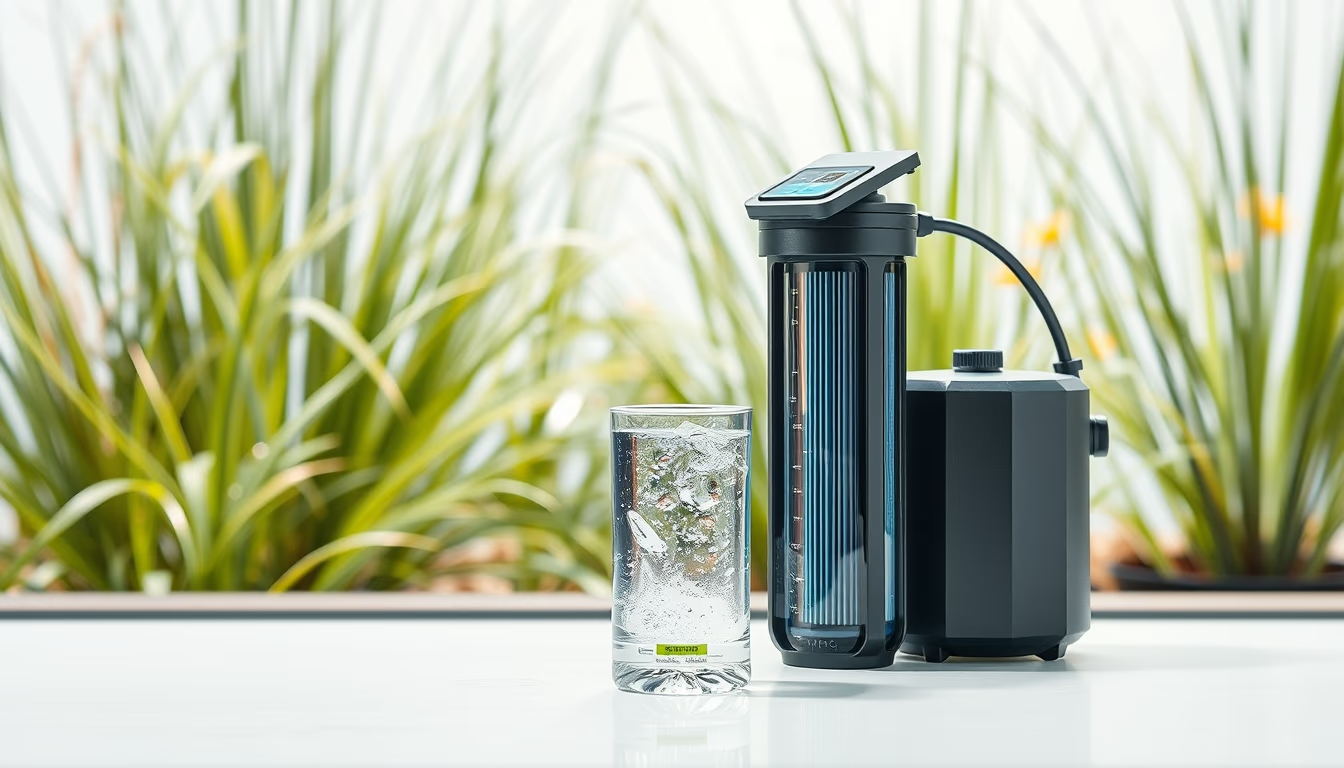
Water filter outdoor
1344×768 · AVIF · CC BY 4.0
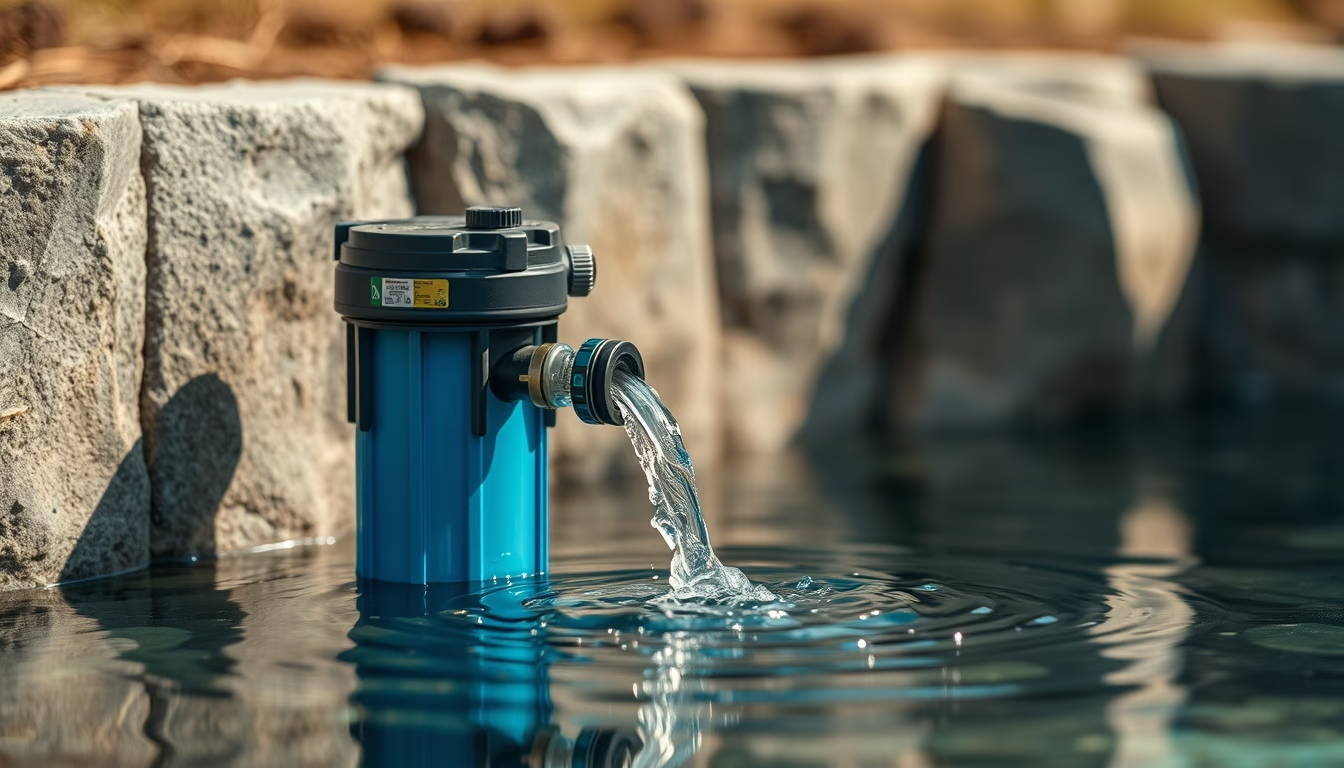
Portable water filters are essential in outdoor survival situations, removing bacteria and protozoa from natural water sources.
About this subject
In survival scenarios, access to clean drinking water is a top priority. Portable water filters, such as those based on hollow fiber membranes, are designed to be lightweight and effective at removing microbial contaminants. They work by size exclusion, trapping particles larger than 0.2 microns, which includes most bacteria and protozoa like Giardia and Cryptosporidium. However, they do not remove viruses, which are smaller, requiring additional purification through chemicals or boiling in areas with viral risk.
The use of water filters dates back millennia, with early sand and charcoal filtration records in ancient Greece. In modern times, portable filters gained popularity from the 1970s onward with the rise of hiking and camping. Brands like LifeStraw and Sawyer became benchmarks, especially in expeditions and natural disaster zones where water supply is disrupted. The World Health Organization recommends filtration as an emergency water treatment method.
Beyond recreational use, these filters have a global impact on combating diarrheal diseases, which kill around 500,000 children annually, mainly in countries with poor sanitation. Humanitarian programs distribute portable filters in rural communities and after disasters, reducing the incidence of cholera and typhoid fever. The technology is evolving: new models incorporate activated carbon to improve taste and remove chemicals, increasing safety in industrially contaminated environments.
Frequently Asked Questions
Do portable water filters remove viruses?
Most portable filters with 0.2 micron pores do not remove viruses, which are smaller. To eliminate viruses, complement with chlorine tablets, UV irradiation, or boiling for at least one minute.
What is the lifespan of a survival water filter?
It depends on the model. Hollow fiber filters like the Sawyer Mini last up to 380,000 liters; activated carbon filters need replacement every 4-6 months or as specified. Lifespan is reduced in very turbid water.
Is it safe to drink filtered water directly from rivers or lakes?
Yes, if the filter has pores smaller than 0.2 microns to trap bacteria and protozoa. However, be wary of chemical or viral contamination; in areas with human or agricultural activity, water may contain heavy metals or pesticides that are not filtered out.
Direct URL
https://pub-c7d6a6ea828543ac903a74a341ccb2e1.r2.dev/imagens/water-filter-outdoor-magazine-editorial-fresh16.avifHow to credit
Include a visible link back to UtilizAí. Copy one of the snippets below:
<a href="https://xn--utiliza-eza.com/en/midia/imagens/water-filter-outdoor-magazine-editorial-fresh16">Water filter outdoor</a> by <a href="https://xn--utiliza-eza.com">UtilizAí</a>, licensed under <a href="https://creativecommons.org/licenses/by/4.0/">CC BY 4.0</a>.
[Water filter outdoor](https://xn--utiliza-eza.com/en/midia/imagens/water-filter-outdoor-magazine-editorial-fresh16) by [UtilizAí](https://xn--utiliza-eza.com), CC BY 4.0
License: CC-BY-4.0