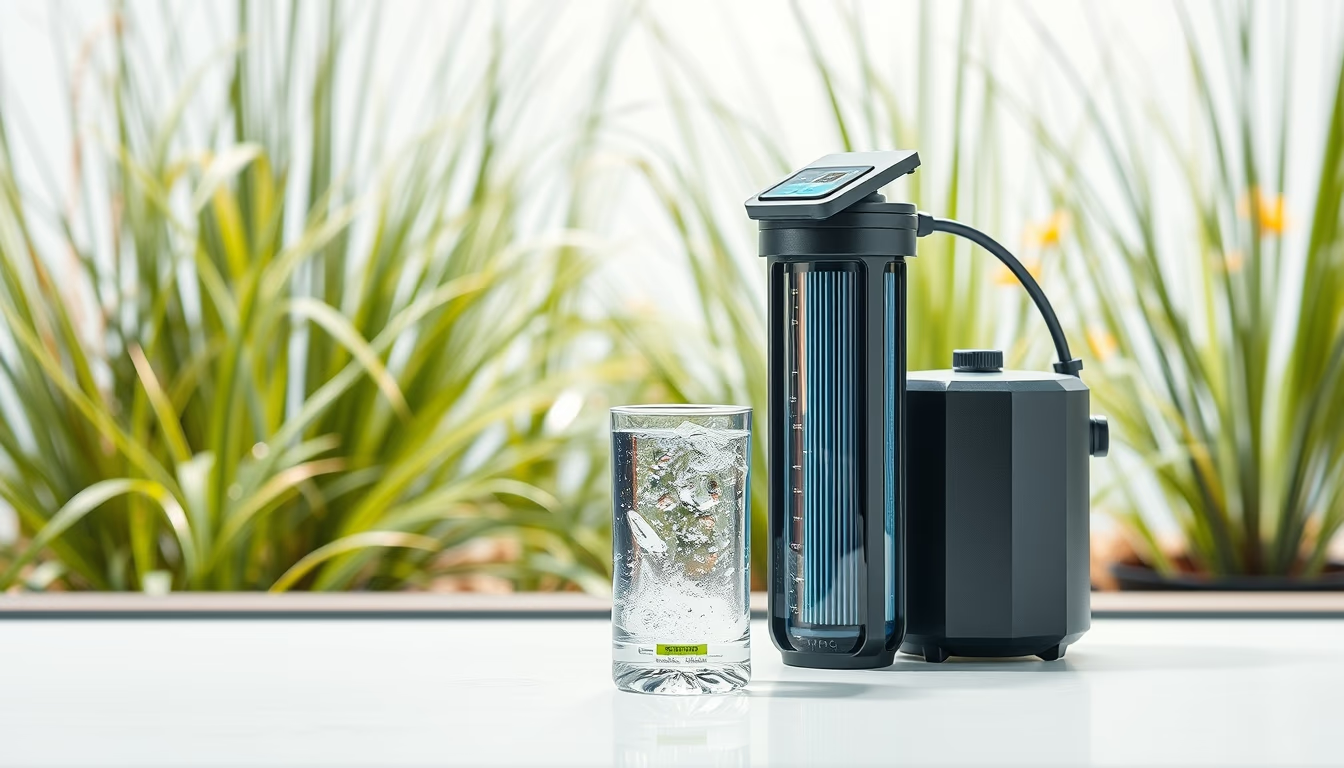
Water filter outdoor
1344×768 · AVIF · CC BY 4.0
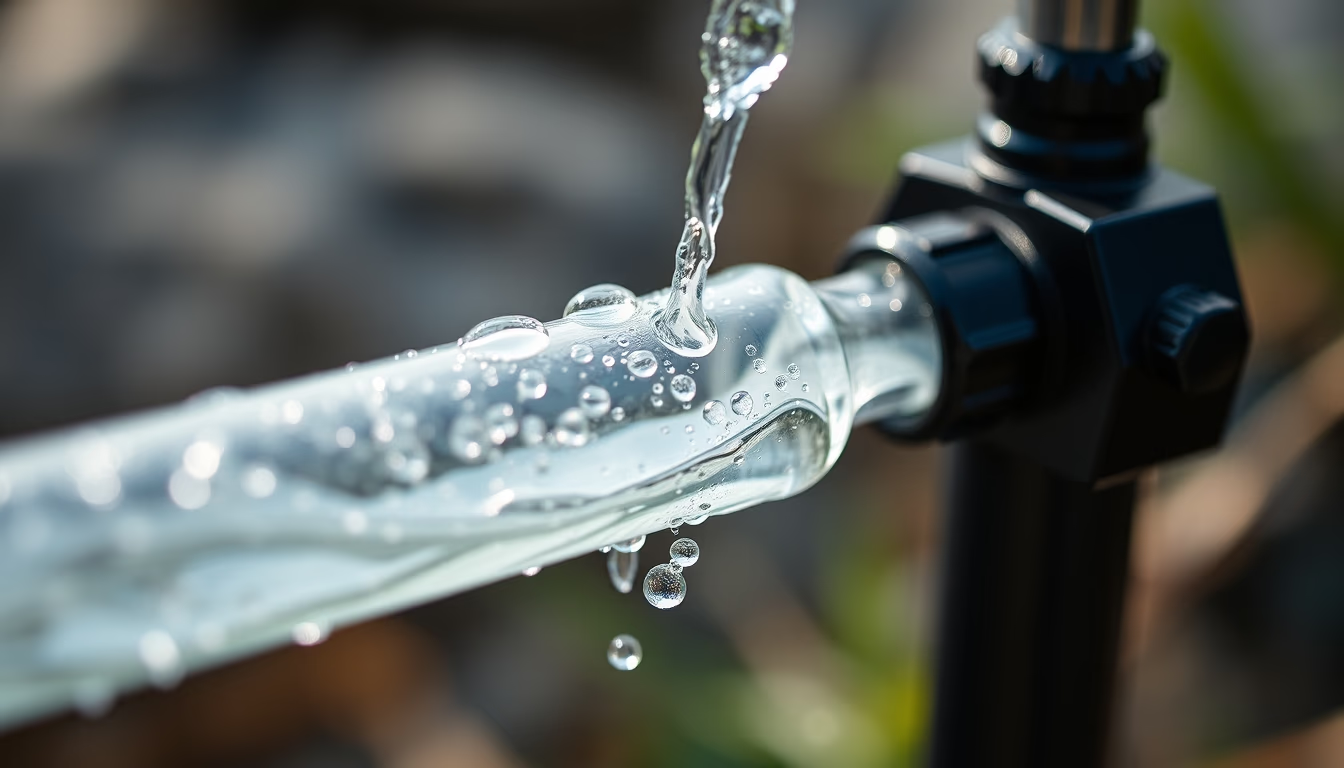
Portable water filter for outdoor expeditions, essential to prevent waterborne diseases from contaminated sources.
About this subject
In survival or outdoor expedition scenarios, safe drinking water is a critical resource. An estimated 2 billion people worldwide lack access to safe water, and diarrheal diseases from contaminated water kill thousands daily. A portable water filter is a compact, lightweight device that removes pathogens such as bacteria, protozoa, and sometimes viruses, making water from rivers, lakes, or springs safe to drink.
Several types of portable filters exist. The most common are mechanical filters that use membranes with microscopic pores to trap impurities. Popular models like the LifeStraw and Sawyer Squeeze feature pores of 0.1 to 0.2 microns, effectively removing bacteria (e.g., E. coli) and protozoa (e.g., Giardia and Cryptosporidium). Viruses, being smaller, require chemical treatment (iodine or chlorine) or UV light, which many mechanical filters do not cover.
A portable filter operates by direct suction (straw type), manual pressure (pump), or gravity (bag systems). The choice depends on the expedition: a straw filter suffices for solo backpacking, while a gravity system can filter several liters at once for groups. Maintenance is straightforward: rinse the membrane with clean water and avoid freezing, which can damage the pores. Filter lifespan ranges from 1,000 to 10,000 liters, depending on the model.
Boiling remains a reliable purification method, but it consumes fuel and time. Combining filtration with chemical treatment provides the broadest protection, especially in virus-prone areas. For remote expeditions, carrying a portable filter is one of the most important safety measures to prevent illness and ensure hydration.
Frequently Asked Questions
What is the difference between a portable water filter and a purifier?
Filters typically remove particles, bacteria, and protozoa, while purifiers also eliminate viruses. A purifier is recommended for regions with viral disease risk, such as hepatitis A.
How do I choose the right filter for a hike?
Consider weight, flow rate, the contaminants present in the area, and group size. For solo use, a straw filter is lightweight. For groups, a gravity system is more practical.
Does a portable filter remove chemicals or heavy metals?
Most mechanical filters do not remove dissolved chemicals or heavy metals. For that, a filter with activated carbon or a reverse osmosis system is needed, which are larger and less common in portable versions.
Direct URL
https://pub-c7d6a6ea828543ac903a74a341ccb2e1.r2.dev/imagens/water-filter-outdoor-macro-closeup-fresh13.avifHow to credit
Include a visible link back to UtilizAí. Copy one of the snippets below:
<a href="https://xn--utiliza-eza.com/en/midia/imagens/water-filter-outdoor-macro-closeup-fresh13">Water filter outdoor</a> by <a href="https://xn--utiliza-eza.com">UtilizAí</a>, licensed under <a href="https://creativecommons.org/licenses/by/4.0/">CC BY 4.0</a>.
[Water filter outdoor](https://xn--utiliza-eza.com/en/midia/imagens/water-filter-outdoor-macro-closeup-fresh13) by [UtilizAí](https://xn--utiliza-eza.com), CC BY 4.0
License: CC-BY-4.0