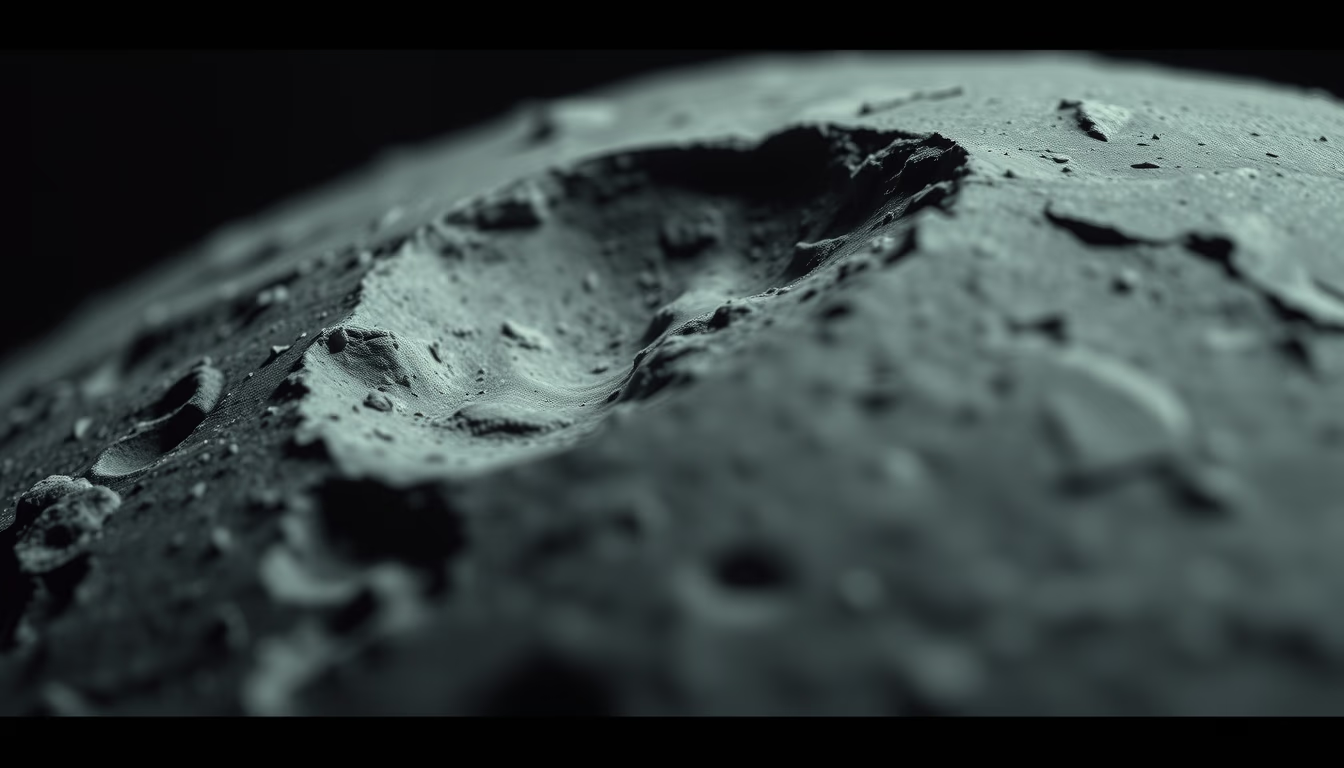
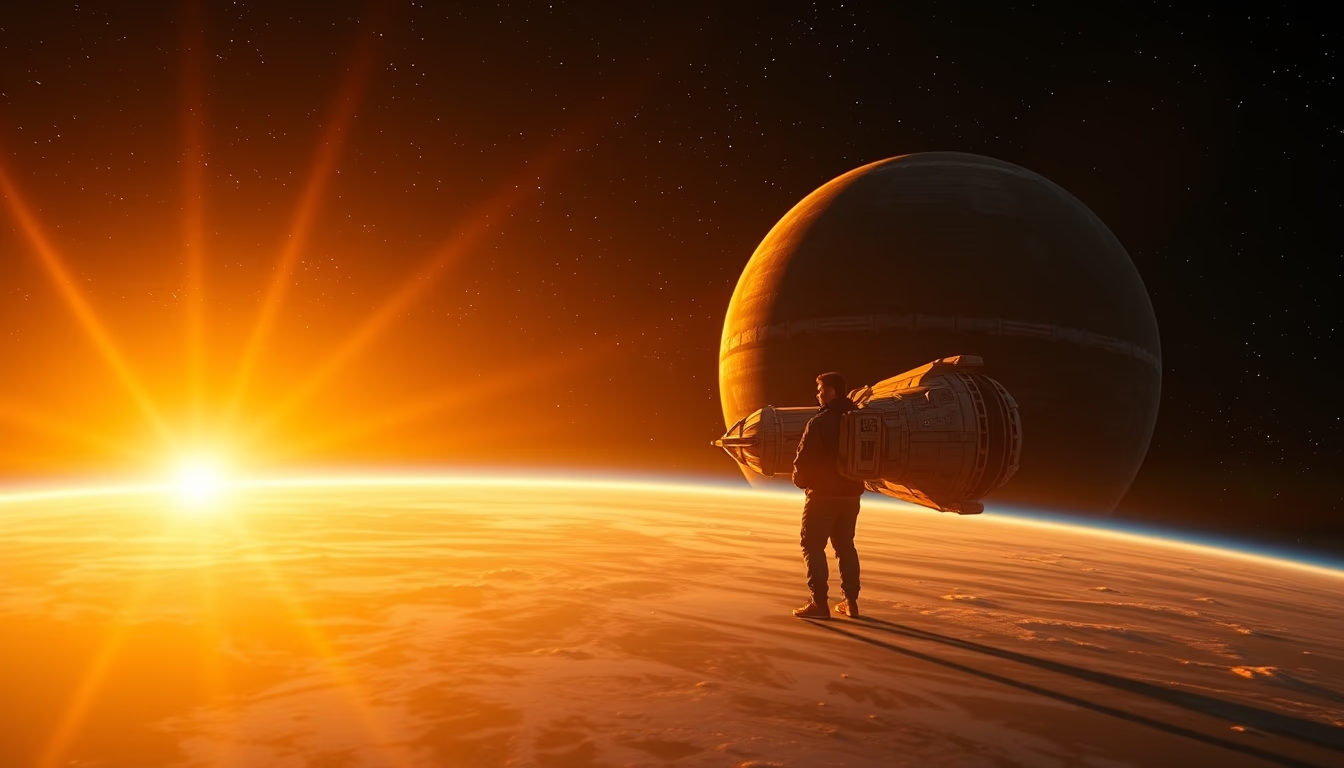
Voyager 1 deep space
1344×768 · AVIF · CC BY 4.0

Launched in 1977 by NASA, Voyager 1 is the farthest human-made object and the first to reach interstellar space.
About this subject
Voyager 1 was launched on September 5, 1977 by NASA with the goal of exploring Jupiter and Saturn. During its mission, it discovered active volcanoes on Io, a moon of Jupiter, and revealed details of Saturn's atmosphere and its moon Titan. After completing planetary exploration, the spacecraft continued its journey into interstellar space.
On August 25, 2012, Voyager 1 crossed the heliopause, the boundary where the solar wind meets the interstellar medium, becoming the first human-made object to enter interstellar space. Since then, it has been transmitting data about particles, magnetic fields, and plasmas from this unexplored region. Currently, it is over 24 billion kilometers from Earth, and its signals take about 22 hours to arrive.
The spacecraft carries the Golden Record, a gold-plated disc with sounds and images representative of humanity, including greetings in 55 languages and music from different cultures. Additionally, in 1990, at the request of Carl Sagan, it photographed Earth as a 'pale blue dot,' an iconic image highlighting our planet's fragility.
Its power comes from radioisotope thermoelectric generators (RTGs), which are expected to allow some instruments to function until around 2025. Voyager 1 remains a symbol of space exploration and human curiosity, inspiring generations and providing unique data about the outer reaches of the Solar System.
Frequently Asked Questions
How far is Voyager 1 from Earth currently?
As of January 2025, Voyager 1 is approximately 24.5 billion kilometers from Earth, or about 164 astronomical units (AU).
What is the Voyager Golden Record?
The Golden Record is a gold-plated copper disc containing greetings in 55 languages, music from various cultures, and images of life on Earth, designed to communicate our existence to any extraterrestrial civilization that might find it.
Is Voyager 1 still operational?
Yes, Voyager 1 is still functioning and sending scientific data, though some instruments have been turned off to conserve power. The radioisotope generators are expected to sustain operations until around the mid-2020s.
Direct URL
https://pub-c7d6a6ea828543ac903a74a341ccb2e1.r2.dev/imagens/voyager-1-deep-space-architectural-photography-fresh7.avifHow to credit
Include a visible link back to UtilizAí. Copy one of the snippets below:
<a href="https://xn--utiliza-eza.com/en/midia/imagens/voyager-1-deep-space-architectural-photography-fresh7">Voyager 1 deep space</a> by <a href="https://xn--utiliza-eza.com">UtilizAí</a>, licensed under <a href="https://creativecommons.org/licenses/by/4.0/">CC BY 4.0</a>.
[Voyager 1 deep space](https://xn--utiliza-eza.com/en/midia/imagens/voyager-1-deep-space-architectural-photography-fresh7) by [UtilizAí](https://xn--utiliza-eza.com), CC BY 4.0
License: CC-BY-4.0