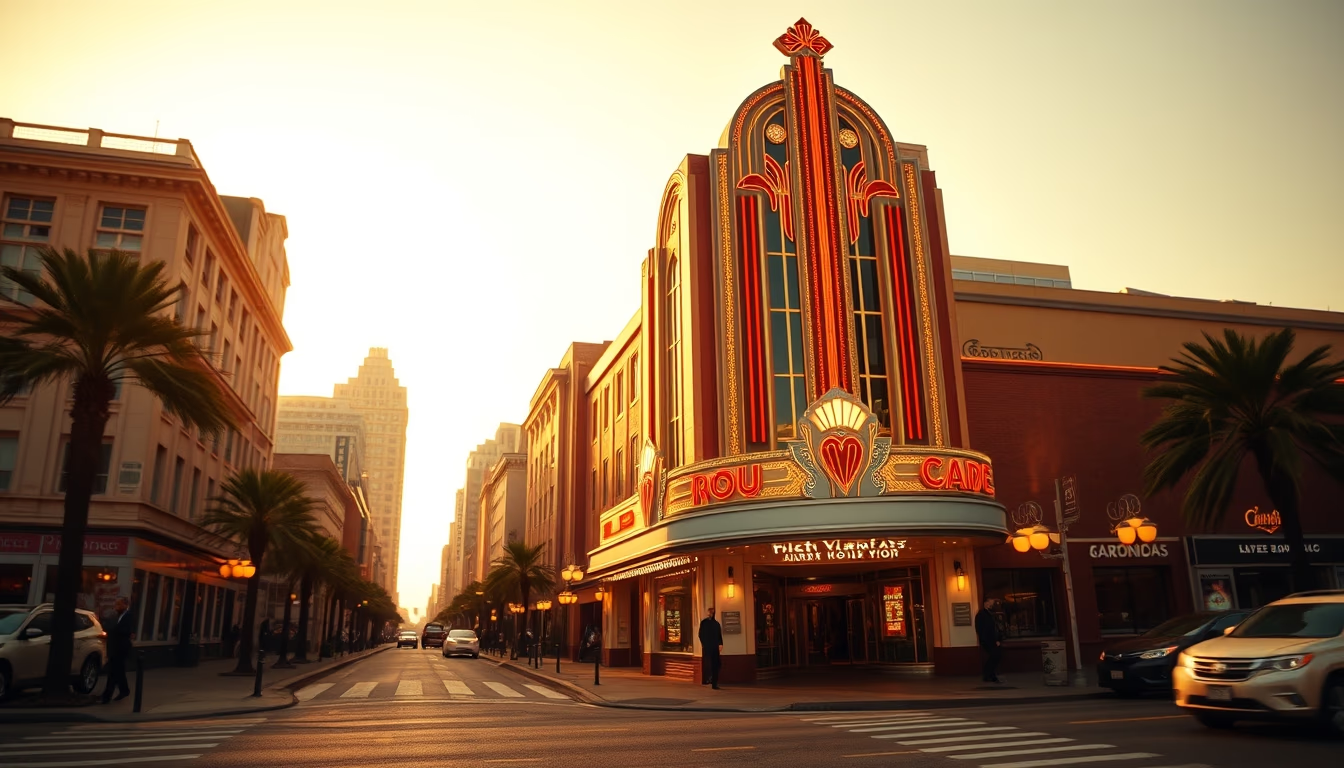
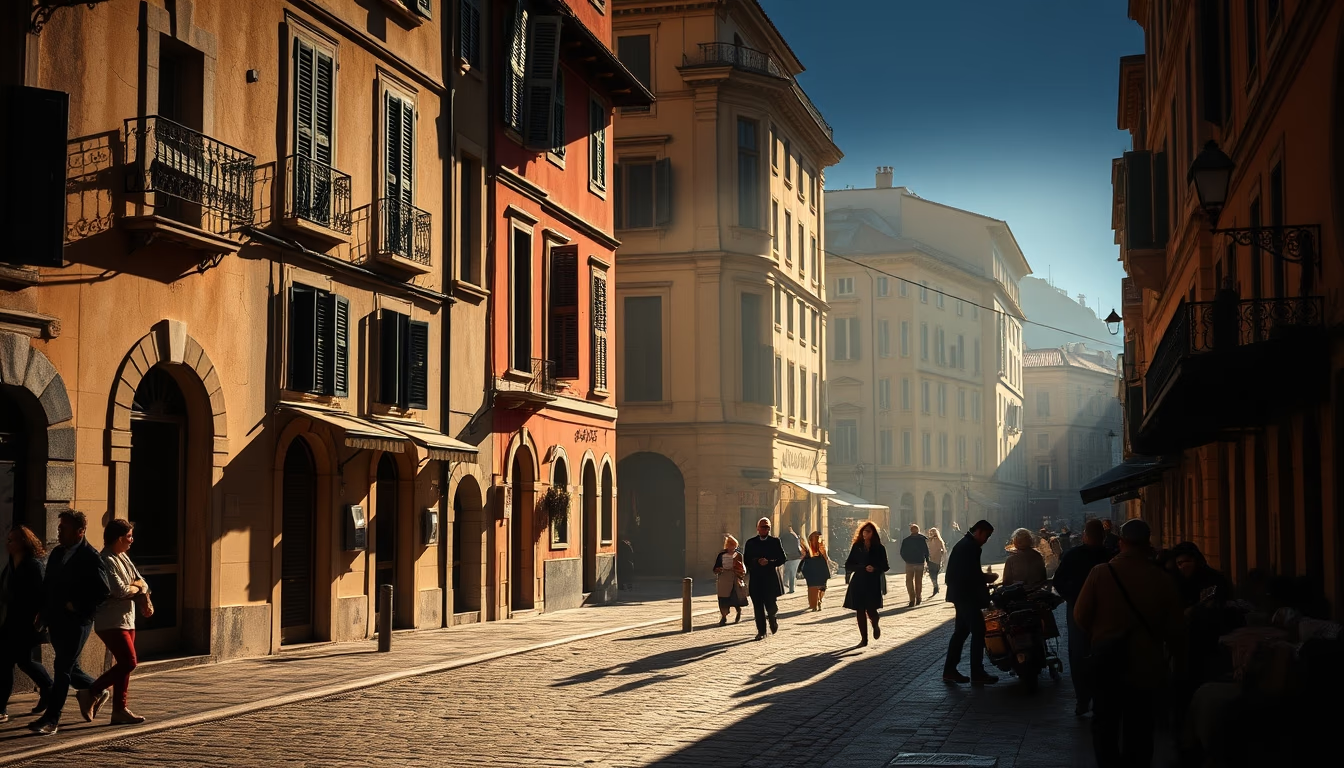
Vintage postcards stack
1344×768 · AVIF · CC BY 4.0

A stack of vintage postcards unveils 20th-century visual memories, from art to personal correspondence.
About this subject
Postcards emerged in the second half of the 19th century, driven by the growth of postal systems and the demand for quick, affordable communication. In the United States, the first government-issued postcards appeared in 1873, while private publishers soon followed with a variety of images. By the 1890s, postcard collecting became a widespread hobby, often called “deltiology.” People sent them from vacations, as holiday greetings, or simply as a way to stay in touch. The golden age of postcards is generally considered to be between 1890 and 1915, when millions were produced and mailed worldwide.
These small cards capture a vast array of subjects: cityscapes, natural wonders, historical events, advertisements, and even political propaganda. They provide a unique window into the visual culture of the past, showing how places looked before modern development, what people wore, and how they depicted their world. Many postcards were hand-tinted or printed using chromolithography, giving them a distinct, often exaggerated color palette. The divided back, standardized in the early 1900s, allowed for both a message and the address on the same side, leaving the entire front for the image.
Collectors value vintage postcards for their rarity, condition, and subject matter. Cards from specific publishers, such as the Detroit Publishing Company or Curt Teich, are highly sought after. Others gain value due to their historical significance, like those depicting vanished buildings or major events. Postcards also serve as primary sources for historians and researchers, offering insights into social trends, tourism, and artistic styles. Today, digital reproduction and online markets have made it easier for collectors to find and trade cards, but the physical object remains a cherished artifact.
The revival of analog communication, exemplified by platforms like Postcrossing, shows that the appeal of postcards endures. Sending a real card through the mail carries a personal touch that emails lack. Vintage postcards, in particular, evoke nostalgia and a connection to earlier generations. Whether stored in albums or displayed in frames, they continue to tell stories of places, people, and moments frozen in time.
Frequently Asked Questions
How can I determine the value of a vintage postcard?
Value depends on rarity, condition, subject popularity, publisher, and whether it has original postmarks or stamps. Cards from well-known series or depicting unusual places tend to be more valuable.
What is the difference between a postcard and a postal card?
A postal card is a piece of stiff paper issued by a postal authority for sending messages. A postcard is a privately produced card with an image on one side. In common usage, the terms are often used interchangeably.
Where can I buy vintage postcards in the United States?
Antique shops, flea markets, postcard shows, and online marketplaces like eBay or Etsy are good sources. Specialized dealers and clubs such as the American Postcard Collectors Association also offer resources.
Direct URL
https://pub-c7d6a6ea828543ac903a74a341ccb2e1.r2.dev/imagens/vintage-postcards-stack-studio-editorial-portrait-fresh2.avifHow to credit
Include a visible link back to UtilizAí. Copy one of the snippets below:
<a href="https://xn--utiliza-eza.com/en/midia/imagens/vintage-postcards-stack-studio-editorial-portrait-fresh2">Vintage postcards stack</a> by <a href="https://xn--utiliza-eza.com">UtilizAí</a>, licensed under <a href="https://creativecommons.org/licenses/by/4.0/">CC BY 4.0</a>.
[Vintage postcards stack](https://xn--utiliza-eza.com/en/midia/imagens/vintage-postcards-stack-studio-editorial-portrait-fresh2) by [UtilizAí](https://xn--utiliza-eza.com), CC BY 4.0
License: CC-BY-4.0