Venus surface acidic
1344×768 · AVIF · CC BY 4.0
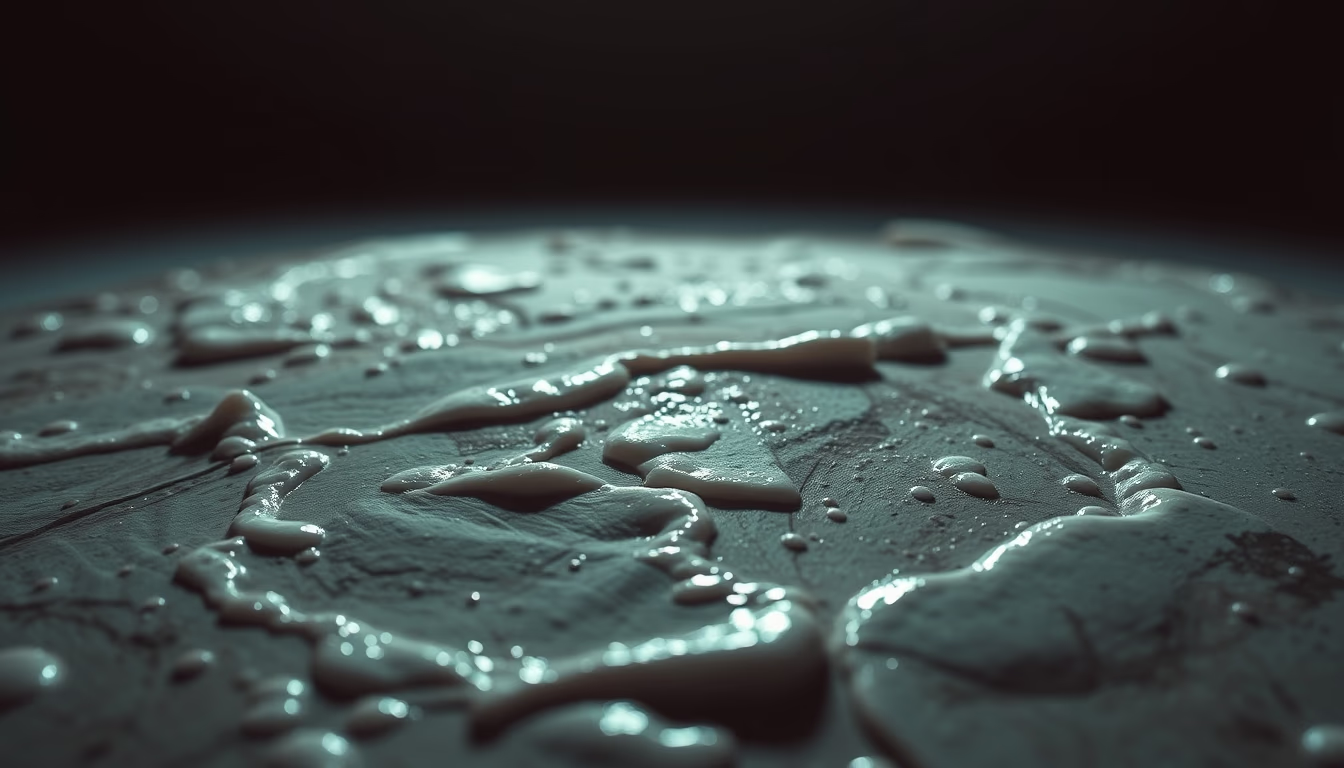
The surface of Venus is covered by sulfuric acid clouds, with an atmospheric pressure 90 times that of Earth and temperatures that can melt lead.
About this subject
Venus, the second planet from the Sun, has an atmosphere composed mainly of carbon dioxide (96.5%) and nitrogen (3.5%), but it is the dense clouds of sulfuric acid that dominate its appearance. These clouds, formed from photochemical reactions in the upper atmosphere, reflect about 70% of sunlight, making Venus the brightest planet in Earth's night sky. However, beneath this whitish cover, an uncontrolled greenhouse effect raises surface temperatures to approximately 462 °C (864 °F), enough to melt lead and tin.
Atmospheric pressure on the Venusian surface is crushing: 92 atmospheres, equivalent to pressure at nearly 1 km depth in Earth's oceans. This combination of extreme heat and pressure makes any life as we know it impossible, though speculation persists about microorganisms in the upper cloud layers, where temperature and pressure are milder. The Soviet Venera probes, which landed on the planet between 1970 and 1982, sent back the only direct images of the surface, showing a rocky, volcanic terrain with basaltic plains and few impact craters.
Unlike Earth, Venus lacks active plate tectonics, but evidence suggests recent volcanic activity. The Magellan probe in 1990 mapped vast lava flows and volcanic structures. The acidity of the clouds results from the oxidation of volcanic sulfur dioxide (SO₂), forming concentrated sulfuric acid (H₂SO₄). This chemical cycle echoes what happens on Earth when volcanic SO₂ creates acid rain, but on Venus the process is far more intense and global.
Recent studies from the JAXA Akatsuki mission and computer simulations indicate that Venusian atmospheric circulation is extremely rapid: high-altitude winds reach up to 360 km/h (224 mph), a phenomenon known as super-rotation. Despite technological challenges, new missions such as NASA's VERITAS and ESA's EnVision are planned for the 2030s, promising to unveil more secrets of this hellish world and its acidic landscapes.
Frequently Asked Questions
Why is the surface of Venus so acidic?
The acidity comes from clouds of sulfuric acid, formed by the reaction of volcanic sulfur dioxide with water in the atmosphere. This acid rains down but evaporates before reaching the ground, creating a chemical cycle that maintains the acidity.
Is it possible to land on Venus?
Yes, the Soviet Venera probes landed and survived up to 2 hours due to the high pressure and temperature. No mission has attempted since 1985, but new, more resilient spacecraft are in development.
Is there life in the clouds of Venus?
Speculation exists about microorganisms in the upper clouds, where temperatures are mild and sulfuric acid is dilute. Studies have detected possible phosphine, but the debate continues. No conclusive evidence has been found.
Direct URL
https://pub-c7d6a6ea828543ac903a74a341ccb2e1.r2.dev/imagens/venus-surface-acidic-fine-art-photography-p10.avifHow to credit
Include a visible link back to UtilizAí. Copy one of the snippets below:
<a href="https://xn--utiliza-eza.com/en/midia/imagens/venus-surface-acidic-fine-art-photography-p10">Venus surface acidic</a> by <a href="https://xn--utiliza-eza.com">UtilizAí</a>, licensed under <a href="https://creativecommons.org/licenses/by/4.0/">CC BY 4.0</a>.
[Venus surface acidic](https://xn--utiliza-eza.com/en/midia/imagens/venus-surface-acidic-fine-art-photography-p10) by [UtilizAí](https://xn--utiliza-eza.com), CC BY 4.0
License: CC-BY-4.0