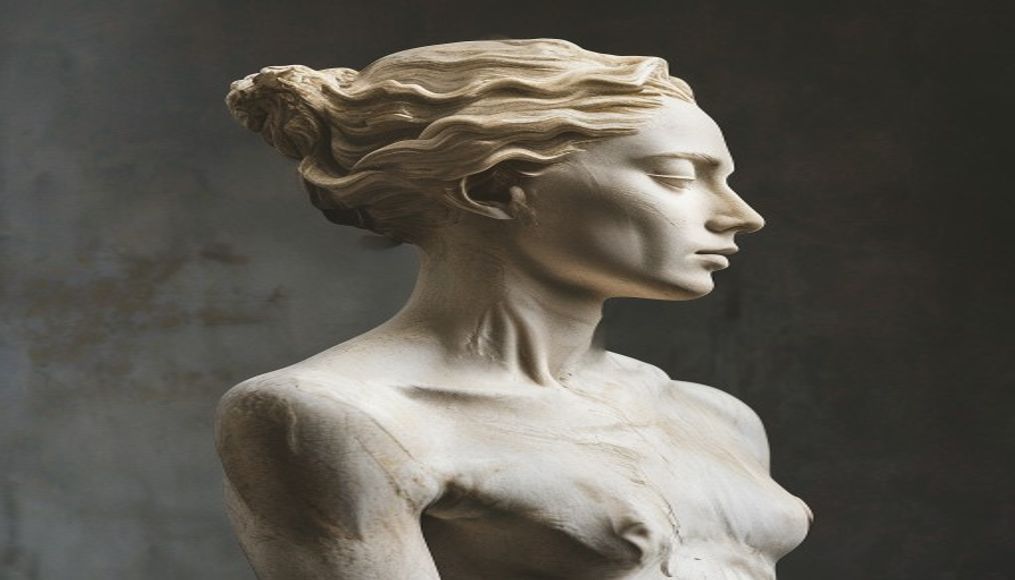
Venus de milo
1344×768 · AVIF · CC BY 4.0

The Venus de Milo is a famous armless Greek statue on display at the Louvre Museum, dated to the Hellenistic period.
About this subject
The Venus de Milo is a marble sculpture depicting the Greek goddess Aphrodite, dated to around 130 to 100 BC. It was discovered in 1820 on the island of Milos, Greece, by a local farmer. The statue is a prime example of Hellenistic art, known for its realism and dramatic expression. It stands 2.02 meters tall and originally had arms, which were lost over time. It is believed that the figure held an apple in her left hand and draped her robe with the right, referencing the Judgment of Paris.
Today, the Venus de Milo is one of the highlights of the Louvre Museum in Paris, attracting millions of visitors each year. Its fame stems not only from its aesthetic beauty but also from the mystery surrounding its identity and original pose. The statue was carved from two blocks of marble, joined at the hips, a common technique at the time. The name "Venus" was given by the French, but the identification with Aphrodite is widely accepted.
Interestingly, the Venus de Milo was almost acquired by the Turks, but the French managed to bring it to Paris. The missing arms have sparked numerous theories, but it is believed they were broken during a conflict between the French and Turks after the discovery. The statue has influenced artists such as Salvador Dalí and appears in various cultural references, including films and music.
Frequently Asked Questions
Where is the Venus de Milo displayed?
The Venus de Milo is displayed at the Louvre Museum in Paris, France. It is one of the most visited pieces in the museum.
Why is the Venus de Milo missing her arms?
The arms were lost over time, likely during a conflict between the French and Turks after the statue's discovery in 1820. There are theories that they were broken intentionally or by accident.
How tall is the Venus de Milo?
The statue is 2.02 meters tall. It was carved from marble and dates to the Hellenistic period, around 130 to 100 BC.
Direct URL
https://pub-c7d6a6ea828543ac903a74a341ccb2e1.r2.dev/imagens/venus-de-milo-studio-editorial-portrait-p3.avifHow to credit
Include a visible link back to UtilizAí. Copy one of the snippets below:
<a href="https://xn--utiliza-eza.com/en/midia/imagens/venus-de-milo-studio-editorial-portrait-p3">Venus de milo</a> by <a href="https://xn--utiliza-eza.com">UtilizAí</a>, licensed under <a href="https://creativecommons.org/licenses/by/4.0/">CC BY 4.0</a>.
[Venus de milo](https://xn--utiliza-eza.com/en/midia/imagens/venus-de-milo-studio-editorial-portrait-p3) by [UtilizAí](https://xn--utiliza-eza.com), CC BY 4.0
License: CC-BY-4.0