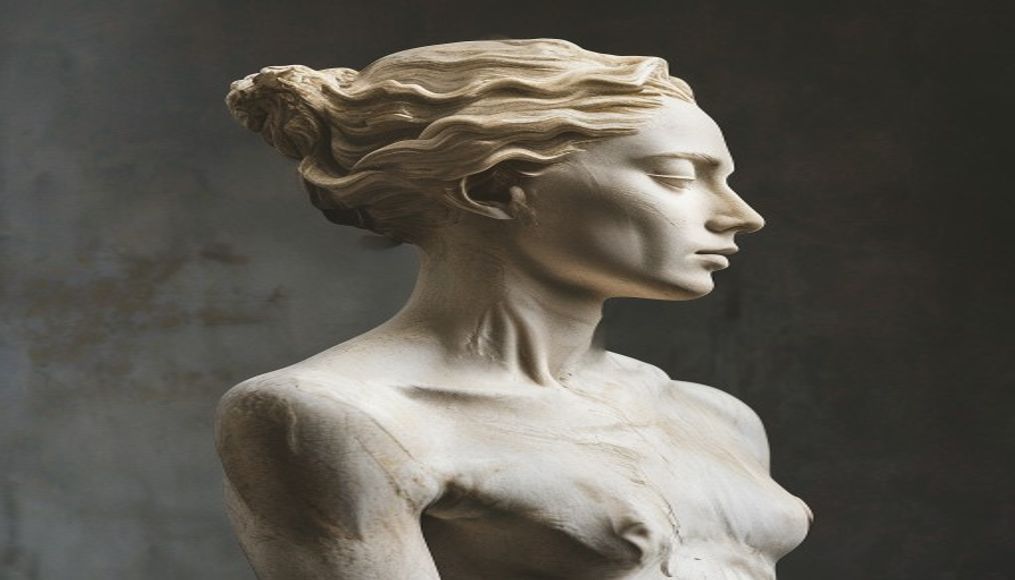
Venus de milo
1344×768 · AVIF · CC BY 4.0

The Venus de Milo is one of the most iconic sculptures of ancient Greece, depicting the goddess Aphrodite missing her arms and displayed at the Louvre.
About this subject
The Venus de Milo, also known as Aphrodite of Milos, is a marble statue discovered in 1820 on the Greek island of Milos. It is believed to have been carved around 130, 100 BCE, during the Hellenistic period. The work depicts the goddess of love and beauty, Aphrodite, and is famous for its elegant pose and the absence of both arms, which has led to much speculation about its original stance.
The statue was found by a local farmer named Yorgos Kentrotas, among the ruins of an ancient theater. Quickly acquired by French officials, it was presented to King Louis XVIII, who donated it to the Louvre Museum in Paris, where it remains today. Its fame grew in the 19th century, celebrated as a supreme example of classical art, even though it actually belongs to the Hellenistic period, which followed the classical era.
The Venus de Milo has inspired countless replicas and references in popular culture, from poems and paintings to films and advertisements. Its missing arms have only increased its mystery, sparking debates among archaeologists about whether it once held an apple, a mirror, or a draped garment. What is known is that the sculpture was originally painted in vivid colors and adorned with jewelry, but most of these details have been lost over the centuries.
Today, the Venus de Milo is one of the most visited pieces in the Louvre, alongside the Mona Lisa. Its timeless beauty and the enigma of its incomplete form continue to fascinate scholars and visitors worldwide. The statue stands 2.02 meters tall and is made of Parian marble, a high-quality material widely used in Greek sculpture.
Frequently Asked Questions
Where is the Venus de Milo currently displayed?
The Venus de Milo is displayed at the Louvre Museum in Paris, France, since 1821. It is one of the museum's most popular pieces, attracting millions of visitors each year.
Why is the Venus de Milo missing her arms?
The statue's arms were lost over time, likely during transportation or due to earthquake damage and erosion. They were already missing when the statue was discovered, and have never been found.
What does the Venus de Milo represent?
The sculpture represents Aphrodite (Venus in Roman mythology), the Greek goddess of love, beauty, and fertility. It is an example of Hellenistic art, known for its realism and expressiveness.
Direct URL
https://pub-c7d6a6ea828543ac903a74a341ccb2e1.r2.dev/imagens/venus-de-milo-magazine-editorial-p8.avifHow to credit
Include a visible link back to UtilizAí. Copy one of the snippets below:
<a href="https://xn--utiliza-eza.com/en/midia/imagens/venus-de-milo-magazine-editorial-p8">Venus de milo</a> by <a href="https://xn--utiliza-eza.com">UtilizAí</a>, licensed under <a href="https://creativecommons.org/licenses/by/4.0/">CC BY 4.0</a>.
[Venus de milo](https://xn--utiliza-eza.com/en/midia/imagens/venus-de-milo-magazine-editorial-p8) by [UtilizAí](https://xn--utiliza-eza.com), CC BY 4.0
License: CC-BY-4.0