Usb-c connector macro
1344×768 · AVIF · CC BY 4.0
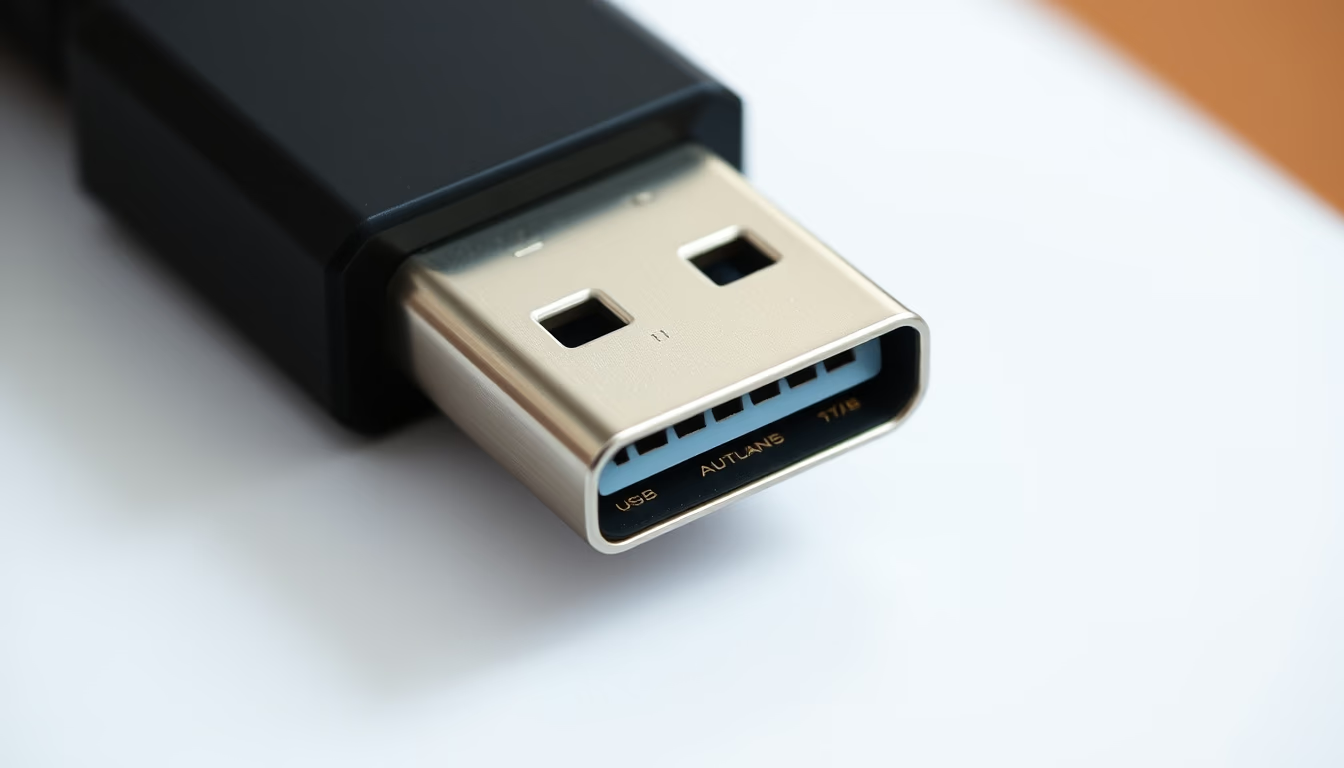
The USB-C connector, a universal standard for data transfer and charging, stands out for its reversible design and high speed.
About this subject
The USB-C connector, developed by the USB Implementers Forum and launched in 2014, revolutionized connectivity in electronic devices. Unlike previous USB connectors, it features a symmetrical design that allows insertion in any orientation, eliminating the frustration of plugging in the cable the wrong way. With 24 internal pins, USB-C supports advanced protocols such as USB 3.1 Gen 2 (up to 10 Gbps), Thunderbolt 3 (up to 40 Gbps), and DisplayPort, as well as delivering up to 100W of power for fast charging thanks to the USB Power Delivery standard.
Its adoption was accelerated by manufacturers like Apple, which replaced the Lightning connector in iPads and MacBooks, and Google, which implemented it in Pixel smartphones. Currently, USB-C is found in laptops, tablets, smartphones, monitors, docks, and even consoles like the Nintendo Switch. Although widespread, the uniformity of the standard still faces challenges: not all USB-C cables support the same speeds or power, which can confuse consumers. The European Union, starting in 2024, will require all portable electronic devices to use USB-C as a common charger, a measure aimed at reducing e-waste.
Interestingly, the connector can operate in Alternate Mode (Alt Mode), allowing it to transmit HDMI or VGA video signals with simple adapters. Additionally, its durability is estimated at 10,000 insertion cycles, surpassing the 5,000 cycles of micro USB. The continued evolution of the standard, such as USB4 based on Thunderbolt 3, ensures that USB-C remains relevant for future generations of devices.
Frequently Asked Questions
What is a USB-C connector?
It is a universal 24-pin, reversible connector that supports data transfer, power charging, and video output. It was introduced in 2014 and is used in a wide range of modern electronic devices.
What are the main advantages of USB-C over previous connectors?
Reversible design (no wrong orientation), higher transfer speeds (up to 40 Gbps with Thunderbolt 3), support for fast charging up to 100W, and ability to transmit audio and video signals.
Are all USB-C cables the same?
No. Cables can have different speed capabilities (USB 2.0, 3.1, Thunderbolt) and power ratings (60W, 100W). It is important to check the cable specifications to ensure compatibility with the device.
Direct URL
https://pub-c7d6a6ea828543ac903a74a341ccb2e1.r2.dev/imagens/usb-c-connector-macro-film-grain-authentic-p11.avifHow to credit
Include a visible link back to UtilizAí. Copy one of the snippets below:
<a href="https://xn--utiliza-eza.com/en/midia/imagens/usb-c-connector-macro-film-grain-authentic-p11">Usb-c connector macro</a> by <a href="https://xn--utiliza-eza.com">UtilizAí</a>, licensed under <a href="https://creativecommons.org/licenses/by/4.0/">CC BY 4.0</a>.
[Usb-c connector macro](https://xn--utiliza-eza.com/en/midia/imagens/usb-c-connector-macro-film-grain-authentic-p11) by [UtilizAí](https://xn--utiliza-eza.com), CC BY 4.0
License: CC-BY-4.0