Urban farm vertical building
1344×768 · AVIF · CC BY 4.0
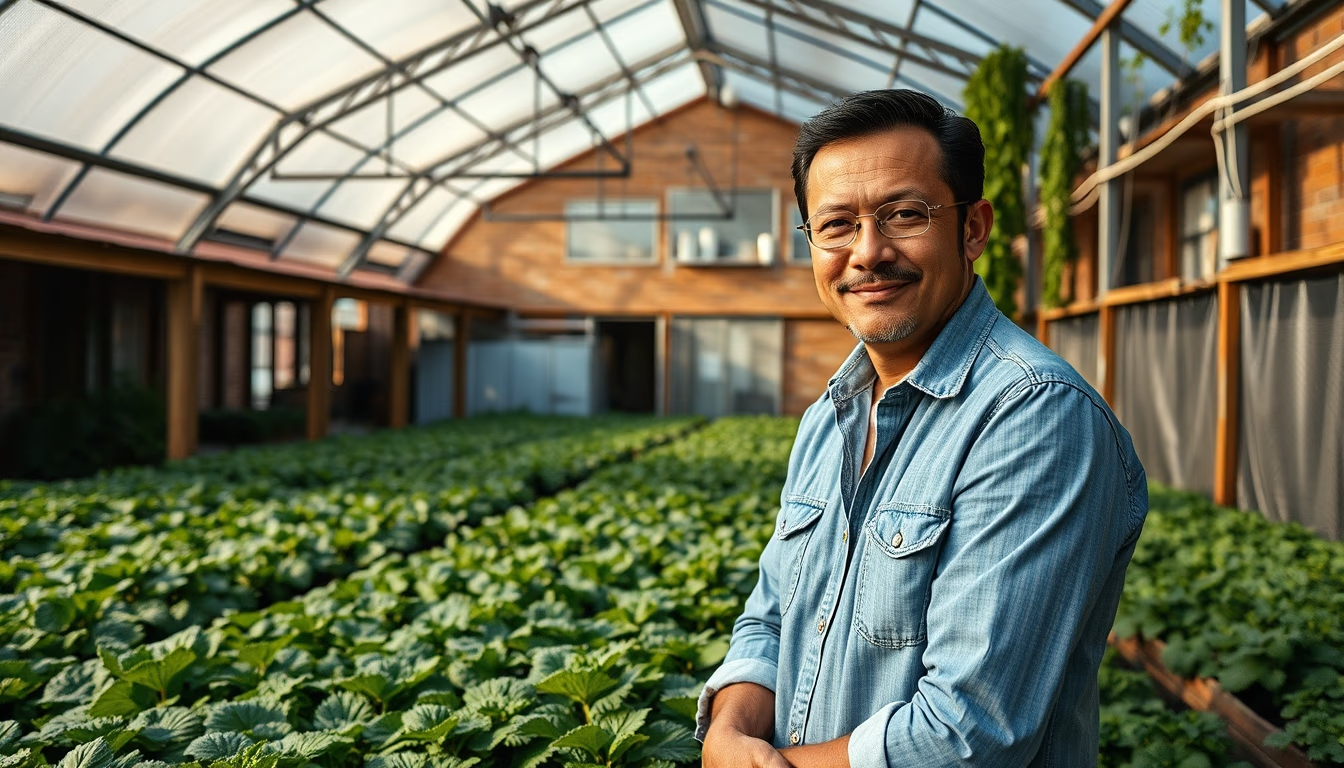
Vertical farm buildings grow food on multiple floors, reducing transport distances and using technologies like hydroponics and LED for sustainable production.
About this subject
Vertical farms are agricultural structures that grow food indoors by stacking planting layers in specially designed or adapted buildings. This approach has gained global traction over the past decade as a response to food security challenges, urbanization, and climate change. Unlike traditional agriculture, which relies on large land areas and favorable weather, vertical farms operate in controlled environments using systems such as hydroponics (water-based nutrient delivery), aeroponics (nutrient mist), and aquaponics (integration with fish farming). Artificial lighting, typically adjustable-spectrum LEDs, replaces sunlight, enabling continuous growth cycles and year-round production.
Data from the Food and Agriculture Organization of the United Nations indicates that the global urban population is projected to reach 68% by 2050, straining food logistics. Vertical farms can be installed in metropolitan areas, dramatically reducing transport distances, in some cases from thousands of kilometers to just a few. This cuts carbon emissions associated with freight and keeps food fresher. Moreover, these systems consume up to 95% less water than conventional agriculture because water is recirculated and reused. Pesticide use is minimal or nonexistent, as the controlled environment prevents pests.
Technologies such as IoT sensors, artificial intelligence for nutrient monitoring, and robotics for harvesting are increasingly incorporated. Startups like AeroFarms in Newark (USA) and Infarm in Berlin exemplify the trend. In Brazil, initiatives in São Paulo and Curitiba are testing vertical cultivation of leafy greens and microgreens to supply local restaurants and supermarkets. However, challenges remain: high energy costs for artificial lighting and significant initial investment. Yet, with falling LED prices and advances in renewable energy, economic viability is improving. The concept of "farm-to-table" gains new depth when the farm is literally a few floors away from the consumer.
Frequently Asked Questions
What are the main advantages of urban vertical farms?
Key advantages include drastically reduced food transport distances, water savings of up to 95%, elimination of pesticides, year-round production, and efficient use of urban space. They also contribute to food security in densely populated areas.
Which crops are most commonly grown in vertical farms?
Short-cycle, low-height crops are most common, such as lettuce, arugula, kale, microgreens, herbs (basil, mint), strawberries, and cherry tomatoes. Research is advancing to include grains and tubers, but technical and economic challenges remain.
Are vertical farms economically viable today?
Some operations are already profitable, especially for premium high-value products like microgreens and herbs. However, large-scale viability still depends on reducing energy and LED lighting costs. Investments in solar power and batteries can improve profitability.
Direct URL
https://pub-c7d6a6ea828543ac903a74a341ccb2e1.r2.dev/imagens/urban-farm-vertical-building-studio-editorial-portrait-p0.avifHow to credit
Include a visible link back to UtilizAí. Copy one of the snippets below:
<a href="https://xn--utiliza-eza.com/en/midia/imagens/urban-farm-vertical-building-studio-editorial-portrait-p0">Urban farm vertical building</a> by <a href="https://xn--utiliza-eza.com">UtilizAí</a>, licensed under <a href="https://creativecommons.org/licenses/by/4.0/">CC BY 4.0</a>.
[Urban farm vertical building](https://xn--utiliza-eza.com/en/midia/imagens/urban-farm-vertical-building-studio-editorial-portrait-p0) by [UtilizAí](https://xn--utiliza-eza.com), CC BY 4.0
License: CC-BY-4.0