Urban farm vertical building
1344×768 · AVIF · CC BY 4.0
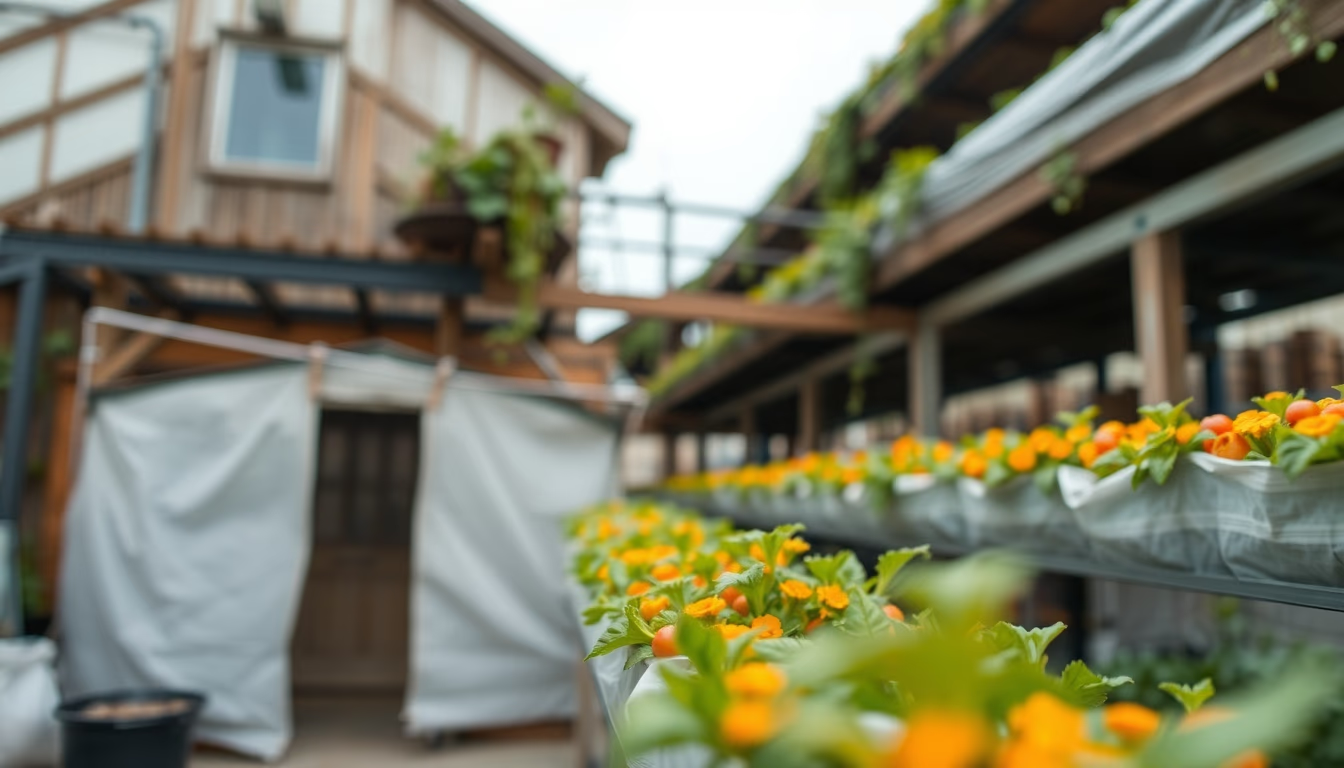
Urban vertical farms: how agricultural buildings inside cities are revolutionizing fresh food production with cutting-edge technology.
About this subject
Urban vertical farms are structures designed to grow food on multiple floors within metropolitan areas. Unlike traditional agriculture, they use hydroponic or aeroponic systems, LED lighting, and automated climate control to maximize yield per square meter. This approach allows year-round harvests regardless of external weather and dramatically reduces water usage (up to 95% less than conventional farming).
Cities like Singapore, Tokyo, and New York already host commercial vertical farms, such as Sky Greens in Singapore and AeroFarms in Newark. These facilities grow everything from microgreens and lettuce to tomatoes and strawberries, supplying local supermarkets and restaurants. Proximity to end consumers eliminates long supply chains, cutting carbon emissions and ensuring freshness.
Beyond environmental benefits, urban vertical farms can revitalize degraded or underused areas, such as abandoned warehouses or building rooftops. They also create specialized jobs in agronomic engineering, biotechnology, and automated systems operation. The global vertical farming market is estimated to exceed $20 billion by 2030, driven by demand for safe, sustainable food in megacities.
A lesser-known aspect is their contribution to food security in arid or poor-soil regions. Middle Eastern countries like the United Arab Emirates heavily invest in vertical farms to reduce import dependence. In Dubai, Badia Farms produces 2.5 tons of vegetables per month on just 4,000 square meters, demonstrating scalability potential.
Frequently Asked Questions
How does an urban vertical farm work?
It uses hydroponic (nutrient-rich water) or aeroponic (nutrient mist) systems on vertical shelves, with LED lighting mimicking the solar spectrum. Sensors automatically control temperature, humidity, and pH.
What are the main advantages of vertical farming?
Up to 95% less water usage, no pesticides, year-round harvests regardless of climate, reduced transportation and carbon footprint, and utilization of idle urban spaces.
Can vertical farming replace traditional agriculture?
Not entirely, but it is a complementary alternative for high-value and perishable crops, especially in regions with scarce arable land or water, contributing to urban food security.
Direct URL
https://pub-c7d6a6ea828543ac903a74a341ccb2e1.r2.dev/imagens/urban-farm-vertical-building-macro-closeup-p2.avifHow to credit
Include a visible link back to UtilizAí. Copy one of the snippets below:
<a href="https://xn--utiliza-eza.com/en/midia/imagens/urban-farm-vertical-building-macro-closeup-p2">Urban farm vertical building</a> by <a href="https://xn--utiliza-eza.com">UtilizAí</a>, licensed under <a href="https://creativecommons.org/licenses/by/4.0/">CC BY 4.0</a>.
[Urban farm vertical building](https://xn--utiliza-eza.com/en/midia/imagens/urban-farm-vertical-building-macro-closeup-p2) by [UtilizAí](https://xn--utiliza-eza.com), CC BY 4.0
License: CC-BY-4.0