Urban farm vertical building
1344×768 · AVIF · CC BY 4.0
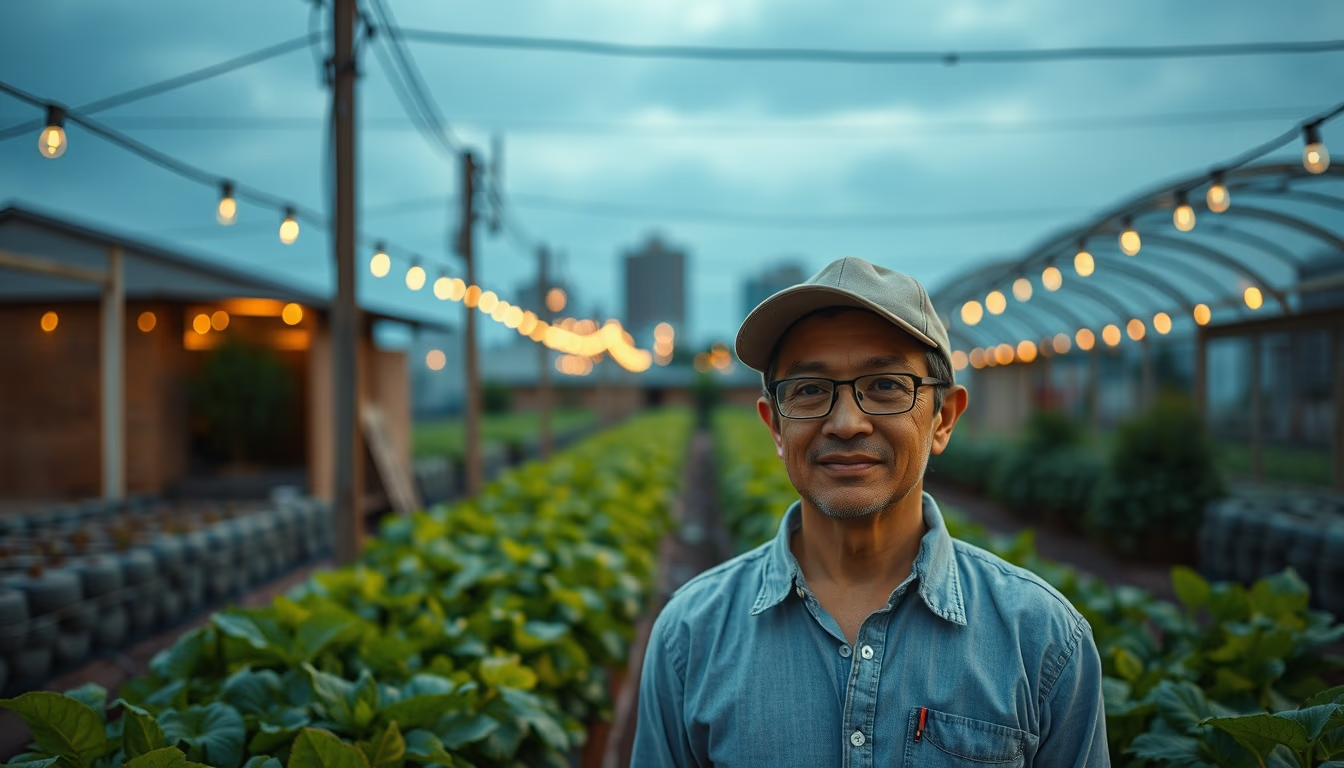
Urban vertical farm buildings integrate hydroponic technology and automation to produce fresh food in densely populated areas.
About this subject
Urban vertical farms are a significant agricultural innovation, enabling food cultivation in controlled environments within specially designed buildings. They use hydroponic or aeroponic systems where plants grow in nutrient solutions without soil, maximizing vertical space. LED lighting with specific spectra replaces sunlight, and sensors monitor temperature, humidity and nutrients in real time, ensuring year-round continuous production.
In Brazil, cities like São Paulo host pilot projects such as Pink Farms, which produces leafy greens in an adapted warehouse. Globally, iconic examples include Sky Greens in Singapore and AeroFarms in Newark, USA, yielding tons of vegetables annually. The main benefit is reducing the distance between production and consumption, cutting carbon emissions and post-harvest losses.
These farms consume up to 95% less water than traditional agriculture because water recirculates in the systems. Automation allows a single person to manage large areas, and the absence of pesticides makes food healthier. Challenges include high energy and setup costs, but advances in solar power and LED efficiency are lowering these barriers.
Interestingly, some vertical farms are being integrated into residential and commercial buildings, like Sky Greens project which became a tourist attraction. In Brazil, startups like 1000 Frescos aim to bring this model to supermarkets, growing herbs and microgreens locally. As urbanization increases, vertical farms are expected to become essential components of smart cities.
Frequently Asked Questions
How does an urban vertical farm work?
An urban vertical farm uses hydroponic or aeroponic systems in enclosed environments. Plants grow on towers or shelves illuminated by LEDs, and sensors automate irrigation, nutrients and climate, allowing frequent harvests without soil.
What are the main challenges of vertical farms?
The main challenges are high energy consumption for lighting and climate control, high setup costs and the need for specialized labor. However, energy efficiency is improving with more efficient LEDs and solar panels.
Are there vertical farms in Brazil?
Yes, examples include Pink Farms in São Paulo, producing lettuce and herbs, and 1000 Frescos, which installs mini-farms in supermarkets. These projects are still small but show potential for expansion in the country.
Direct URL
https://pub-c7d6a6ea828543ac903a74a341ccb2e1.r2.dev/imagens/urban-farm-vertical-building-fine-art-photography-p4.avifHow to credit
Include a visible link back to UtilizAí. Copy one of the snippets below:
<a href="https://xn--utiliza-eza.com/en/midia/imagens/urban-farm-vertical-building-fine-art-photography-p4">Urban farm vertical building</a> by <a href="https://xn--utiliza-eza.com">UtilizAí</a>, licensed under <a href="https://creativecommons.org/licenses/by/4.0/">CC BY 4.0</a>.
[Urban farm vertical building](https://xn--utiliza-eza.com/en/midia/imagens/urban-farm-vertical-building-fine-art-photography-p4) by [UtilizAí](https://xn--utiliza-eza.com), CC BY 4.0
License: CC-BY-4.0