Urban farm rooftop
1344×768 · AVIF · CC BY 4.0
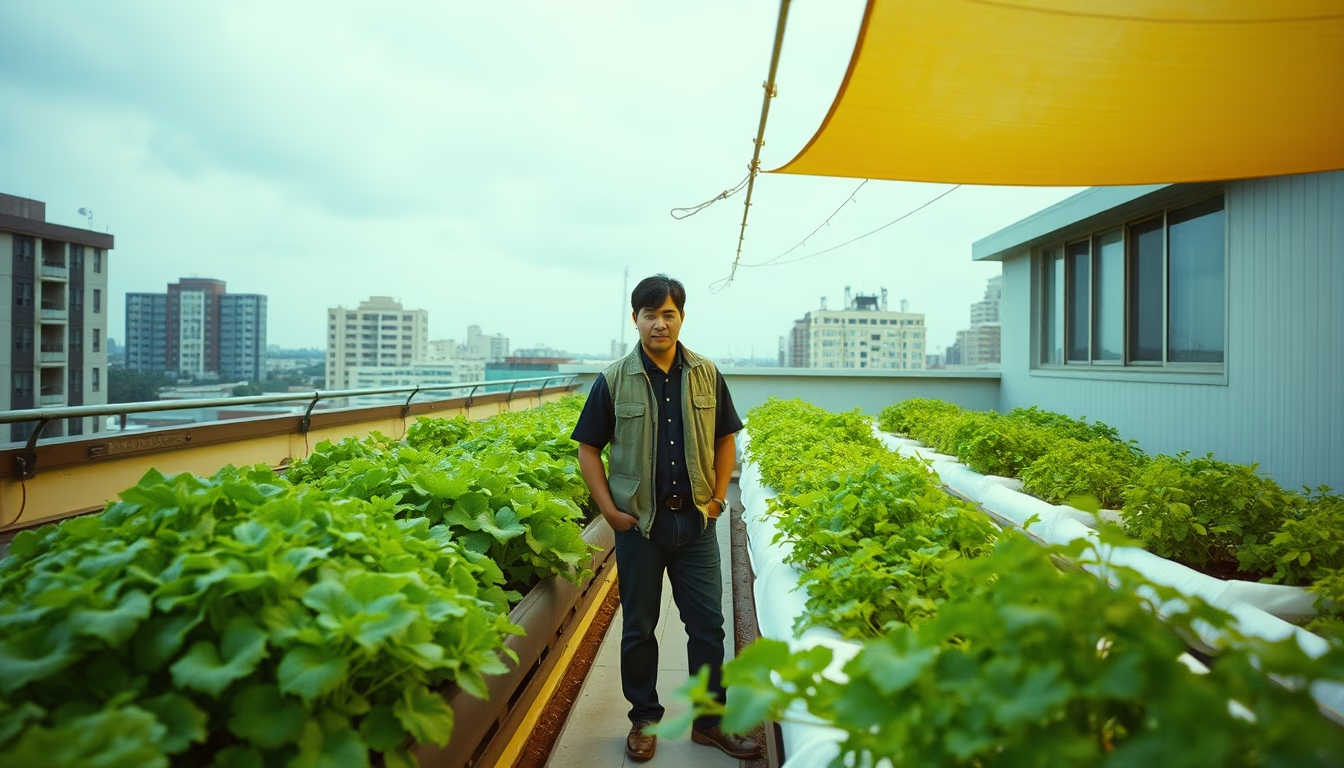
Rooftop urban farms turn idle flat roofs into productive spaces, reducing heat islands and supplying fresh food in cities.
About this subject
Rooftop urban farms are an increasingly popular solution for food security and sustainability in large cities. In metropolises such as São Paulo, New York, and Paris, flat roofs of commercial and residential buildings are transformed into cultivation areas using urban farming techniques like hydroponics, raised beds, and lightweight modified soil. These spaces can produce leafy greens like lettuce and arugula, as well as tomatoes, bell peppers, and herbs, with year‑round harvests in protected systems.
According to the FAO, urban agriculture already feeds about 800 million people worldwide. In Brazil, the movement has gained momentum with initiatives such as the São Paulo Urban Agriculture Network and private projects that lease rooftops for farming. One example is the Cinemark Urban Farm in São Paulo, which occupies a rooftop and produces roughly 40,000 heads of lettuce per month. Beyond food, these farms help reduce the urban heat island effect: plant evapotranspiration can lower local temperatures by up to 3°C. They also retain rainwater, easing drainage systems.
Culturally, rooftop farms reconnect urban dwellers with the origin of their food. Many offer workshops and educational tours, raising environmental awareness. Technically, the roof structure must support additional load: a hydroponic system weighs about 40 kg/m², while moist soil can reach 100 kg/m². Therefore, lightweight substrates and automated drip irrigation are common. The popularity of this model is expected to grow with ESG trends and the circular economy, especially in densely populated areas with little green space.
Frequently Asked Questions
What are the main benefits of a rooftop urban farm?
They produce fresh food locally, reduce heat islands, improve building insulation, retain stormwater, and promote urban biodiversity, while also offering recreational spaces and environmental education.
What kind of structure is needed to install a rooftop farm?
You need to verify the roof’s load‑bearing capacity, proper waterproofing, and drainage. Lightweight systems like hydroponics or organic substrates (coconut coir, perlite) are recommended. Engineering design is often required.
Which crops grow best on rooftops?
Short‑cycle leafy greens such as lettuce, arugula, spinach, chives, and basil are ideal. Cherry tomatoes, bell peppers, and strawberries also thrive. In hydroponic systems, a wide range of greens and herbs can be cultivated.
Direct URL
https://pub-c7d6a6ea828543ac903a74a341ccb2e1.r2.dev/imagens/urban-farm-rooftop-lo-fi-disposable-camera-p2.avifHow to credit
Include a visible link back to UtilizAí. Copy one of the snippets below:
<a href="https://xn--utiliza-eza.com/en/midia/imagens/urban-farm-rooftop-lo-fi-disposable-camera-p2">Urban farm rooftop</a> by <a href="https://xn--utiliza-eza.com">UtilizAí</a>, licensed under <a href="https://creativecommons.org/licenses/by/4.0/">CC BY 4.0</a>.
[Urban farm rooftop](https://xn--utiliza-eza.com/en/midia/imagens/urban-farm-rooftop-lo-fi-disposable-camera-p2) by [UtilizAí](https://xn--utiliza-eza.com), CC BY 4.0
License: CC-BY-4.0