Urban farm rooftop
1344×768 · AVIF · CC BY 4.0
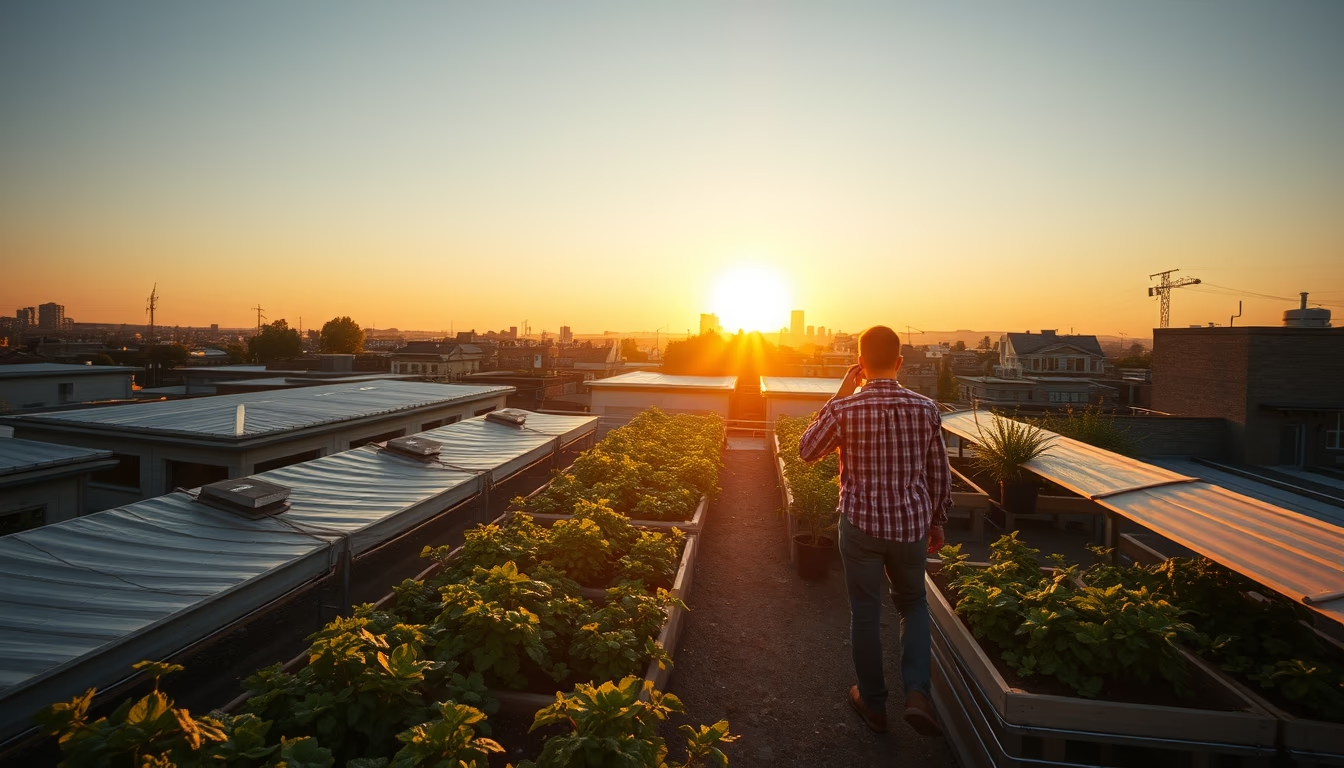
Rooftop urban farms combine sustainable cultivation and space reuse in cities, turning rooftops into sources of fresh food.
About this subject
Rooftop urban farming, also known as rooftop agriculture, adapts food cultivation to the urban environment by using building roofs and terraces to grow vegetables, herbs, and small fruits. This practice gained momentum in the 2000s, especially in metropolises like New York, Paris, and Tokyo, where high land costs and lack of green spaces drove innovative solutions. In tropical climates such as Brazil, cities like São Paulo and Rio de Janeiro see rooftop gardens as a way to enhance food security and mitigate heat island effects.
From a technical perspective, a rooftop farm requires structural planning to support the weight of soil and water layers, along with efficient drainage systems to prevent leaks. Lightweight substrates like coconut fiber and vermiculite are preferred, and automated drip irrigation minimizes water waste. Crop selection depends on sun exposure and microclimate; common choices include lettuce, cherry tomatoes, basil, and mint.
Culturally and environmentally, these spaces go beyond food production. They act as ecological corridors for urban pollinators, absorb rainwater, lower surrounding temperatures, and create community gathering spots. Projects like Fazenda Urbana do Caju in Rio de Janeiro or Rooftop Republic in Hong Kong show how agriculture and architecture can integrate. Estimates suggest rooftop gardens can reduce a building's energy consumption by up to 30% due to thermal insulation.
Interestingly, the concept dates back to the Hanging Gardens of Babylon and Egyptian terrace gardens. Today, with advances in hydroponics and aquaponics, it is possible to grow on rooftops with minimal soil using closed recirculation systems. Beyond productivity, these spaces become hubs for environmental education and leisure, fostering a new relationship between cities and nature.
Frequently Asked Questions
What are the main benefits of a rooftop urban farm?
It reduces heat islands, improves building thermal insulation, absorbs rainwater, provides fresh food, and creates habitat for urban pollinators.
Can I set up a rooftop garden without permission?
No, you need to check the building's structure and obtain approval from the condominium or owner, as well as consult local regulations on construction and drainage.
Which plants are best suited for rooftop cultivation?
Fast-growing leafy greens like lettuce, arugula, and spinach; herbs like basil and mint; and small fruits like strawberries and cherry tomatoes.
Direct URL
https://pub-c7d6a6ea828543ac903a74a341ccb2e1.r2.dev/imagens/urban-farm-rooftop-cinematic-wide-shot-p4.avifHow to credit
Include a visible link back to UtilizAí. Copy one of the snippets below:
<a href="https://xn--utiliza-eza.com/en/midia/imagens/urban-farm-rooftop-cinematic-wide-shot-p4">Urban farm rooftop</a> by <a href="https://xn--utiliza-eza.com">UtilizAí</a>, licensed under <a href="https://creativecommons.org/licenses/by/4.0/">CC BY 4.0</a>.
[Urban farm rooftop](https://xn--utiliza-eza.com/en/midia/imagens/urban-farm-rooftop-cinematic-wide-shot-p4) by [UtilizAí](https://xn--utiliza-eza.com), CC BY 4.0
License: CC-BY-4.0