Urban farm rooftop
1344×768 · AVIF · CC BY 4.0
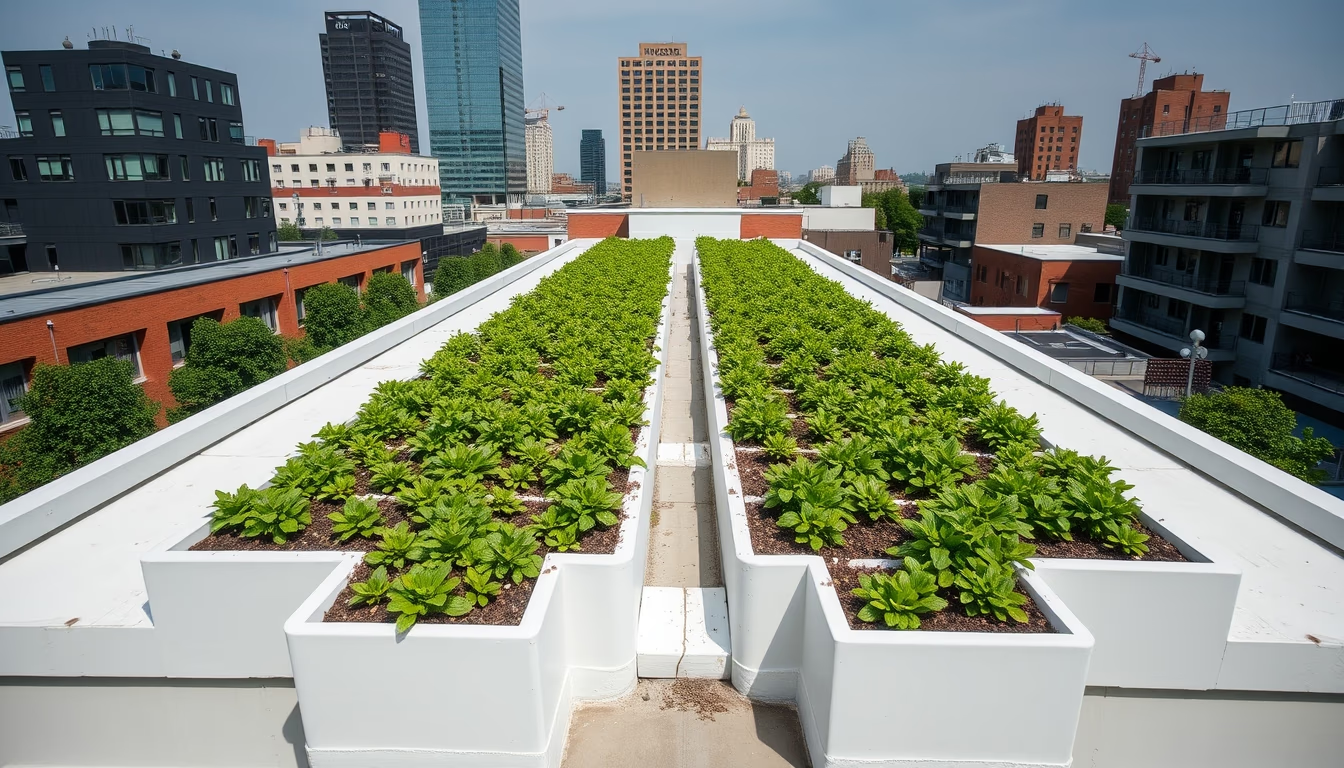
Urban rooftop farms turn idle spaces into productive areas, enhancing food security and sustainability in Brazilian cities.
About this subject
Urban rooftop farms, also known as rooftop gardens, are a form of urban agriculture gaining traction in cities like São Paulo, Rio de Janeiro, and Brasília. They utilize underused spaces on residential, commercial, and industrial buildings to grow food, helping mitigate heat islands, manage stormwater, and improve air quality. According to Embrapa, the production potential in Brazil is significant: each square meter can yield up to 50 kilograms of vegetables per year, depending on the system used.
The cultural significance of these initiatives goes beyond food. In São Paulo, Law 16,642/2017 incentivizes green roofs and vegetable gardens with property tax discounts. Projects like Telhado Verde in downtown São Paulo show it’s possible to integrate food production with sustainable architecture, creating spaces for social interaction and environmental education. Internationally, cities such as Tokyo and Toronto have large-scale rooftop farming programs, with Brooklyn Grange in New York producing over 50 tons of food annually.
Technically, rooftop farms can be implemented using lightweight soil systems or hydroponics. Soil-based systems require waterproofing, drainage, and low-density substrate to avoid overloading the structure. Hydroponics uses nutrient solutions and inert substrates, allowing precise nutrient control and reduced water consumption. Irrigation is often automated via drip or mist systems, and energy can be supplied by rooftop solar panels. Common crops include lettuce, arugula, cherry tomatoes, strawberries, herbs, and bell peppers. Harvests can be weekly, providing extra income for families or communities.
Interestingly, studies show that cultivated rooftops can reduce a building’s energy consumption by up to 30% due to added thermal insulation. In addition, the practice is used in social reintegration and occupational therapy programs in hospitals and prisons. In Brazil, the Hortas Cariocas project in Rio de Janeiro transformed over 50 community rooftops into productive areas, benefiting thousands of families. As cities grow, rooftop farming emerges as a viable solution to bring food production closer to consumption, reducing logistics costs and carbon emissions.
Frequently Asked Questions
What are the main benefits of a rooftop garden?
It reduces building temperature, improves air quality, manages stormwater, provides fresh food, and can generate extra income. It also enhances urban biodiversity.
Can any type of food be grown on a rooftop?
No. Leafy greens, herbs, shallow-rooted vegetables (like radishes), and small fruits (like strawberries) are recommended. Large fruit trees are not suitable due to weight.
How to start a rooftop farm on a building?
First, evaluate the structure and waterproofing of the roof. Hire an engineer to check the load capacity. Then choose a soil or hydroponic system, install drainage and irrigation, and select adapted crops.
Direct URL
https://pub-c7d6a6ea828543ac903a74a341ccb2e1.r2.dev/imagens/urban-farm-rooftop-architectural-photography-p0.avifHow to credit
Include a visible link back to UtilizAí. Copy one of the snippets below:
<a href="https://xn--utiliza-eza.com/en/midia/imagens/urban-farm-rooftop-architectural-photography-p0">Urban farm rooftop</a> by <a href="https://xn--utiliza-eza.com">UtilizAí</a>, licensed under <a href="https://creativecommons.org/licenses/by/4.0/">CC BY 4.0</a>.
[Urban farm rooftop](https://xn--utiliza-eza.com/en/midia/imagens/urban-farm-rooftop-architectural-photography-p0) by [UtilizAí](https://xn--utiliza-eza.com), CC BY 4.0
License: CC-BY-4.0