Tuscan villa cypress cypresses
1344×768 · AVIF · CC BY 4.0
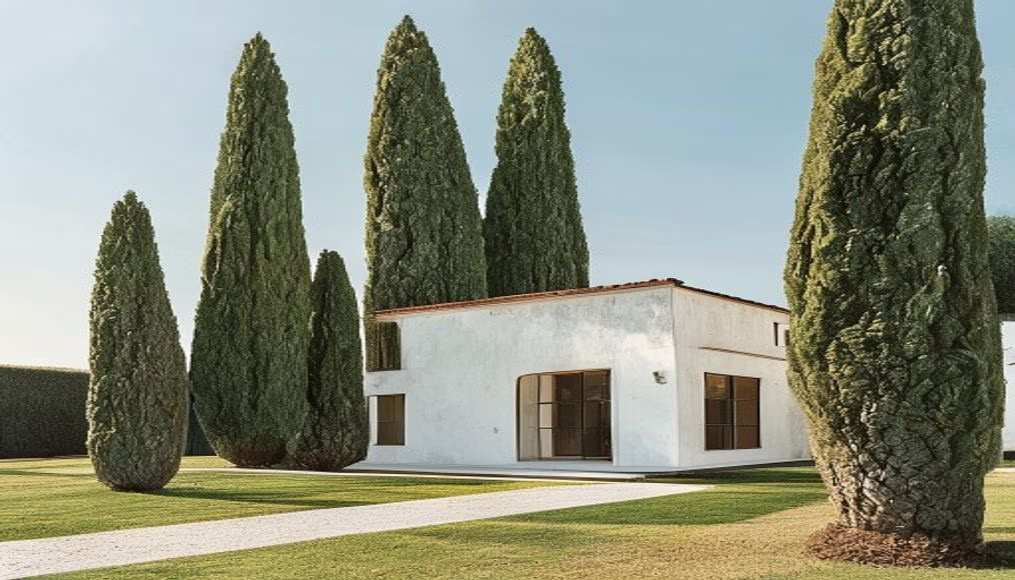
Tuscan villa with cypresses: icons of the landscape and rural architecture of Tuscany, among hills and Renaissance tradition.
About this subject
Tuscan villas exemplify Italian rural architecture, combining local materials like stone and terracotta with simple, elegant lines. Typical of the Tuscany region, these buildings emerged between the 15th and 18th centuries as agricultural estates and summer residences for Florentine nobility. The style emphasizes integration with the landscape: inner courtyards, loggias, and windows facing vineyards and olive groves. Cypress trees (Cupressus sempervirens) are inseparable from this scenery. Native to the eastern Mediterranean, they were introduced to Italy centuries ago and became symbols of Tuscany. Their columnar shape and elegant bearing are used to border paths, create avenues, and serve as windbreaks on the hills. The combination of villas and cypresses is one of the most recognizable images of inland Italy, immortalized by Renaissance painters like Leonardo da Vinci and contemporary photographers. Beyond aesthetic value, cypresses have cultural significance: they are often planted in cemeteries and associated with eternity. In Tuscany, they also play an ecological role, sheltering birds and preventing soil erosion. The Tuscan landscape, with its gentle undulations and rows of cypresses, is protected by regional planning laws and attracts millions of tourists annually. The architecture of the villas, adapted to the Mediterranean climate with thick walls and tile roofs, has influenced residential designs worldwide, especially the Mediterranean Revival style.
Frequently Asked Questions
Why are cypress trees so common in Tuscany?
Cypress trees were introduced centuries ago and adapted perfectly to the Mediterranean climate. They are used as windbreaks, property boundaries, and ornamental elements in avenues and gardens, becoming symbols of the Tuscan landscape.
What is the typical architecture of a Tuscan villa?
A traditional Tuscan villa is built with local stone, terracotta roof tiles, thick walls for thermal insulation, and features loggias, inner courtyards, and windows facing the agricultural landscape. The design emphasizes simplicity and integration with the surroundings.
Are cypress trees native to Italy?
No, the Mediterranean cypress (Cupressus sempervirens) is native to the eastern Mediterranean (Greece, Turkey, Iran). It was introduced to Italy during Roman antiquity and over centuries became naturalized and iconic in the Tuscan landscape.
Direct URL
https://pub-c7d6a6ea828543ac903a74a341ccb2e1.r2.dev/imagens/tuscan-villa-cypress-cypresses-minimal-art-direction-luxo0.avifHow to credit
Include a visible link back to UtilizAí. Copy one of the snippets below:
<a href="https://xn--utiliza-eza.com/en/midia/imagens/tuscan-villa-cypress-cypresses-minimal-art-direction-luxo0">Tuscan villa cypress cypresses</a> by <a href="https://xn--utiliza-eza.com">UtilizAí</a>, licensed under <a href="https://creativecommons.org/licenses/by/4.0/">CC BY 4.0</a>.
[Tuscan villa cypress cypresses](https://xn--utiliza-eza.com/en/midia/imagens/tuscan-villa-cypress-cypresses-minimal-art-direction-luxo0) by [UtilizAí](https://xn--utiliza-eza.com), CC BY 4.0
License: CC-BY-4.0