Tuscan villa cypress cypresses
1344×768 · AVIF · CC BY 4.0
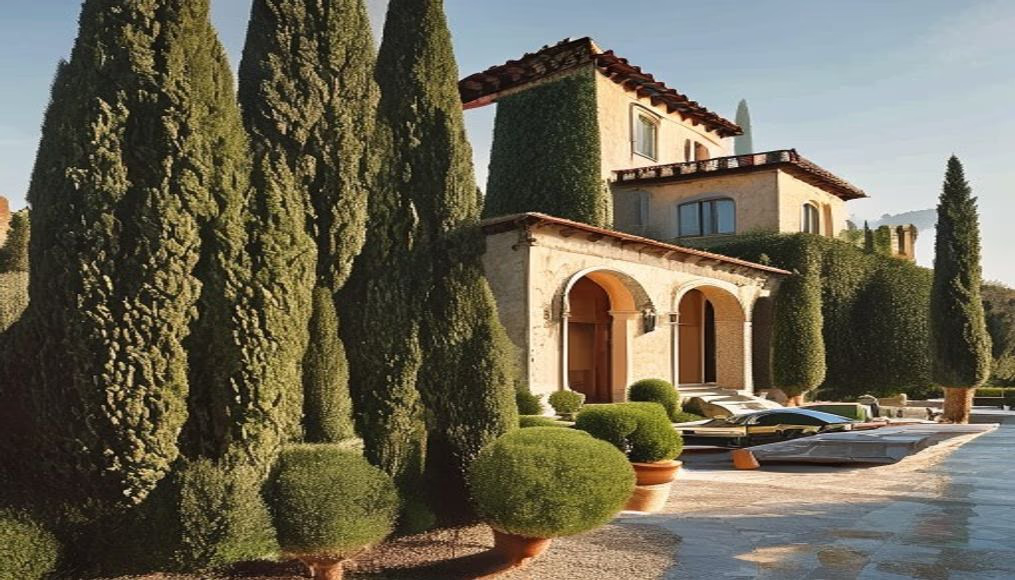
Tuscan villas and cypresses create an iconic Italian landscape, symbol of rural elegance and centuries-old agricultural tradition.
About this subject
Tuscan villas, typical of central Italy, are rural residences dating from the Renaissance period. Many were built between the 15th and 18th centuries by Florentine aristocratic families, such as the Medicis, who turned agricultural estates into countryside palaces. They feature stone facades, terracotta roofs, arched windows, and inner courtyards, blending seamlessly into the gentle hills of the landscape.
Cypress trees (Cupressus sempervirens) are native to the Mediterranean region and have been cultivated in Tuscany since Etruscan times. Their tall, columnar shape contrasts with the rolling hills, creating avenues and hedges that define properties and country roads. Beyond aesthetics, cypresses act as windbreaks, protecting olive groves and vineyards that produce renowned olive oil and wine, such as Chianti.
The combination of villas and cypresses has become a global visual icon, immortalized by Renaissance painters and modern photographers. Regions like Val d'Orcia and Chianti are particularly known for these landscapes. Cypress cultivation is linked to sustainable soil management practices, helping preserve local biodiversity.
Interestingly, the presence of cypresses on Tuscan properties also held symbolic meaning: they were planted as property markers and, in some traditions, represented hospitality, guiding travelers to villa entrances. Today, preserving these landscapes is encouraged by European Union agricultural policies and origin certifications, such as DOP for local cheeses and olive oils.
Frequently Asked Questions
What are Tuscan villas and what is their historical origin?
Tuscan villas are rural Renaissance residences built by Florentine noble families between the 15th and 18th centuries. Originally agricultural estates, they were transformed into elegant country houses with gardens and vineyards.
Why are cypress trees so common in the Tuscan landscape?
Cypresses have been cultivated since Etruscan times for their use as windbreaks and property markers. Their vertical shape contrasts with the rolling hills, creating an iconic landscape that also protects olive groves and vineyards.
How is the landscape of villas and cypresses preserved today?
Preservation is supported by European Union agricultural policies and DOP certifications that promote sustainable practices. Legal protection also exists in areas like Val d'Orcia, a UNESCO World Heritage site.
Direct URL
https://pub-c7d6a6ea828543ac903a74a341ccb2e1.r2.dev/imagens/tuscan-villa-cypress-cypresses-cinematic-still-life-luxo1.avifHow to credit
Include a visible link back to UtilizAí. Copy one of the snippets below:
<a href="https://xn--utiliza-eza.com/en/midia/imagens/tuscan-villa-cypress-cypresses-cinematic-still-life-luxo1">Tuscan villa cypress cypresses</a> by <a href="https://xn--utiliza-eza.com">UtilizAí</a>, licensed under <a href="https://creativecommons.org/licenses/by/4.0/">CC BY 4.0</a>.
[Tuscan villa cypress cypresses](https://xn--utiliza-eza.com/en/midia/imagens/tuscan-villa-cypress-cypresses-cinematic-still-life-luxo1) by [UtilizAí](https://xn--utiliza-eza.com), CC BY 4.0
License: CC-BY-4.0