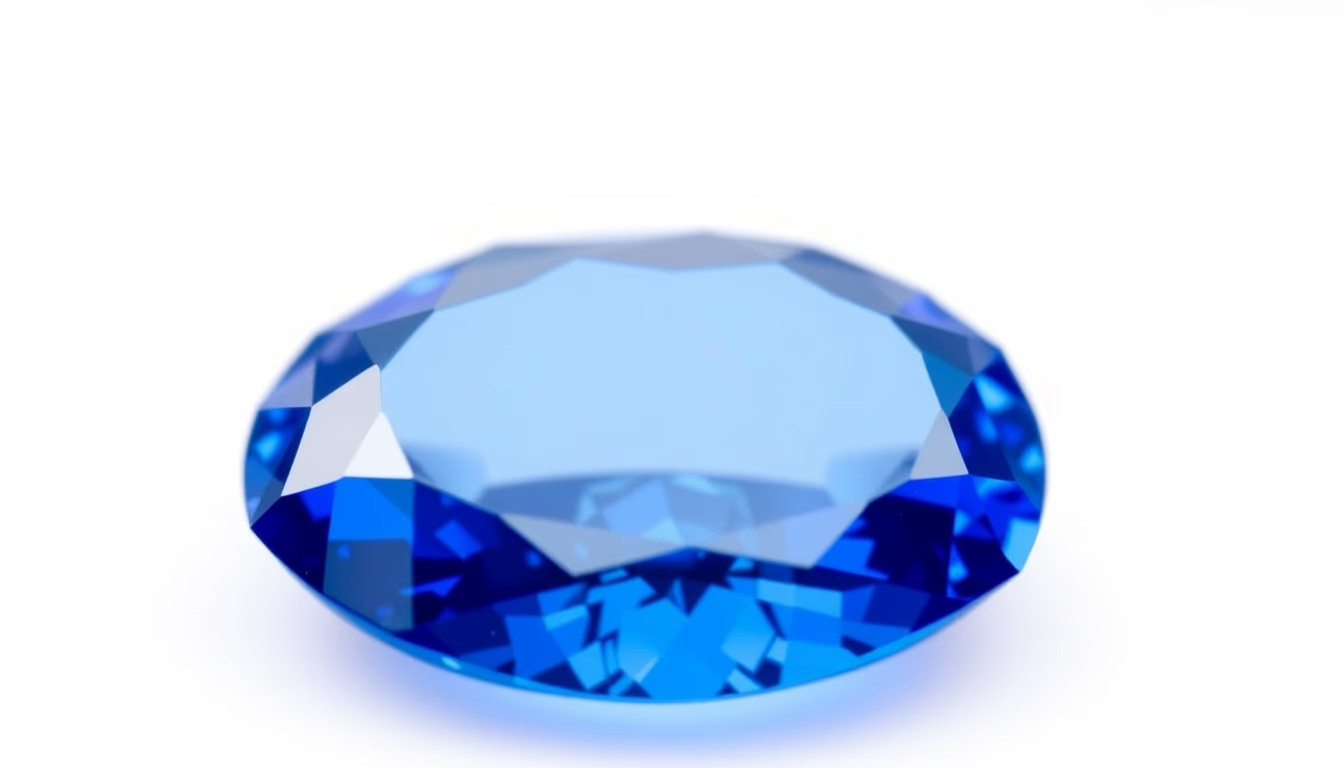
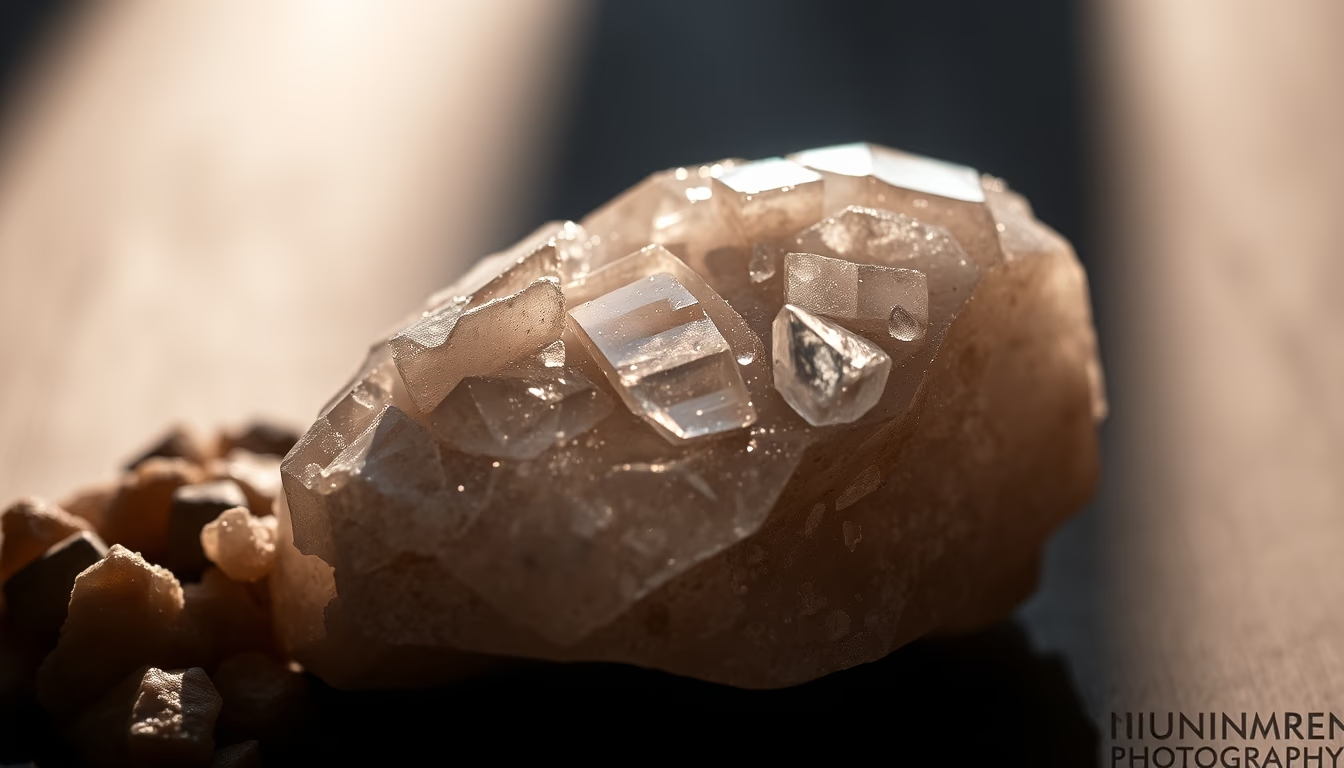
Turquoise polished
1344×768 · AVIF · CC BY 4.0

Polished turquoise: a blue-green gemstone used since Ancient Egypt, known for its unique color and association with protection.
About this subject
Turquoise is a hydrated phosphate mineral of copper and aluminum, with chemical formula CuAl6(PO4)4(OH)8·4H2O. Its characteristic color, ranging from sky-blue to apple-green, results from copper content. The most famous deposits are in Iran (ancient Persia), where the gem has been mined for millennia, and in the southwestern United States, especially Arizona and New Mexico. Turquoise is also found in Afghanistan, China, Mexico, and Brazil, though in smaller quantities.
Historically, turquoise was one of the first gemstones to be cut and polished. The ancient Egyptians used it in jewelry and amulets, such as those found in Tutankhamun's tomb. Persians believed the stone protected against the evil eye, while Native American peoples considered it sacred, using it in ceremonies and as trade currency. In Tibetan culture, turquoise is one of the five precious gems and symbolizes the sky and purity.
Natural turquoise is relatively soft, with a hardness between 5 and 6 on the Mohs scale, and porous. Therefore, it is often stabilized with resins or treated with oils and waxes to improve color and durability. Common imitations include reconstituted turquoise (pressed fragments with resin) and synthetic stones such as dyed howlite. To identify genuine turquoise, observe uniform color, absence of bubbles (present in plastics), and heat reaction: natural does not melt.
Interesting fact: the name "turquoise" comes from the French "pierre turquoise," meaning "Turkish stone," because Persian gems reached Europe through trade in Turkey. Turquoise is also the birthstone for December and associated with the zodiac sign Sagittarius.
Frequently Asked Questions
How can I identify genuine turquoise from imitations?
Genuine turquoise has uniform color, is opaque, and may show fine veins (matrix). Imitations like dyed howlite have artificial color and may display bubbles or spots under magnification. A simple test: natural turquoise does not melt under heat, unlike plastics.
Where are the best turquoise deposits in the world?
The finest turquoise comes from Iran (ancient Persia), known for its even sky-blue color. Also famous is turquoise from Arizona, USA, such as the Sleeping Beauty mine, which produced a pure blue gem without matrix.
Why is turquoise considered a protective stone?
Since antiquity, turquoise has been associated with protection against negative energy and accidents. Persians and Turks used it in talismans, and Native American peoples believed it connected heaven and earth, bringing luck and strength.
Direct URL
https://pub-c7d6a6ea828543ac903a74a341ccb2e1.r2.dev/imagens/turquoise-polished-high-fashion-editorial-p5.avifHow to credit
Include a visible link back to UtilizAí. Copy one of the snippets below:
<a href="https://xn--utiliza-eza.com/en/midia/imagens/turquoise-polished-high-fashion-editorial-p5">Turquoise polished</a> by <a href="https://xn--utiliza-eza.com">UtilizAí</a>, licensed under <a href="https://creativecommons.org/licenses/by/4.0/">CC BY 4.0</a>.
[Turquoise polished](https://xn--utiliza-eza.com/en/midia/imagens/turquoise-polished-high-fashion-editorial-p5) by [UtilizAí](https://xn--utiliza-eza.com), CC BY 4.0
License: CC-BY-4.0