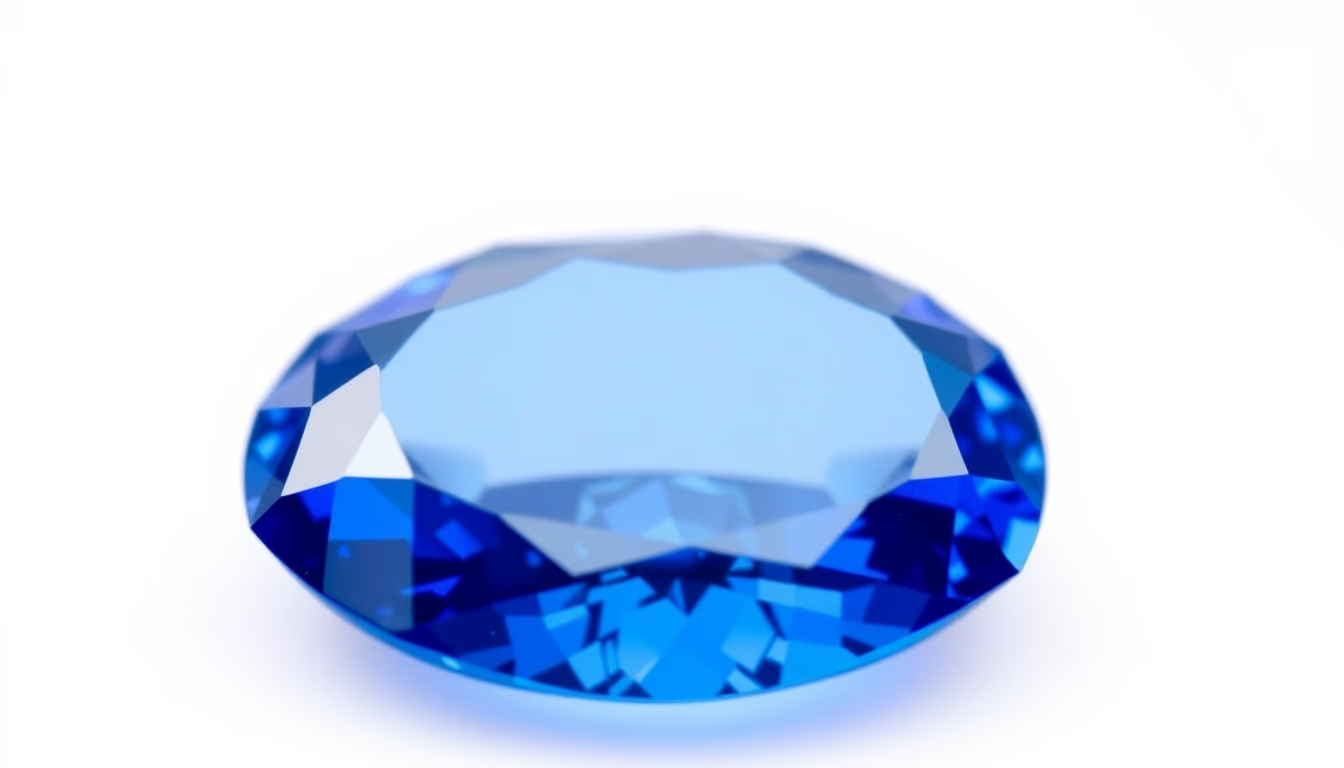
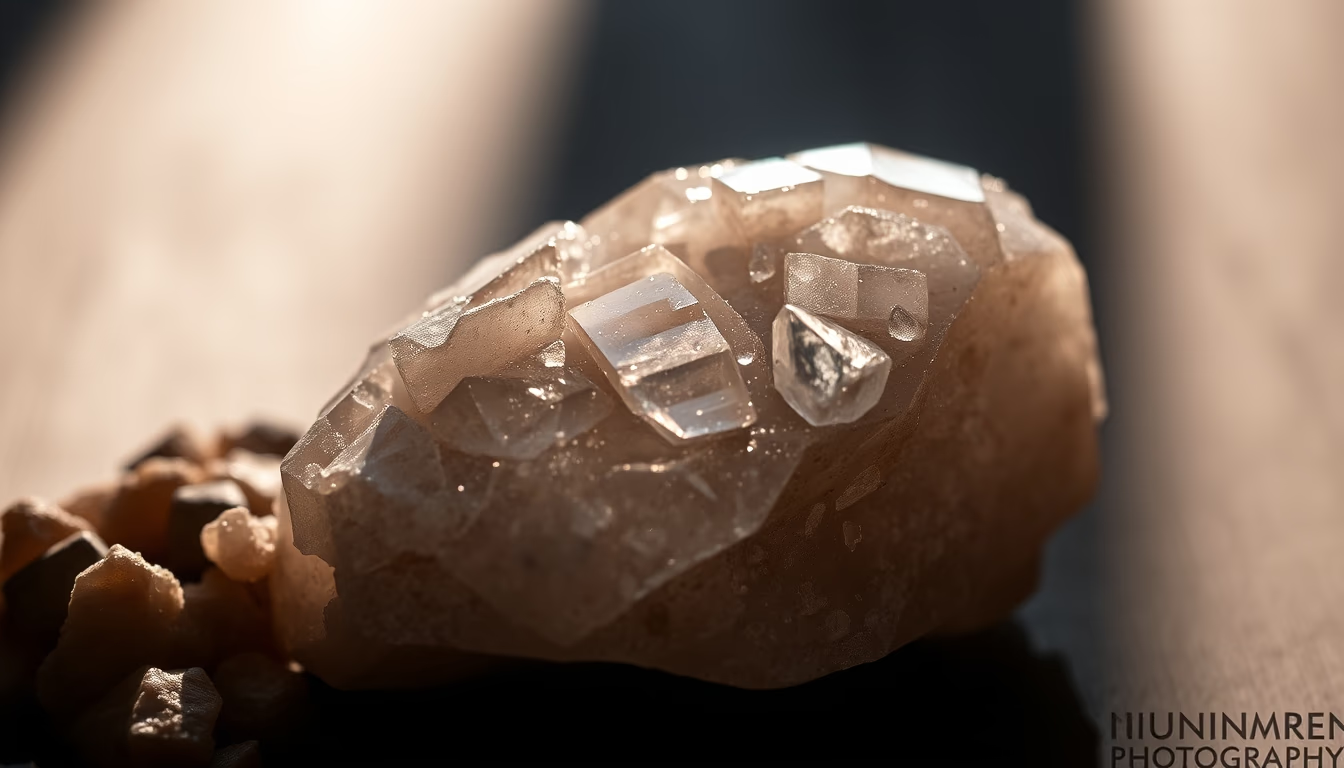
Turquoise polished
1344×768 · AVIF · CC BY 4.0

Polished turquoise is an opaque gemstone ranging from blue to green, treasured for millennia for its beauty and spiritual significance.
About this subject
Turquoise is a hydrated copper aluminum phosphate mineral with the chemical formula CuAl6(PO4)4(OH)8·4H2O. Its characteristic color ranges from sky blue to apple green, depending on the ratio of copper and iron. Significant deposits are found in Iran (ancient Persia), the Sinai region of Egypt, the southwestern United States (Arizona, New Mexico, Nevada), and China. The gem is relatively soft, with a hardness of 5 to 6 on the Mohs scale, and porous, making it susceptible to staining and requiring special care.
Historically, turquoise is one of the oldest gemstones used in jewelry and ornamentation. The ancient Egyptians mined it in Sinai over 4,000 years ago, and it has been found in pharaonic tombs, including Tutankhamun's. Persians associated it with the sky and protection against the evil eye. In Native American culture, especially among the Navajo, Pueblo, and Apache peoples, turquoise is sacred, used in ceremonies, amulets, and as trade currency. It was believed to bring luck, healing, and spiritual connection.
Today, turquoise is cut into cabochons or beads for necklaces, bracelets, and earrings. Due to its porosity, it is often treated with resins or stabilized to improve durability and color. Natural untreated turquoise is rare and more valuable. Synthetic and reconstituted imitations (made from pressed fragments) are common in the market. To identify a genuine piece, look for uniform color, absence of bubbles (in plastics), and a cool feel to the touch. The largest mine in the United States, the Sleeping Beauty Mine in Arizona, closed in 2012, increasing the value of authentic pieces.
Fun fact: the name "turquoise" comes from the French "pierre turquoise," meaning "Turkish stone," because the gem reached Europe through Turkey from Persian mines. Turquoise is the national stone of Iran and the birthstone for December in some traditions. In contemporary jewelry, it pairs well with silver and gold and is often used in Southwestern-inspired designs.
Frequently Asked Questions
How to identify genuine turquoise?
Look for uniform color without suspicious spots, absence of bubbles (common in plastics), and a cool feel to the touch. Natural turquoise is porous and may stain, while synthetic imitations are usually more homogeneous. A simple test: scratch the piece on unglazed ceramic; the powder should be white, not colored.
What are the main treatments for turquoise?
Common treatments include stabilization with epoxy or polyester resin to fill pores and improve color, and artificial dyeing to intensify the hue. "Reconstituted" turquoise is made from pressed fragments with resin. Treated or reconstituted pieces are less valuable than natural untreated ones.
Why was turquoise so valued by ancient cultures?
Because of its celestial color and rarity, turquoise was associated with the sky, protection, and spiritual power. Egyptians, Persians, and Native Americans used it as an amulet, in religious rituals, and as a status symbol, believing it brought health, luck, and connection to the divine.
Direct URL
https://pub-c7d6a6ea828543ac903a74a341ccb2e1.r2.dev/imagens/turquoise-polished-fine-art-photography-p0.avifHow to credit
Include a visible link back to UtilizAí. Copy one of the snippets below:
<a href="https://xn--utiliza-eza.com/en/midia/imagens/turquoise-polished-fine-art-photography-p0">Turquoise polished</a> by <a href="https://xn--utiliza-eza.com">UtilizAí</a>, licensed under <a href="https://creativecommons.org/licenses/by/4.0/">CC BY 4.0</a>.
[Turquoise polished](https://xn--utiliza-eza.com/en/midia/imagens/turquoise-polished-fine-art-photography-p0) by [UtilizAí](https://xn--utiliza-eza.com), CC BY 4.0
License: CC-BY-4.0