Turkish tea hourglass
1344×768 · AVIF · CC BY 4.0
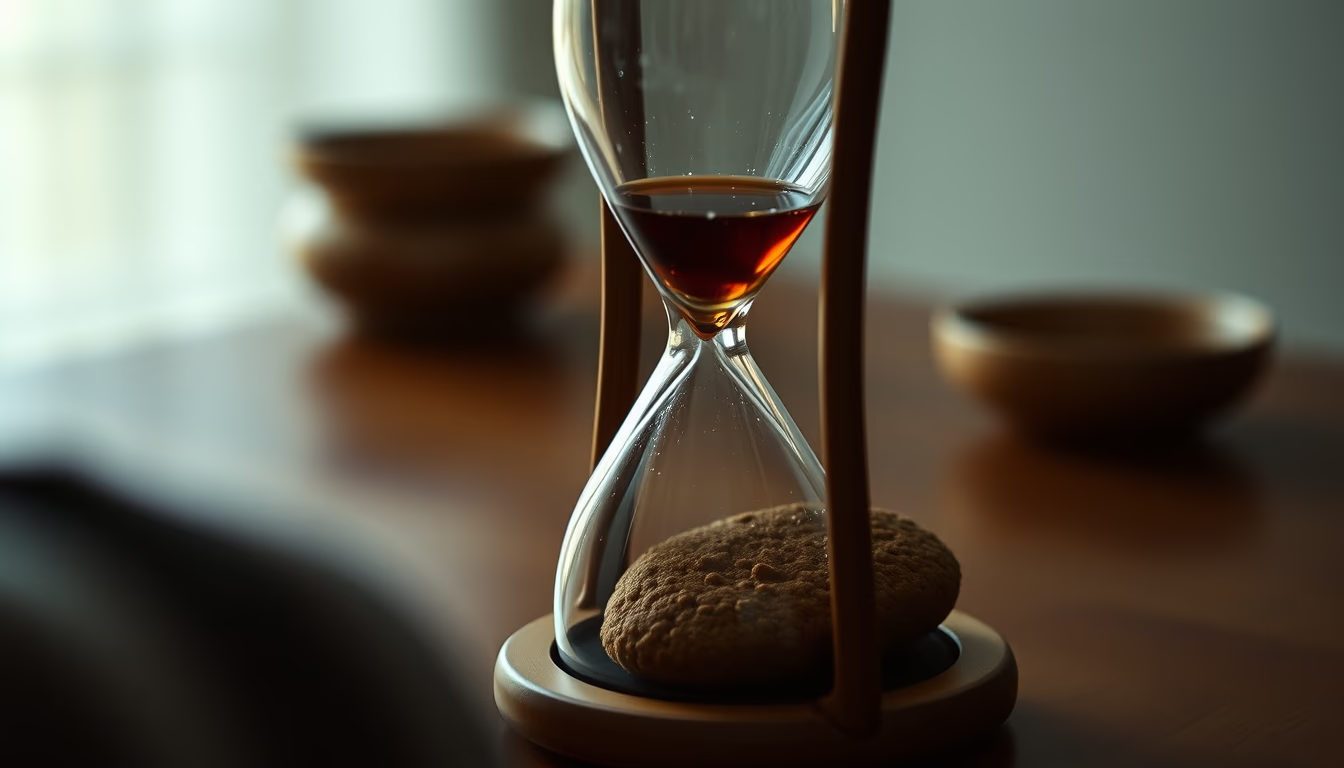
The Turkish tea hourglass, also called tea sandglass, is a tool used to measure the steeping time of black Turkish tea, ensuring the perfect flavor extraction.
About this subject
In Turkey, tea is far more than a beverage: it is a symbol of hospitality and social gathering. Traditionally prepared in a çaydanlık (double teapot), black Turkish tea requires precise steeping time to achieve its characteristic full-bodied and slightly bitter flavor. The tea hourglass emerges as a practical tool to mark this period, typically between 10 and 15 minutes, depending on desired strength.
The typical hourglass has two glass bulbs connected by a narrow neck, filled with fine sand that flows from one side to the other. When flipped, it signals the start of infusion. Although digital timers are common today, the hourglass remains popular in traditional tea houses and Turkish homes for its nostalgic aesthetics and silent functionality.
Tea is mainly cultivated in the Black Sea region, such as Rize, where humid climate and fertile soil produce high-quality leaves. The drink is served in small tulip-shaped glasses, without milk, often accompanied by sugar cubes. The tea hourglass reflects the attention to ritual: every step, from boiling water to resting the infusion, is valued.
Interestingly, the use of hourglasses for tea is not exclusive to Turkey; countries like Morocco and Japan also employ similar instruments for their teas. However, the Turkish version is especially associated with çay evi (tea house) and the custom of playing tavla (backgammon) while waiting for tea to brew. The hourglass has become both decorative and functional, representing patience and the pleasure of a tea break.
Frequently Asked Questions
How long does the Turkish tea hourglass typically measure?
It usually marks between 10 and 15 minutes, the ideal steeping time for black Turkish tea in a çaydanlık. Some models have fixed durations, like 12 minutes.
Is the tea hourglass used only in Turkey?
No. Similar instruments are used in countries like Morocco for mint tea and in Japan for green tea, but the Turkish version is iconic in çay culture.
Why is the hourglass preferred over digital timers in some places?
For its traditional aesthetics and silence. In tea houses, it complements the relaxing atmosphere and evokes the artisanal ritual of tea preparation.
Direct URL
https://pub-c7d6a6ea828543ac903a74a341ccb2e1.r2.dev/imagens/turkish-tea-hourglass-documentary-photography-fresh12.avifHow to credit
Include a visible link back to UtilizAí. Copy one of the snippets below:
<a href="https://xn--utiliza-eza.com/en/midia/imagens/turkish-tea-hourglass-documentary-photography-fresh12">Turkish tea hourglass</a> by <a href="https://xn--utiliza-eza.com">UtilizAí</a>, licensed under <a href="https://creativecommons.org/licenses/by/4.0/">CC BY 4.0</a>.
[Turkish tea hourglass](https://xn--utiliza-eza.com/en/midia/imagens/turkish-tea-hourglass-documentary-photography-fresh12) by [UtilizAí](https://xn--utiliza-eza.com), CC BY 4.0
License: CC-BY-4.0