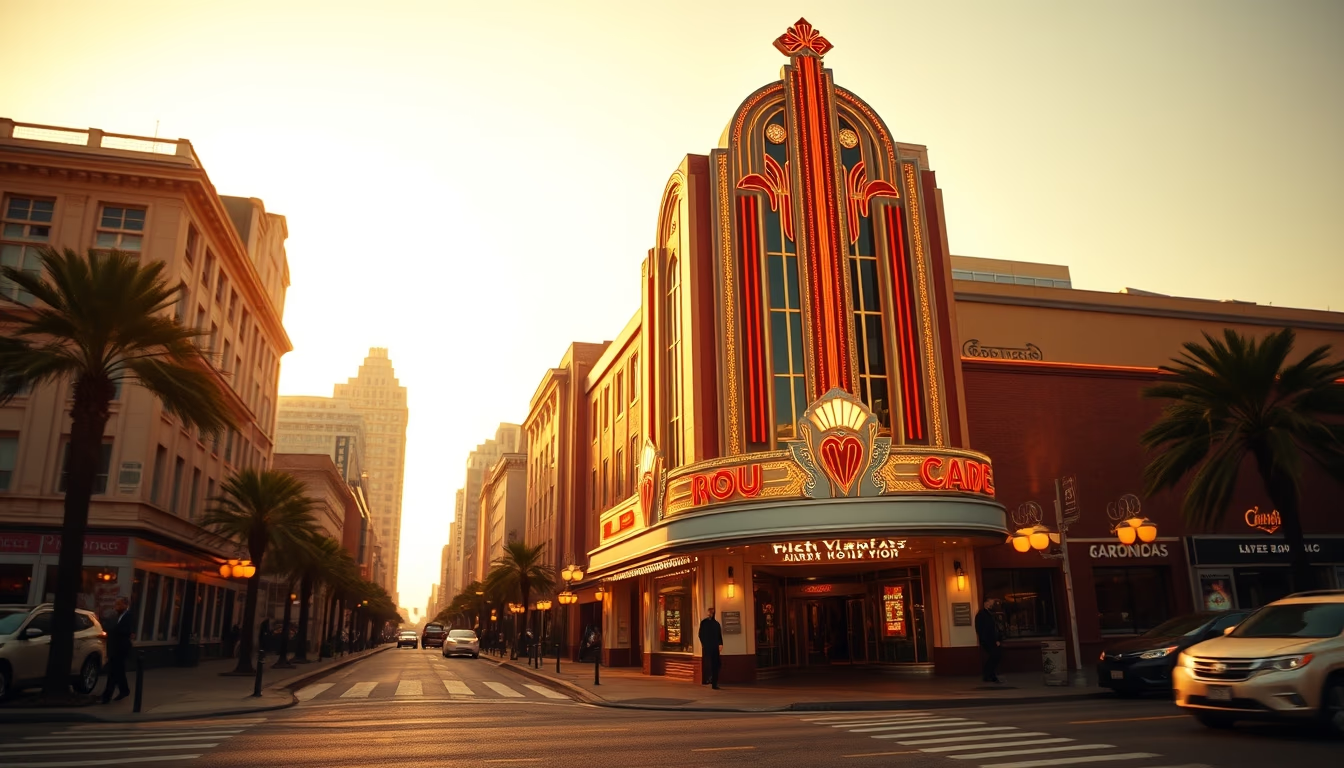
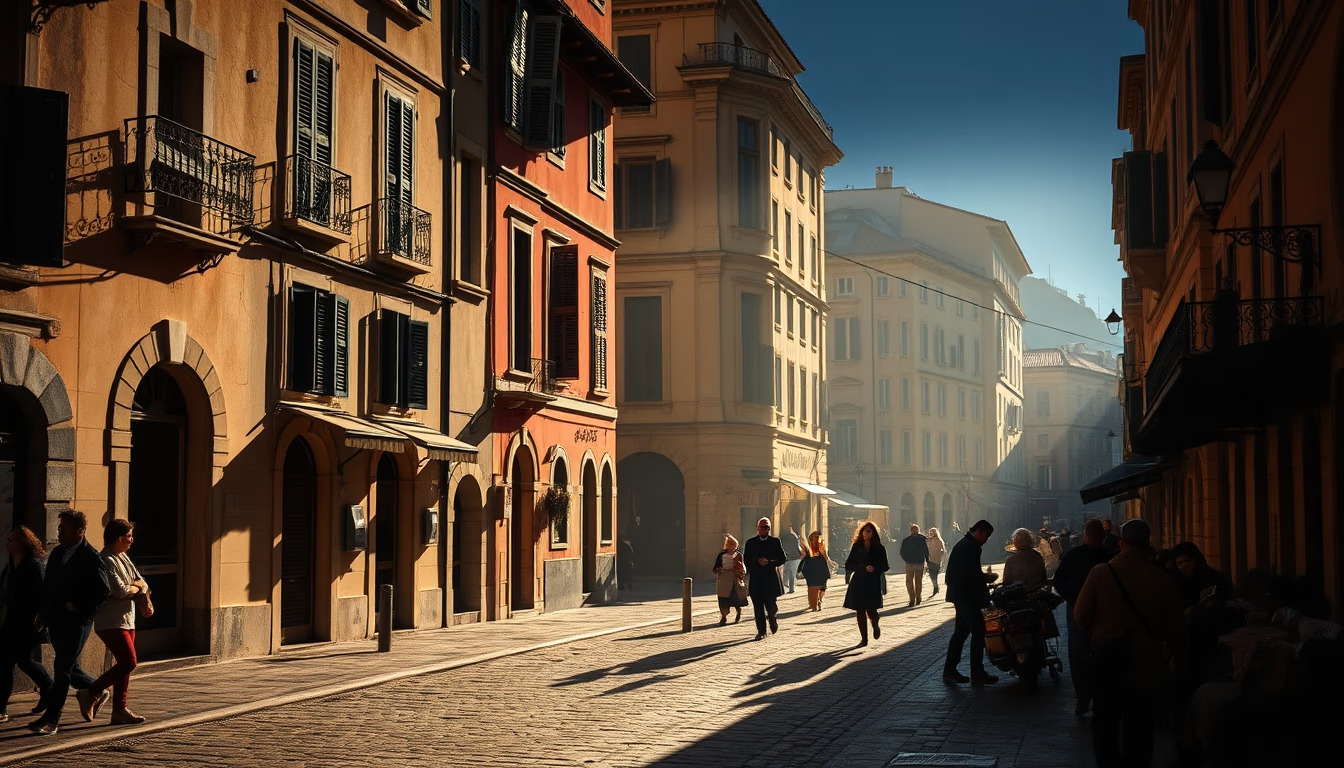
Travel postcards europe
1344×768 · AVIF · CC BY 4.0

European travel postcards reveal centuries of tourism, culture and iconic landscapes, from Paris to the Alps.
About this subject
European travel postcards are visual records that capture the essence of iconic destinations across the continent. Emerging in the late 19th century with the development of photography and postal systems, these cards became a popular way to share travel experiences. Images often highlight landmarks like the Eiffel Tower in Paris, the Colosseum in Rome, Venice canals, Alpine mountains and Mediterranean beaches. The panoramic wide-shot technique is common to show the grandeur of these locations.
Production of European postcards peaked between the 1890s and 1950s, with specialized publishers such as Léon & Lévy and Fotografia Rapini. The best-selling postcard in Europe is estimated to be Mont Saint-Michel in France, with millions of copies. Each region developed its own style: Swiss postcards favor Alpine landscapes, while Italian ones focus on Roman ruins and Renaissance art. This variety reflects the continent's cultural diversity.
Culturally, postcards shaped the perception of the average traveler before the digital age. They created a collective imaginary of places like St. Mark's Square or the Acropolis. Collectors seek antique series whose images often show urban changes or historical events. Today, despite digital postcards, physical ones are still sold at station kiosks and airports, maintaining the tradition as travel souvenirs.
Interestingly, the Portuguese word 'postal' derives from English 'postcard', but in Europe the common term is 'carte postale' (French) or 'Postkarte' (German). The standardization of the international 14 x 9 cm format allowed travelers to send short messages home, connecting continents.
Frequently Asked Questions
What is the origin of the postcard?
The postcard originated in Europe in the late 19th century, with the first recorded issue in Austria in 1869. The combination of cheap photography and efficient postal systems popularized the format, especially for tourists wanting to send images of their travels.
Which European destinations are most depicted?
The most common destinations include the Eiffel Tower (Paris), the Colosseum (Rome), the canals of Venice, the Swiss Alps, the Sagrada Familia (Barcelona) and the Palace of Versailles. Each region has its icons, but France and Italy lead in postcard sales.
How did postcards influence tourism?
Postcards acted as visual showcases, sparking travel desire and creating an idealized image of destinations. Before the internet, they were major sources of visual information, helping to establish places like Copacabana Beach (though outside Europe) and the Colosseum as must-see attractions.
Direct URL
https://pub-c7d6a6ea828543ac903a74a341ccb2e1.r2.dev/imagens/travel-postcards-europe-cinematic-wide-shot-fresh0.avifHow to credit
Include a visible link back to UtilizAí. Copy one of the snippets below:
<a href="https://xn--utiliza-eza.com/en/midia/imagens/travel-postcards-europe-cinematic-wide-shot-fresh0">Travel postcards europe</a> by <a href="https://xn--utiliza-eza.com">UtilizAí</a>, licensed under <a href="https://creativecommons.org/licenses/by/4.0/">CC BY 4.0</a>.
[Travel postcards europe](https://xn--utiliza-eza.com/en/midia/imagens/travel-postcards-europe-cinematic-wide-shot-fresh0) by [UtilizAí](https://xn--utiliza-eza.com), CC BY 4.0
License: CC-BY-4.0