Transistor surface mount
1344×768 · AVIF · CC BY 4.0
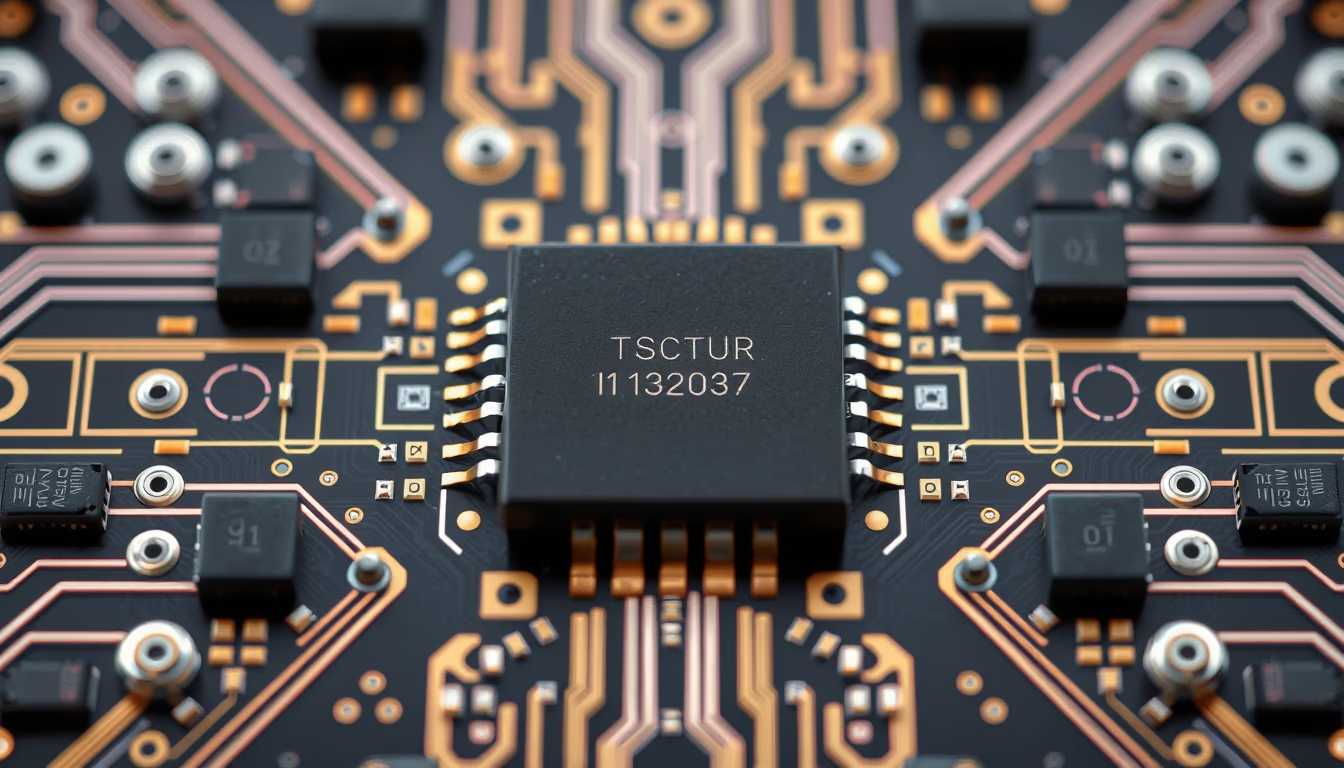
Surface-mount transistors (SMD) revolutionized modern electronics, enabling smaller, faster circuits with better thermal performance.
About this subject
Surface-mount transistors, also known as SMD (Surface-Mount Device) transistors, are crucial components in virtually all modern electronic devices. Unlike traditional through-hole transistors with long leads, SMDs are soldered directly onto the surface of the printed circuit board (PCB), taking up far less space. This size reduction enables extremely high component density, essential for smartphones, tablets, laptops, and IoT devices.
SMD technology emerged in the 1960s but gained widespread adoption in the 1980s with automated pick-and-place assembly. Surface-mount transistors come in various standardized packages, such as SOT-23, SOT-323, SOT-223, and DPAK (TO-252). Each package is designed to dissipate different power levels. For example, an SOT-23 is common for low-power signals (up to 250 mW), while a DPAK can handle several watts.
In practice, SMD transistors are used for fast switching in power supplies, signal amplification in radios, voltage regulation, and as LED drivers. Their low parasitic inductance (due to short leads) improves high-frequency performance, essential for WiFi (2.4/5 GHz) and Bluetooth. Additionally, surface mounting eliminates the need for holes in the board, simplifying manufacturing and reducing costs.
A curious detail: identification of SMD transistors often relies on alphanumeric markings printed on the package, known as "marking codes". Because space is limited, manufacturers use code tables that are not always standardized, requiring datasheet consultation. Heat dissipation is also critical: power components usually have a metal tab (heatsink pad) that must be soldered to a copper area on the PCB to conduct heat away.
Frequently Asked Questions
What is the main difference between an SMD transistor and a through-hole transistor?
The main difference is the mounting method. SMD transistors are soldered directly onto the PCB surface (no holes), while through-hole transistors have leads that go through the board and are soldered on the other side. SMDs are smaller, better for automated production, and improve high-frequency performance.
How do you identify an SMD transistor if it doesn't have the full name?
Identification is done via marking codes printed on the package. These alphanumeric codes must be looked up in manufacturer tables or online databases such as the SMD Codebook.
Can SMD transistors be replaced by through-hole versions?
Yes, provided the electrical specs (voltage, current, power, gain) match and there is space on the board. However, the replacement may degrade high-frequency performance due to the longer lead inductance.
Direct URL
https://pub-c7d6a6ea828543ac903a74a341ccb2e1.r2.dev/imagens/transistor-surface-mount-architectural-photography-p5.avifHow to credit
Include a visible link back to UtilizAí. Copy one of the snippets below:
<a href="https://xn--utiliza-eza.com/en/midia/imagens/transistor-surface-mount-architectural-photography-p5">Transistor surface mount</a> by <a href="https://xn--utiliza-eza.com">UtilizAí</a>, licensed under <a href="https://creativecommons.org/licenses/by/4.0/">CC BY 4.0</a>.
[Transistor surface mount](https://xn--utiliza-eza.com/en/midia/imagens/transistor-surface-mount-architectural-photography-p5) by [UtilizAí](https://xn--utiliza-eza.com), CC BY 4.0
License: CC-BY-4.0