Temple columns ancient
1344×768 · AVIF · CC BY 4.0
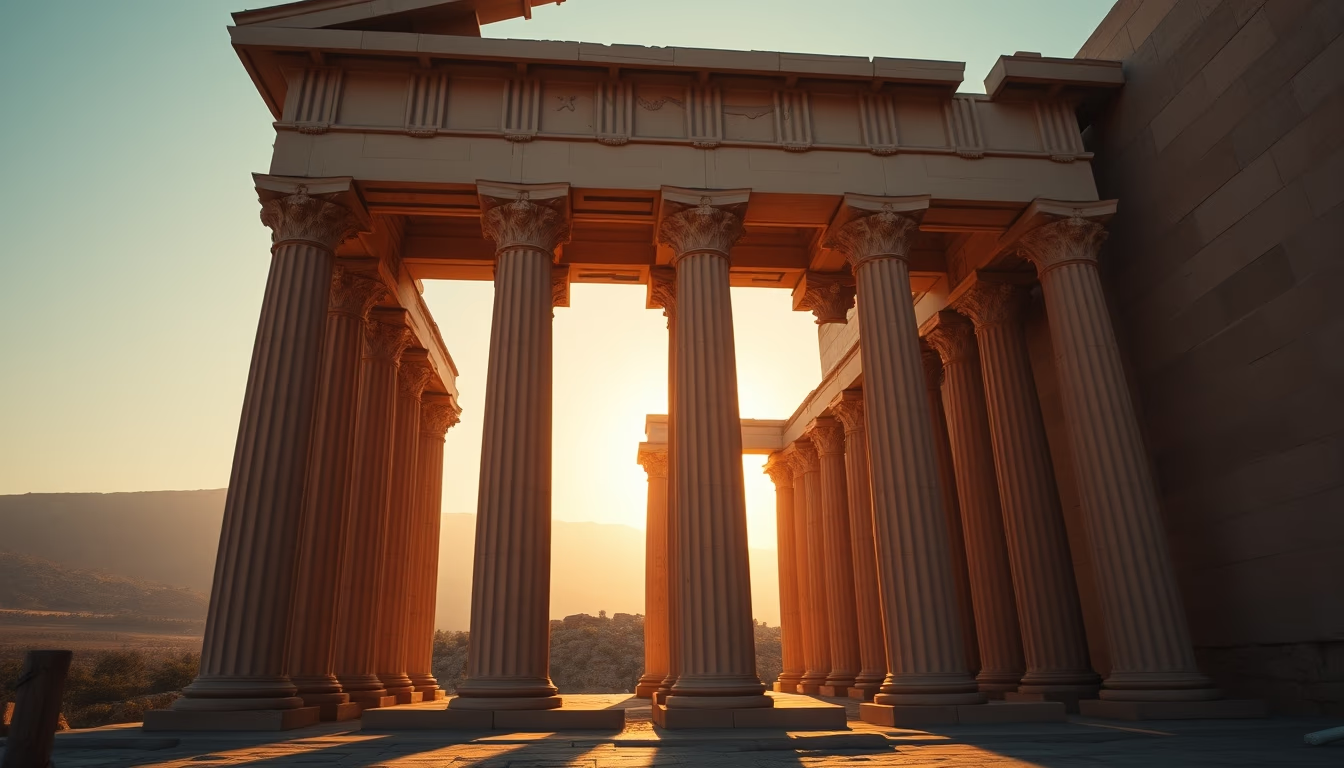
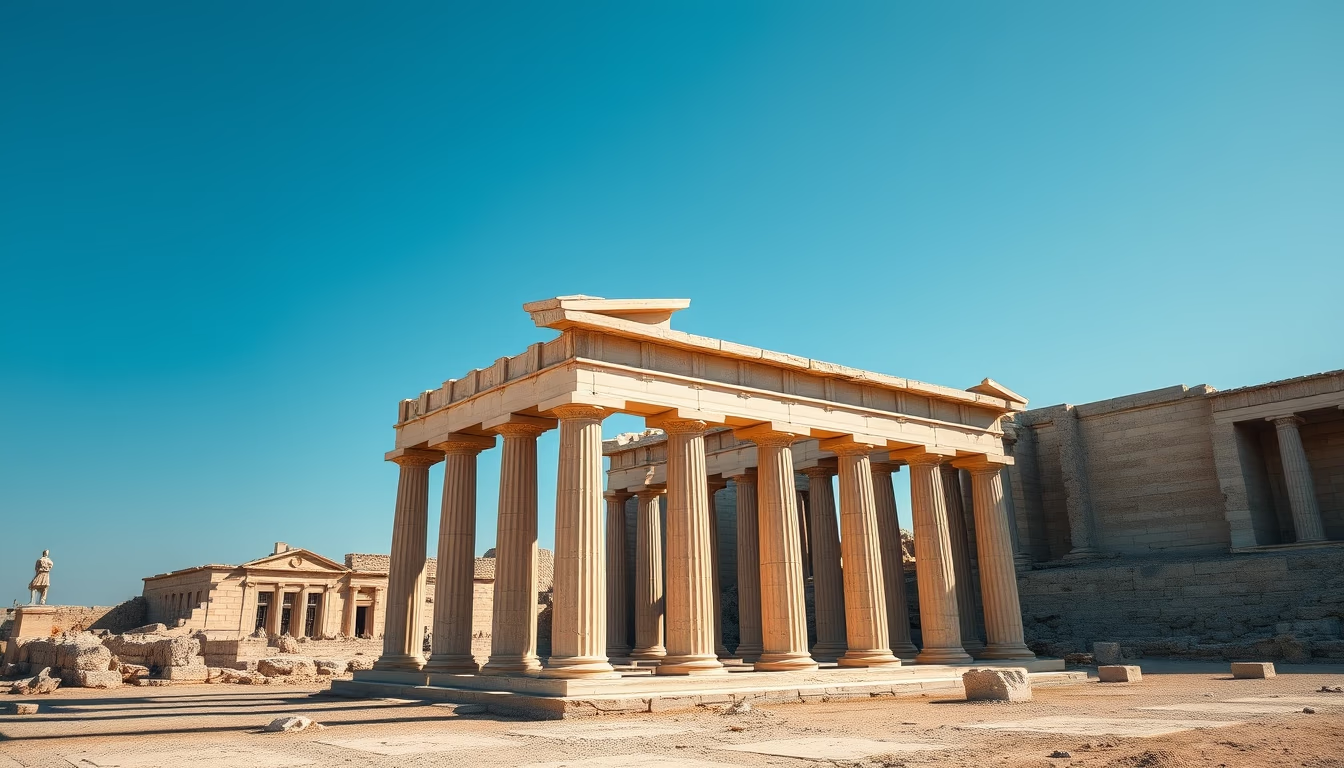
Ancient temple columns are icons of classical architecture, representing power, religion, and technical innovation of civilizations like Greece, Rome, and Egypt.
About this subject
Columns are fundamental structural and decorative elements of ancient temples. In Classical Greece, three main architectural orders emerged: Doric, Ionic, and Corinthian. The Doric order, the simplest and most robust, was common in mainland Greece and southern Italy. The Parthenon in Athens is a prime example, with its monolithic marble columns supporting the entablature without a base. The Ionic order, more slender and ornate, features capitals with spiral volutes and was frequent in Asia Minor, as in the Temple of Artemis at Ephesus, one of the Seven Wonders of the Ancient World. The Corinthian order, the most elaborate, appeared in the 5th century BCE and is noted for capitals decorated with acanthus leaves, widely adopted by the Romans in the Pantheon and the Colosseum.
The Egyptians also erected monumental columns in temples such as Karnak and Luxor, with capitals shaped like papyrus, lotus, or palm. These columns, made of sandstone or granite, could reach over 20 meters in height and were covered with hieroglyphs and reliefs narrating pharaohs' deeds. Unlike Greek columns, Egyptian ones often rested on broad bases and had fluted or smooth shafts.
Construction techniques varied by culture. Greeks used stacked stone drums fixed with metal dowels, while Romans innovated with concrete and brick, allowing larger spans and bolder forms. The column was not merely a support: it symbolized the connection between heaven and earth, and its proportions followed strict mathematical canons to convey harmony and perfection.
In cinema, ancient columns are frequently used in cinematic wide shots to evoke grandeur and timelessness, such as in 'Gladiator' and 'Ben-Hur'. The image in question, a dramatic wide shot, captures this majesty, but the focus here is the architectural legacy that endures in studies, restorations, and inspirations for neoclassical buildings worldwide.
Frequently Asked Questions
What is the difference between Doric, Ionic, and Corinthian orders?
The Doric order is the simplest, without a base and with plain capitals. The Ionic is more slender, with volute capitals. The Corinthian is the most ornate, with acanthus leaf capitals.
Were Egyptian columns different from Greek ones?
Yes. Egyptian columns had vegetal capitals (papyrus, lotus) and were covered with hieroglyphs. Greek columns followed orders with geometric or stylized vegetal capitals.
Why do ancient columns still inspire modern architecture?
Because of their harmonious proportions and symbolism of solidity and beauty. Neoclassical style, for example, incorporates them in government buildings and museums.
Direct URL
https://pub-c7d6a6ea828543ac903a74a341ccb2e1.r2.dev/imagens/temple-columns-ancient-cinematic-wide-shot-p4.avifHow to credit
Include a visible link back to UtilizAí. Copy one of the snippets below:
<a href="https://xn--utiliza-eza.com/en/midia/imagens/temple-columns-ancient-cinematic-wide-shot-p4">Temple columns ancient</a> by <a href="https://xn--utiliza-eza.com">UtilizAí</a>, licensed under <a href="https://creativecommons.org/licenses/by/4.0/">CC BY 4.0</a>.
[Temple columns ancient](https://xn--utiliza-eza.com/en/midia/imagens/temple-columns-ancient-cinematic-wide-shot-p4) by [UtilizAí](https://xn--utiliza-eza.com), CC BY 4.0
License: CC-BY-4.0