Temple columns ancient
1344×768 · AVIF · CC BY 4.0
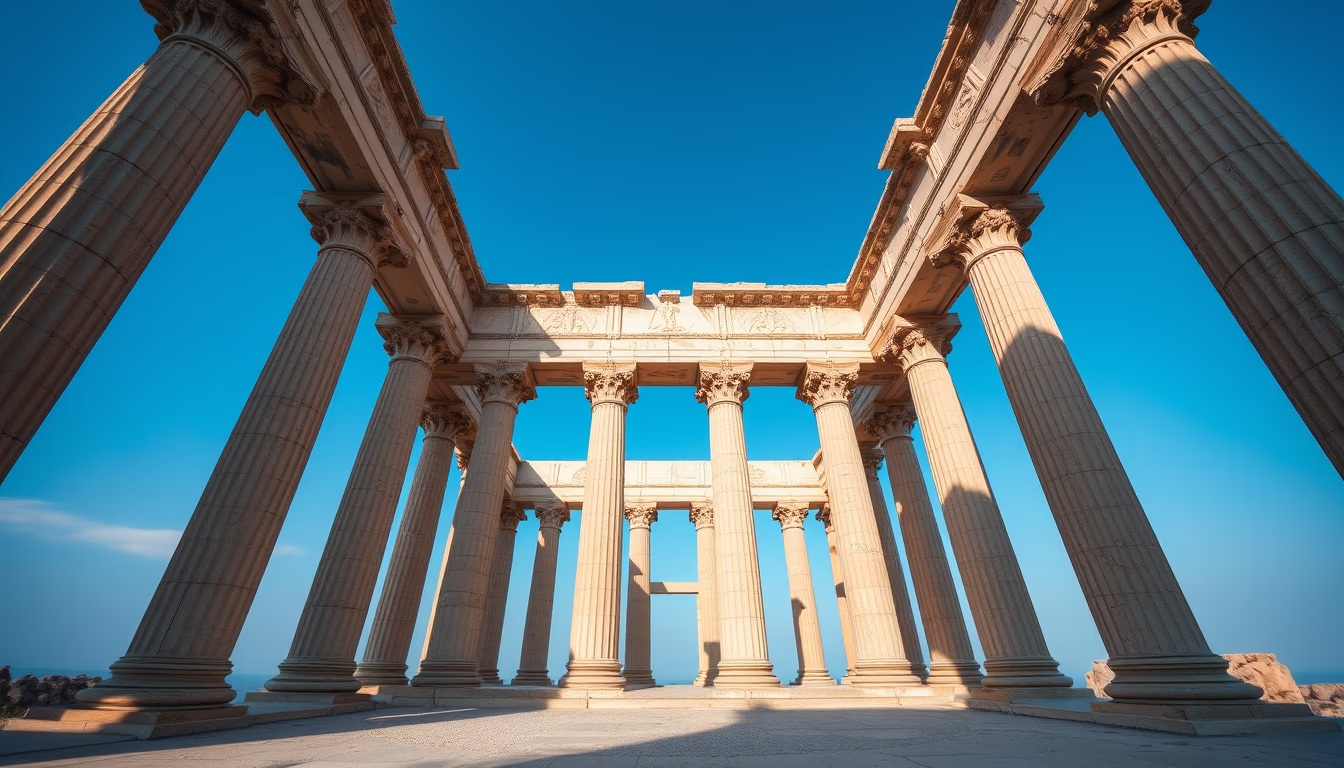
Ancient temple columns represent one of the greatest legacies of classical architecture, combining engineering and religious symbolism.
About this subject
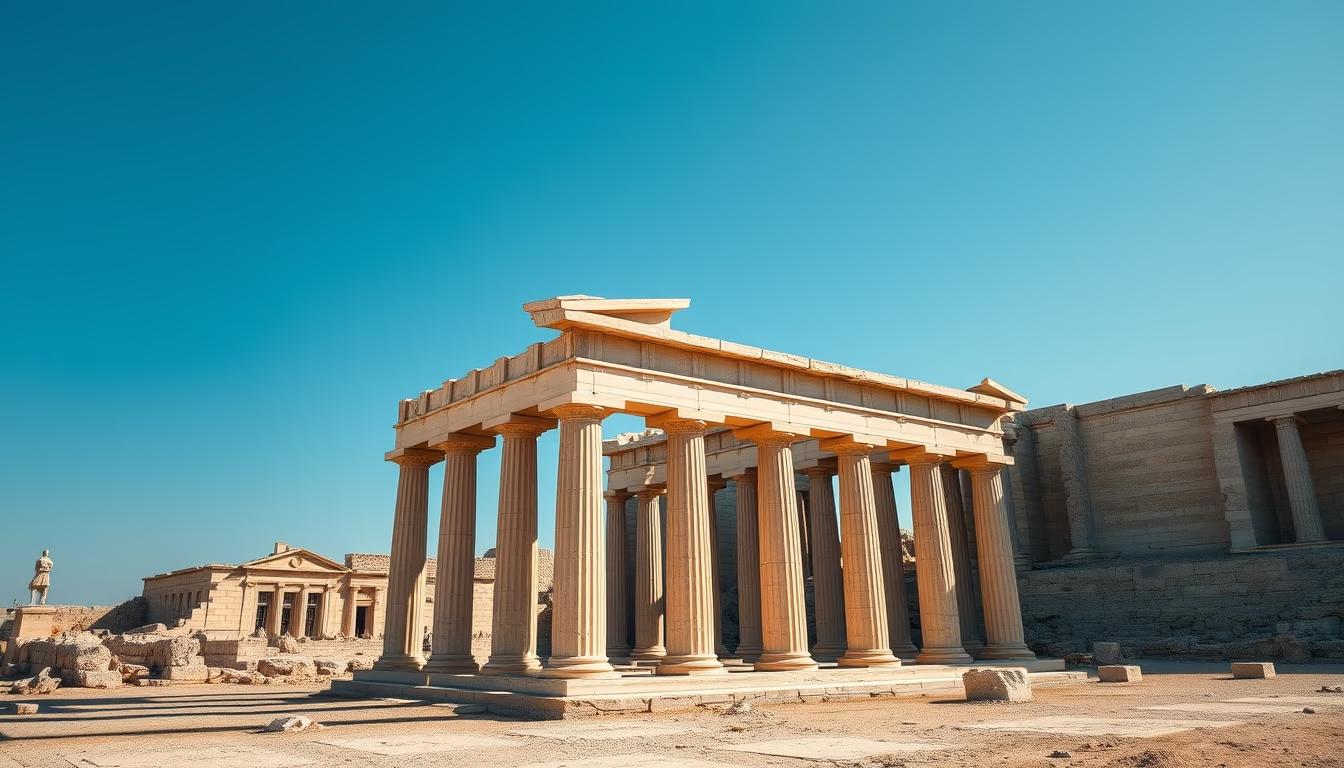
Ancient temple columns are architectural elements that support the structure of temples and carry strong symbolic meaning. Originating in Ancient Greece around the 7th century BCE, they evolved into three main orders: Doric, Ionic, and Corinthian. The Doric order, the simplest and most robust, features fluted shafts and plain capitals, as seen in the Parthenon in Athens. The Ionic order has spiral volutes on the capital, while the Corinthian is adorned with acanthus leaves, more common in Roman constructions.
Greeks developed refined techniques for carving monolithic or segmented columns, using entasis (a slight curve in the shaft) to correct optical illusions of concavity. Marble and limestone were preferred materials, with blocks joined by metal pins. The columns not only supported the roof's weight but also demarcated sacred spaces and symbolized the connection between heaven and earth.
Notable examples include the Temple of Olympian Zeus in Athens, with its towering Corinthian columns, and the Temple of Hera at Olympia, one of the oldest. In Ancient Rome, columns were adapted with composite orders and used in forums and basilicas. The Pantheon, for instance, features huge granite columns transported from Egypt. This legacy influenced the Renaissance and Neoclassicism, spreading to churches and public buildings worldwide.
Interestingly, many ancient columns survived intact for millennia due to high-quality construction and the dry Mediterranean climate. Some were re-erected or restored, such as those of the Temple of Artemis at Ephesus. Today, these architectural elements continue to inspire engineers and architects, studied for their proportional harmony and structural strength.
Frequently Asked Questions
What is the difference between the Greek orders of columns?
The three main orders are Doric, Ionic, and Corinthian. Doric has a simple capital and fluted shaft, symbolizing strength. Ionic features spiral volutes, elegance. Corinthian is the most ornate, with acanthus leaves, used in grander buildings.
How were ancient columns built without modern equipment?
Greeks used ramps, pulleys, and levers to move and lift stone blocks. Monolithic columns were carved in quarries and transported by boat. They were fitted using metal pins and precise adjustments.
Why are Greek temple columns so famous?
They represent a standard of beauty and proportion that influenced all Western architecture. Beyond structure, they symbolized values like democracy and rationalism, and are still studied today.
Direct URL
https://pub-c7d6a6ea828543ac903a74a341ccb2e1.r2.dev/imagens/temple-columns-ancient-architectural-photography-p0.avifHow to credit
Include a visible link back to UtilizAí. Copy one of the snippets below:
<a href="https://xn--utiliza-eza.com/en/midia/imagens/temple-columns-ancient-architectural-photography-p0">Temple columns ancient</a> by <a href="https://xn--utiliza-eza.com">UtilizAí</a>, licensed under <a href="https://creativecommons.org/licenses/by/4.0/">CC BY 4.0</a>.
[Temple columns ancient](https://xn--utiliza-eza.com/en/midia/imagens/temple-columns-ancient-architectural-photography-p0) by [UtilizAí](https://xn--utiliza-eza.com), CC BY 4.0
License: CC-BY-4.0