Sugarcane field with controlled burn at sunset in countryside
1344×768 · AVIF · CC BY 4.0
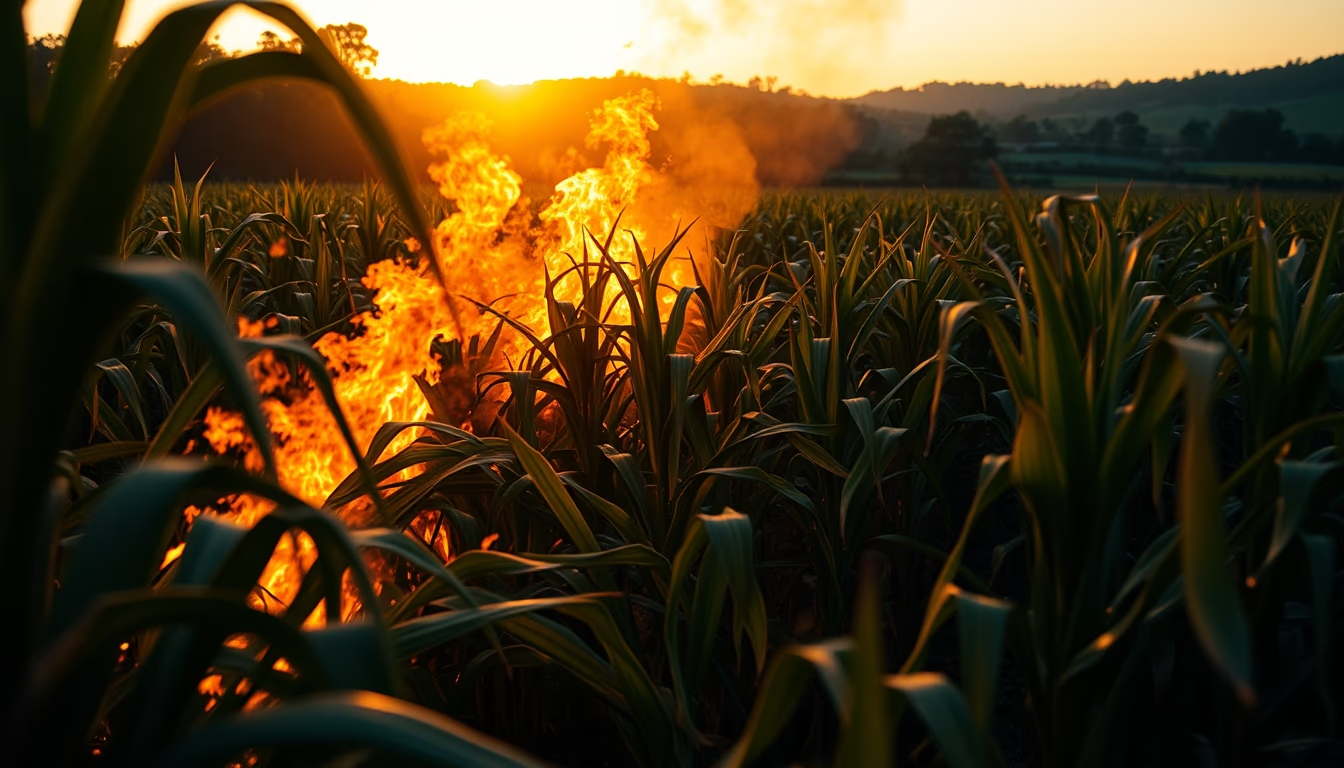
Controlled burn of sugarcane in the São Paulo countryside at sunset, an agricultural technique now in decline that prepares the field for harvest.
About this subject
Controlled burning of sugarcane, though still practiced in some regions of Brazil, is a technique that is gradually being replaced by mechanized green harvesting. The process, carried out before manual harvest, removes dry leaves and straw, making cutting easier and reducing the risk of accidents with venomous animals. However, the practice is highly polluting, releasing large amounts of soot and greenhouse gases, and causing health damage to workers and nearby communities.
São Paulo state, Brazil's largest sugarcane producer, accounts for about 60% of national output, with emphasis on the regions of Ribeirão Preto, Piracicaba, and western São Paulo. Sugarcane has been cultivated in Brazil since colonial times, serving as the basis for sugar, ethanol, and bioelectricity production. The country is the world's largest producer of the crop, with over 700 million tons harvested annually on approximately 10 million hectares.
The transition to mechanized harvesting without burning was driven by environmental legislation and sectoral agreements, such as the São Paulo State Agro-Environmental Protocol signed in 2007. Currently, more than 90% of harvesting in the state is mechanized, but burning still persists in areas with steep terrain or where mechanization is unfeasible. The sunset captured in the image highlights the contrast between the fire and the orange sky, a visual spectacle that also symbolizes an environmental dilemma.
Although the image shows a dramatic scene, it is important to note that controlled burning differs from uncontrolled wildfires. It is planned, surrounded by firebreaks, and conducted under specific weather conditions to prevent spread. Even so, the practice is expected to be completely eliminated in the coming decades, in line with sustainability goals of the sugarcane industry.
Frequently Asked Questions
Why is controlled burning of sugarcane still used?
Burning is mainly used in steep areas or where mechanization is not feasible. It facilitates manual cutting, reducing effort and risks of accidents with animals. However, its use is declining due to environmental laws and voluntary agreements.
What is the environmental impact of sugarcane burning?
Burning releases soot, carbon monoxide, and other pollutants, contributing to respiratory diseases and global warming. It also removes the straw that protects soil from erosion and retains moisture. Therefore, mechanized green harvesting is preferable.
Is Brazil the world's largest producer of sugarcane?
Yes, Brazil leads global production with over 700 million tons per year. São Paulo is the largest producing state, followed by Goiás, Minas Gerais, and Mato Grosso do Sul. Sugarcane is mainly used for sugar and ethanol.
Direct URL
https://pub-c7d6a6ea828543ac903a74a341ccb2e1.r2.dev/imagens/sugarcane-field-on-fire-being-controlled-at-sunset-in-sao-paulo-countryside-wide-late-afternoon-5.avifHow to credit
Include a visible link back to UtilizAí. Copy one of the snippets below:
<a href="https://xn--utiliza-eza.com/en/midia/imagens/sugarcane-field-on-fire-being-controlled-at-sunset-in-sao-paulo-countryside-wide-late-afternoon-5">Sugarcane field with controlled burn at sunset in countryside</a> by <a href="https://xn--utiliza-eza.com">UtilizAí</a>, licensed under <a href="https://creativecommons.org/licenses/by/4.0/">CC BY 4.0</a>.
[Sugarcane field with controlled burn at sunset in countryside](https://xn--utiliza-eza.com/en/midia/imagens/sugarcane-field-on-fire-being-controlled-at-sunset-in-sao-paulo-countryside-wide-late-afternoon-5) by [UtilizAí](https://xn--utiliza-eza.com), CC BY 4.0
License: CC-BY-4.0