Sugarcane field with controlled burn at sunset in countryside
1344×768 · AVIF · CC BY 4.0
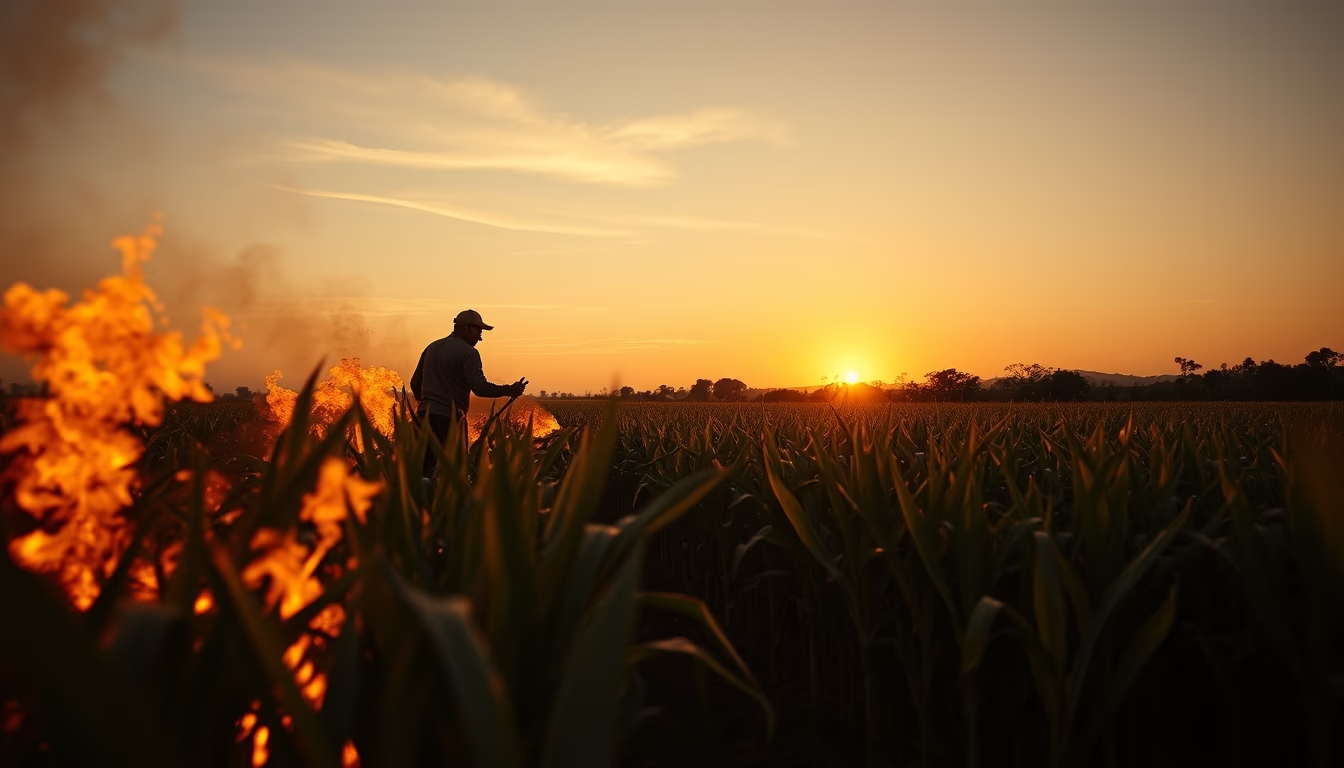
Controlled burn in a sugarcane field at sunset in São Paulo countryside, an agricultural practice that prepares the harvest.
About this subject
Controlled burning is a traditional technique in sugarcane cultivation in Brazil, especially in São Paulo state, the largest national producer. Fire is applied in a planned manner to burn the dry leaves and straw of the sugarcane, facilitating manual cutting and increasing harvest efficiency. Although still common, this practice has been gradually replaced by mechanized harvesting in flat areas due to environmental and public health concerns.
São Paulo's countryside concentrates about 60% of the national sugarcane production, with emphasis on the regions of Ribeirão Preto, Piracicaba, and Araçatuba. Controlled burns are carried out in the late afternoon or early evening when air humidity is higher and winds are calmer, reducing the risk of spread. The visual spectacle of fire contrasting with the orange sky at sunset is a striking scene in the rural landscape.
Despite its efficiency, burning releases soot and greenhouse gases, contributing to air pollution. By law, the practice is only allowed with authorization from environmental agencies and in areas where mechanized harvesting is unfeasible, such as steep terrain. It is estimated that mechanization already covers more than 90% of harvesting in São Paulo, significantly reducing the use of fire.
Interestingly, sugarcane was introduced to Brazil in the 16th century and has since shaped the country's economy and landscape. Today, Brazil is the world's largest producer of sugarcane, primarily used for sugar and ethanol production, a biofuel that powers a large portion of the national vehicle fleet.
Frequently Asked Questions
Why are sugarcane fields burned before harvest?
Controlled burning removes dry leaves and straw, making manual cutting easier and reducing the risk of accidents with venomous animals. It also increases sucrose concentration in the cane.
Is sugarcane burning legal in Brazil?
Yes, but it is regulated. The practice requires authorization from the state environmental agency and is prohibited in areas where mechanized harvesting is possible. In São Paulo, a law establishes a gradual elimination schedule for the use of fire.
What is the environmental impact of controlled burning?
It releases CO2, particulate matter, and other pollutants, contributing to air pollution and the greenhouse effect. However, sugarcane is a crop that sequesters carbon during growth, and ethanol is considered a renewable fuel.
Direct URL
https://pub-c7d6a6ea828543ac903a74a341ccb2e1.r2.dev/imagens/sugarcane-field-on-fire-being-controlled-at-sunset-in-sao-paulo-countryside-wide-late-afternoon-3.avifHow to credit
Include a visible link back to UtilizAí. Copy one of the snippets below:
<a href="https://xn--utiliza-eza.com/en/midia/imagens/sugarcane-field-on-fire-being-controlled-at-sunset-in-sao-paulo-countryside-wide-late-afternoon-3">Sugarcane field with controlled burn at sunset in countryside</a> by <a href="https://xn--utiliza-eza.com">UtilizAí</a>, licensed under <a href="https://creativecommons.org/licenses/by/4.0/">CC BY 4.0</a>.
[Sugarcane field with controlled burn at sunset in countryside](https://xn--utiliza-eza.com/en/midia/imagens/sugarcane-field-on-fire-being-controlled-at-sunset-in-sao-paulo-countryside-wide-late-afternoon-3) by [UtilizAí](https://xn--utiliza-eza.com), CC BY 4.0
License: CC-BY-4.0