Sugarcane field with controlled burn at sunset in countryside
1344×768 · AVIF · CC BY 4.0
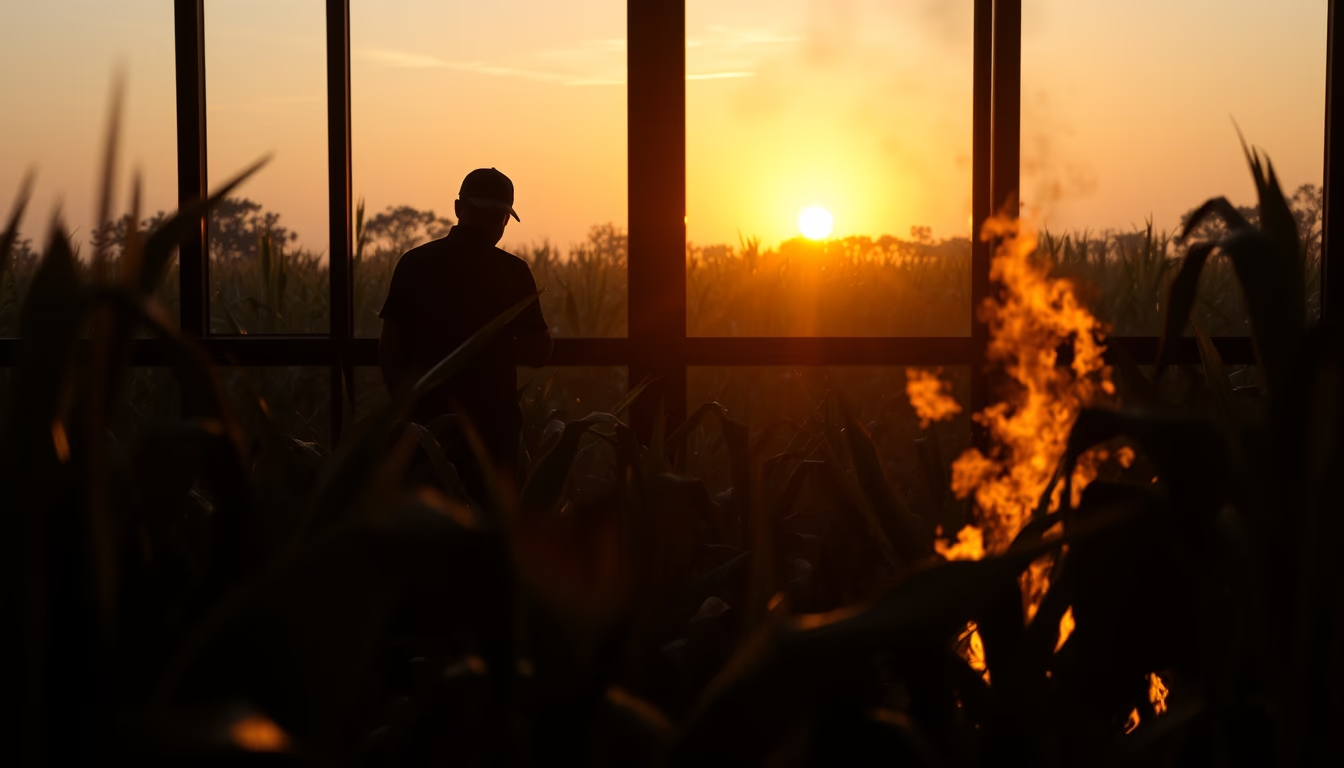
Controlled burning of sugarcane fields at sunset in São Paulo countryside, an agricultural practice gradually replaced by mechanized harvesting.
About this subject
Controlled burning of sugarcane fields is a traditional agricultural technique in Brazil, especially in São Paulo state, the country's largest sugarcane producer. Fire is used to remove straw and dry leaves, facilitating manual cutting and reducing the risk of accidents with venomous animals. The practice typically occurs in the late afternoon when relative humidity is lower and winds are calmer, minimizing smoke dispersion to urban areas. The image captures this moment at sunset, with flames contrasting against the orange sky.
Sugarcane arrived in Brazil in the 16th century and became the foundation of the colonial economy. Today, Brazil is the world's largest producer, with São Paulo accounting for about 60% of national output. Controlled burning, though still used in rugged terrain or small farms, is gradually being replaced by mechanized harvesting, which does not require prior burning. This transition is encouraged by state laws, such as São Paulo's Law 11.241/2002, which sets deadlines for the complete elimination of burning.
Smoke from burning is rich in fine particles and gases, potentially causing respiratory problems and contributing to carbon emissions. On the other hand, well-planned controlled burning reduces the risk of accidental wildfires and eliminates pests. Studies indicate that full mechanization can reduce particulate matter emissions by up to 80%. However, the transition faces challenges such as the high cost of harvesters and the need for workforce training.
The sunset in the background is not merely aesthetic: the time of day is strategically chosen to prevent fire from spreading to neighboring areas. Weaker winds and falling temperatures help control the flames. Although controversial, the practice is regulated by environmental agencies and requires prior authorization, with monitoring of weather conditions.
Frequently Asked Questions
Why is controlled sugarcane burning done at sunset?
Burning is done in the late afternoon because relative humidity is lower and winds are calmer, reducing smoke dispersion and making it easier to control the fire, preventing it from spreading to neighboring areas.
Is controlled burning of sugarcane fields legal in Brazil?
Yes, but it is regulated by state laws and requires prior authorization from environmental agencies. In São Paulo, Law 11.241/2002 sets deadlines for the gradual elimination of burning, encouraging mechanized harvesting.
What are the environmental impacts of controlled burning?
Burning releases fine particles and gases that can cause respiratory problems and contribute to carbon emissions. However, when well-planned, it reduces the risk of accidental wildfires and eliminates pests. Mechanized harvesting can reduce these impacts.
Direct URL
https://pub-c7d6a6ea828543ac903a74a341ccb2e1.r2.dev/imagens/sugarcane-field-on-fire-being-controlled-at-sunset-in-sao-paulo-countryside-documentary-morning-6.avifHow to credit
Include a visible link back to UtilizAí. Copy one of the snippets below:
<a href="https://xn--utiliza-eza.com/en/midia/imagens/sugarcane-field-on-fire-being-controlled-at-sunset-in-sao-paulo-countryside-documentary-morning-6">Sugarcane field with controlled burn at sunset in countryside</a> by <a href="https://xn--utiliza-eza.com">UtilizAí</a>, licensed under <a href="https://creativecommons.org/licenses/by/4.0/">CC BY 4.0</a>.
[Sugarcane field with controlled burn at sunset in countryside](https://xn--utiliza-eza.com/en/midia/imagens/sugarcane-field-on-fire-being-controlled-at-sunset-in-sao-paulo-countryside-documentary-morning-6) by [UtilizAí](https://xn--utiliza-eza.com), CC BY 4.0
License: CC-BY-4.0