Sugarcane field with controlled burn at sunset in countryside
1344×768 · AVIF · CC BY 4.0
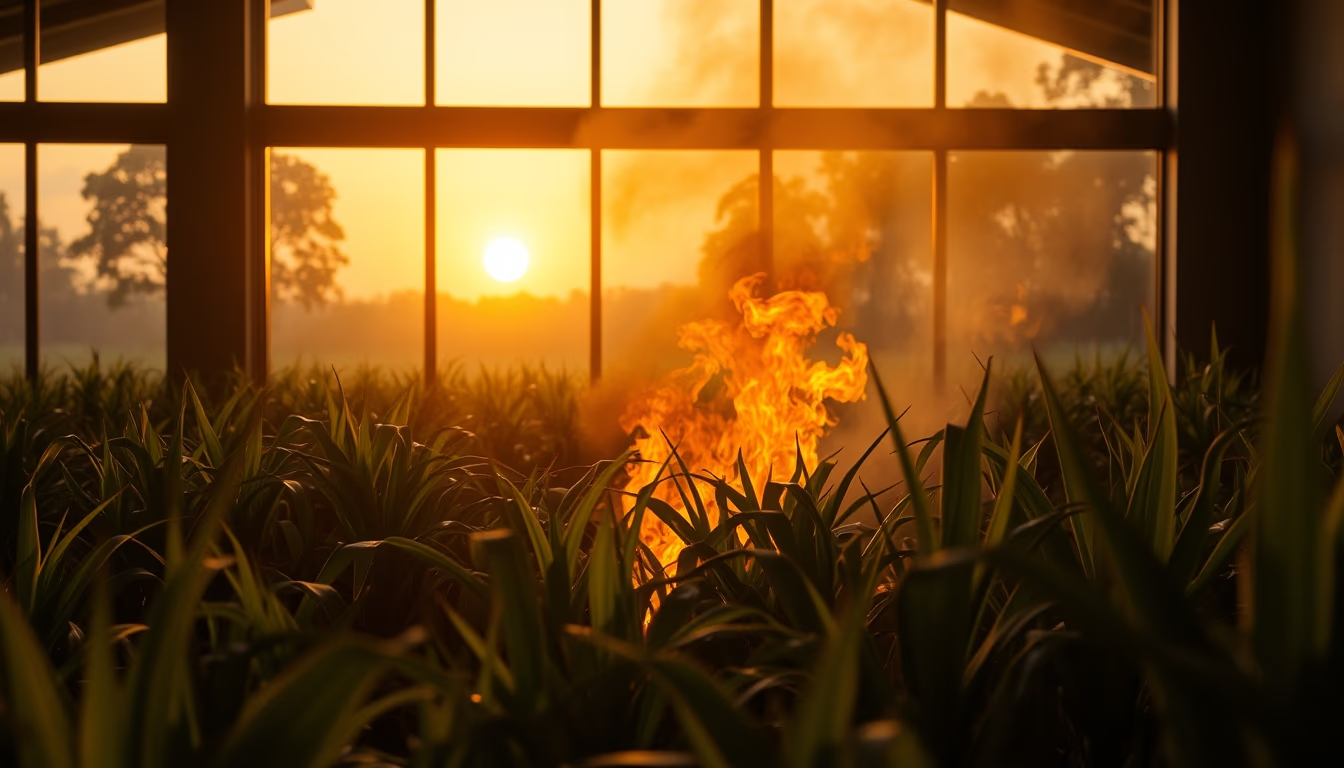
Controlled burn in a sugarcane field at sunset in the São Paulo countryside reveals a traditional agricultural practice.
About this subject
In the countryside of São Paulo, controlled burning of sugarcane straw is an agricultural technique that precedes manual harvesting. Although it is gradually being replaced by mechanized harvesting, it is still used on steep slopes or where mechanization is unfeasible. The practice involves setting fire to dry straw to remove leaves, thorns, and venomous animals, making work easier for cutters and reducing accident risks. The resulting smoke, visible for miles, can cause environmental and health impacts, such as respiratory problems, and is therefore regulated by state laws, such as São Paulo's Law 11.241/2002, which establishes a timeline for its gradual elimination.
The burning sugarcane field at sunset creates a dramatic contrast between the orange flames and the reddening sky. This scene is common in the Ribeirão Preto region, the main sugar-energy hub in Brazil, responsible for about 60% of the national production of sugar and ethanol. Sugarcane cultivation was introduced to Brazil in the 16th century and has since shaped the economy and landscape of the São Paulo countryside. Currently, São Paulo state accounts for over 50% of Brazilian sugarcane production, with mills that integrate the production of sugar, ethanol, and bioelectricity.
Controlled burning, although controversial, is defended by some producers as necessary under certain topographical conditions. However, research by Embrapa and universities shows that mechanized harvesting without burning preserves straw on the soil, improving moisture retention and reducing erosion. The advance of mechanization has been encouraged by public policies and sectoral agreements, such as the Agroenvironmental Protocol of the sugar-energy sector, signed in 2007, which foresees the end of burning in mechanizable areas by 2014 and in others by 2031. Thus, the image records a practice that is becoming extinct, still persisting on some farms.
Interestingly, fire in sugarcane fields also attracts photographers and filmmakers seeking to capture the ephemeral beauty of flames against the horizon. The scene is a reminder of the complex relationship between agriculture, tradition, and sustainability in Brazil. For rural workers, burning represents both a relief in harvesting effort and a health risk, exposing them to soot and intense heat. The transition to more sustainable methods is an ongoing challenge, involving investments in machinery and workforce training.
Frequently Asked Questions
Why is sugarcane burned before harvesting?
Controlled burning removes dry straw, making manual cutting easier and reducing risks of accidents with venomous animals. It also increases cutter productivity.
Is sugarcane burning legal?
Yes, but it is regulated. In São Paulo, Law 11.241/2002 establishes a gradual elimination schedule, with a total ban in mechanizable areas by 2014 and in others by 2031.
What are the environmental impacts of sugarcane burning?
Burning releases smoke and soot, contributing to air pollution and respiratory problems. It also removes the straw that protects the soil, increasing erosion.
Direct URL
https://pub-c7d6a6ea828543ac903a74a341ccb2e1.r2.dev/imagens/sugarcane-field-on-fire-being-controlled-at-sunset-in-sao-paulo-countryside-documentary-morning-3.avifHow to credit
Include a visible link back to UtilizAí. Copy one of the snippets below:
<a href="https://xn--utiliza-eza.com/en/midia/imagens/sugarcane-field-on-fire-being-controlled-at-sunset-in-sao-paulo-countryside-documentary-morning-3">Sugarcane field with controlled burn at sunset in countryside</a> by <a href="https://xn--utiliza-eza.com">UtilizAí</a>, licensed under <a href="https://creativecommons.org/licenses/by/4.0/">CC BY 4.0</a>.
[Sugarcane field with controlled burn at sunset in countryside](https://xn--utiliza-eza.com/en/midia/imagens/sugarcane-field-on-fire-being-controlled-at-sunset-in-sao-paulo-countryside-documentary-morning-3) by [UtilizAí](https://xn--utiliza-eza.com), CC BY 4.0
License: CC-BY-4.0