Sugarcane field with controlled burn at sunset in countryside
1344×768 · AVIF · CC BY 4.0
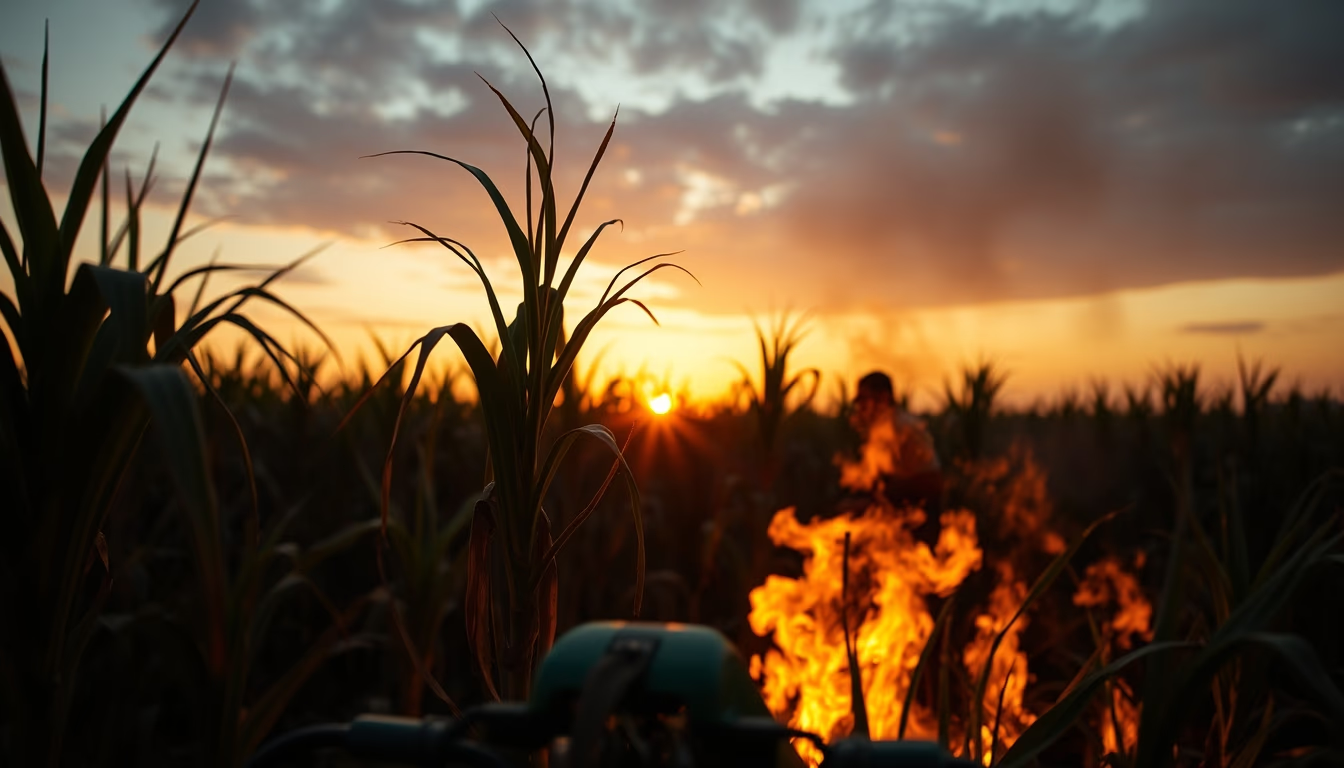
Sugarcane field under controlled burn at sunset in São Paulo countryside, Brazil.
About this subject
Controlled burning of sugarcane is a traditional agricultural practice in Brazil, especially in São Paulo state, the country's largest producer. Fire is used to remove dry leaves and straw, making manual harvesting easier and reducing the risk of accidents with venomous animals. Despite controversies over pollution and health impacts, the technique is still employed in areas where mechanical harvesting is not feasible, such as sloped terrains or small farms. The sunset in the São Paulo countryside, with its orange and reddish hues, creates a dramatic contrast with the flames, capturing a moment of transition between rural work and nightfall.
Sugarcane arrived in Brazil in the 16th century and thrived in the tropical climate. Today, the country is the world's leading producer, with São Paulo accounting for about 50% of the total. Controlled burning, though efficient, is gradually being replaced by mechanical harvesting, which reduces emissions and improves working conditions. This image depicts a practice that still persists in some regions, symbolizing the strength of the sugarcane agroindustry and the challenges of modernization.
In the interior of São Paulo, cities like Ribeirão Preto and Piracicaba are hubs of the sugar-energy sector. Technology and tradition coexist in the cane fields, where fire meets modern machinery. The twilight scene, with a colorful sky and dissipating smoke, represents a cycle renewed each harvest. The practice, regulated by environmental laws, requires planning and authorization, being monitored to minimize harm to local fauna and flora.
Frequently Asked Questions
Why is sugarcane burned before harvest?
Controlled burning removes dry leaves and straw, making manual cutting easier and reducing the risk of accidents with venomous animals. It also increases harvest efficiency in areas where machinery cannot operate.
Is sugarcane burning legal?
Yes, but it is regulated by environmental agencies. Prior authorization is required, and rules must be followed to minimize health and environmental impacts. In São Paulo, there are deadlines for phasing out the practice by 2031.
What are the environmental impacts of controlled burning?
Burning emits pollutants and particulate matter, affecting air quality and respiratory health. However, the burned straw returns nutrients to the soil. The trend is to replace burning with mechanical harvesting to reduce damage.
Direct URL
https://pub-c7d6a6ea828543ac903a74a341ccb2e1.r2.dev/imagens/sugarcane-field-on-fire-being-controlled-at-sunset-in-sao-paulo-countryside-closeup-twilight-5.avifHow to credit
Include a visible link back to UtilizAí. Copy one of the snippets below:
<a href="https://xn--utiliza-eza.com/en/midia/imagens/sugarcane-field-on-fire-being-controlled-at-sunset-in-sao-paulo-countryside-closeup-twilight-5">Sugarcane field with controlled burn at sunset in countryside</a> by <a href="https://xn--utiliza-eza.com">UtilizAí</a>, licensed under <a href="https://creativecommons.org/licenses/by/4.0/">CC BY 4.0</a>.
[Sugarcane field with controlled burn at sunset in countryside](https://xn--utiliza-eza.com/en/midia/imagens/sugarcane-field-on-fire-being-controlled-at-sunset-in-sao-paulo-countryside-closeup-twilight-5) by [UtilizAí](https://xn--utiliza-eza.com), CC BY 4.0
License: CC-BY-4.0