Submarine deep ocean
1344×768 · AVIF · CC BY 4.0
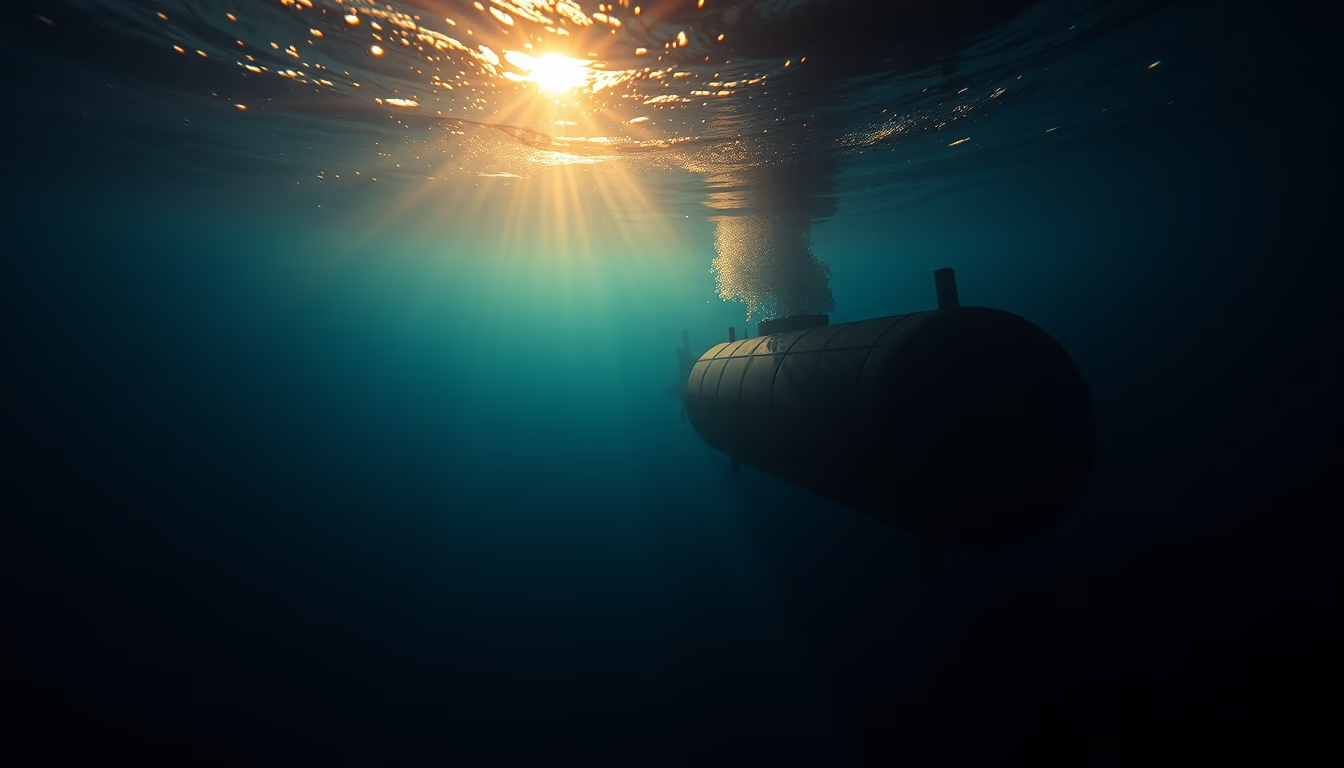
Submarines explore the deep ocean, revealing unknown ecosystems. Submersible technology enables scientific discoveries at great depths.
About this subject
Research submarines like Alvin and Trieste are designed to withstand extreme pressures in the deep ocean, where sunlight does not reach. Trieste reached the Mariana Trench in 1960, descending to 10,916 meters, a depth where pressure exceeds 1,000 atmospheres. These submersible vehicles allow scientists to observe hydrothermal vents, geological formations, and organisms adapted to total darkness, such as abyssal fish and chemosynthetic bacteria.
Deep ocean exploration has revealed unique ecosystems, such as the hydrothermal vent fields discovered in 1977 off the Galápagos Islands. In these locations, life thrives without sunlight, based on sulfur and methane. Each dive catalogs new species, from dumbo octopuses to giant squid. Technology has evolved with remotely operated vehicles (ROVs) and autonomous underwater vehicles (AUVs) that map the seafloor and collect samples without human risk.
Technical challenges include building hulls that can resist pressure, communication systems using sound waves, and long-lasting batteries. Underwater research also contributes to climate change studies by analyzing deep currents and carbon absorption. New materials like titanium alloys and advanced polymers are expanding depth limits. The deep ocean remains one of Earth's last frontiers, with over 80% of its volume still unexplored.
Frequently Asked Questions
What is the maximum depth a submarine can reach?
The record is held by the Trieste submersible, which descended to 10,916 meters in the Mariana Trench. Military submarines operate at about 300-500 meters, while research vehicles can reach over 6,000 meters.
How do submarines withstand the pressure at the bottom of the ocean?
They use high-strength steel or titanium hulls, spherical or cylindrical in shape, and ballast systems to control buoyancy. Internal pressure is kept at atmospheric level.
What important discoveries have been made at the bottom of the ocean?
Hydrothermal vents, chemosynthesis-based ecosystems, new species like the dumbo octopus and colossal squid, as well as historical shipwrecks and mineral deposits.
Direct URL
https://pub-c7d6a6ea828543ac903a74a341ccb2e1.r2.dev/imagens/submarine-deep-ocean-travel-photography-p6.avifHow to credit
Include a visible link back to UtilizAí. Copy one of the snippets below:
<a href="https://xn--utiliza-eza.com/en/midia/imagens/submarine-deep-ocean-travel-photography-p6">Submarine deep ocean</a> by <a href="https://xn--utiliza-eza.com">UtilizAí</a>, licensed under <a href="https://creativecommons.org/licenses/by/4.0/">CC BY 4.0</a>.
[Submarine deep ocean](https://xn--utiliza-eza.com/en/midia/imagens/submarine-deep-ocean-travel-photography-p6) by [UtilizAí](https://xn--utiliza-eza.com), CC BY 4.0
License: CC-BY-4.0