Storyboard sketches rough
1344×768 · AVIF · CC BY 4.0
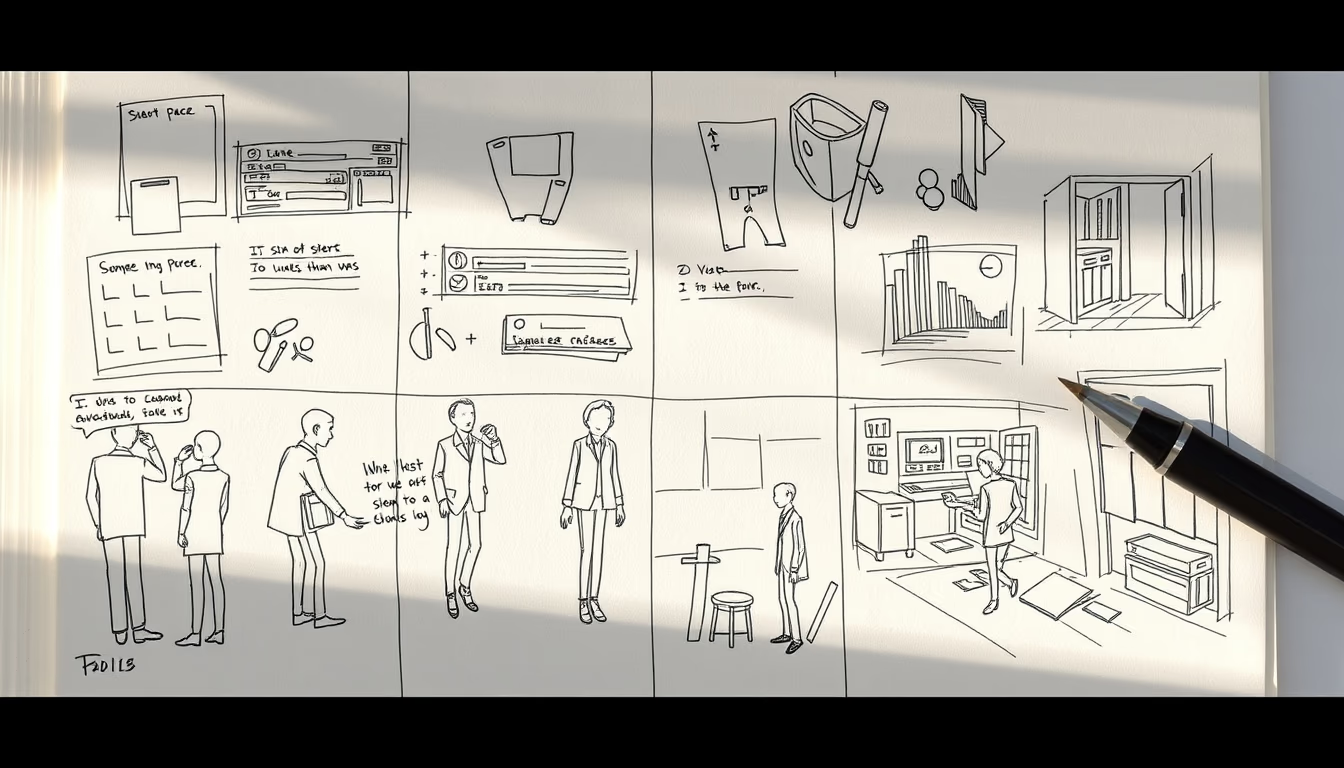
Storyboards are sequential sketches used in filmmaking to plan camera angles, movements, and action before shooting.
About this subject
Storyboarding is an essential pre-production technique in filmmaking, originating from Disney studios in the 1930s. Animator Webb Smith pioneered sequential drawings to plan scenes for animated shorts, and the method quickly spread to live-action cinema, becoming a Hollywood standard.
A typical storyboard consists of a series of panels, each representing a shot or scene, with notes on dialogue, sound effects, and transitions. Renowned directors like Alfred Hitchcock and Steven Spielberg relied on detailed storyboards to visualize complex sequences. Hitchcock famously storyboarded the entire shower scene in "Psycho" (1960), which was executed exactly as drawn.
Today, digital tools like Storyboard Pro and Toon Boom aid the process, but many filmmakers still prefer hand-drawn sketches for speed and creative freedom. Storyboarding extends beyond film to advertising, animation, video games, and even architecture, serving as a bridge between script and final production. In Brazil, networks like TV Globo and independent studios use storyboards to streamline budgets and ensure continuity.
Interestingly, the term "storyboard" derives from comic strip drawing panels. The practice also led to animatics, animated versions of storyboards with temporary audio, used to test pacing and emotion before final animation.
Frequently Asked Questions
What is the difference between a storyboard and an animatic?
A storyboard is a sequence of static drawings, while an animatic is a filmed or animated version of the storyboard with temporary audio, used to test pacing and emotion before final production.
Is storyboarding used only in films?
No. It is widely used in advertising, animation, video games, architecture, and even UX/UI design to plan interaction flows.
Who invented the storyboard?
The modern storyboard was developed at Disney studios in the 1930s, credited to animator Webb Smith, though rudimentary forms existed in silent cinema.
Direct URL
https://pub-c7d6a6ea828543ac903a74a341ccb2e1.r2.dev/imagens/storyboard-sketches-rough-magazine-editorial-p2.avifHow to credit
Include a visible link back to UtilizAí. Copy one of the snippets below:
<a href="https://xn--utiliza-eza.com/en/midia/imagens/storyboard-sketches-rough-magazine-editorial-p2">Storyboard sketches rough</a> by <a href="https://xn--utiliza-eza.com">UtilizAí</a>, licensed under <a href="https://creativecommons.org/licenses/by/4.0/">CC BY 4.0</a>.
[Storyboard sketches rough](https://xn--utiliza-eza.com/en/midia/imagens/storyboard-sketches-rough-magazine-editorial-p2) by [UtilizAí](https://xn--utiliza-eza.com), CC BY 4.0
License: CC-BY-4.0