Storyboard sketches
1344×768 · AVIF · CC BY 4.0
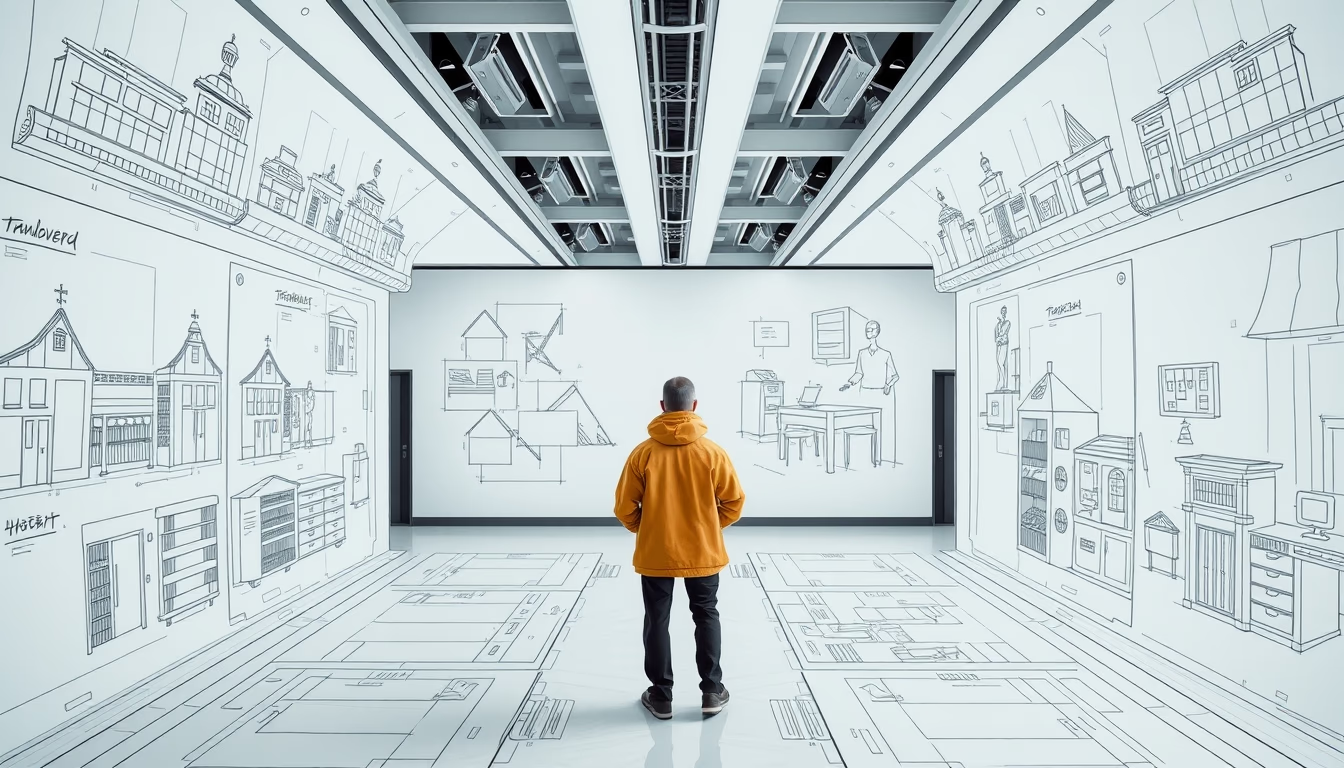
Storyboard sketches are sequential drawings that plan scenes for films, animations, and even architectural projects, serving as a visual script.
About this subject
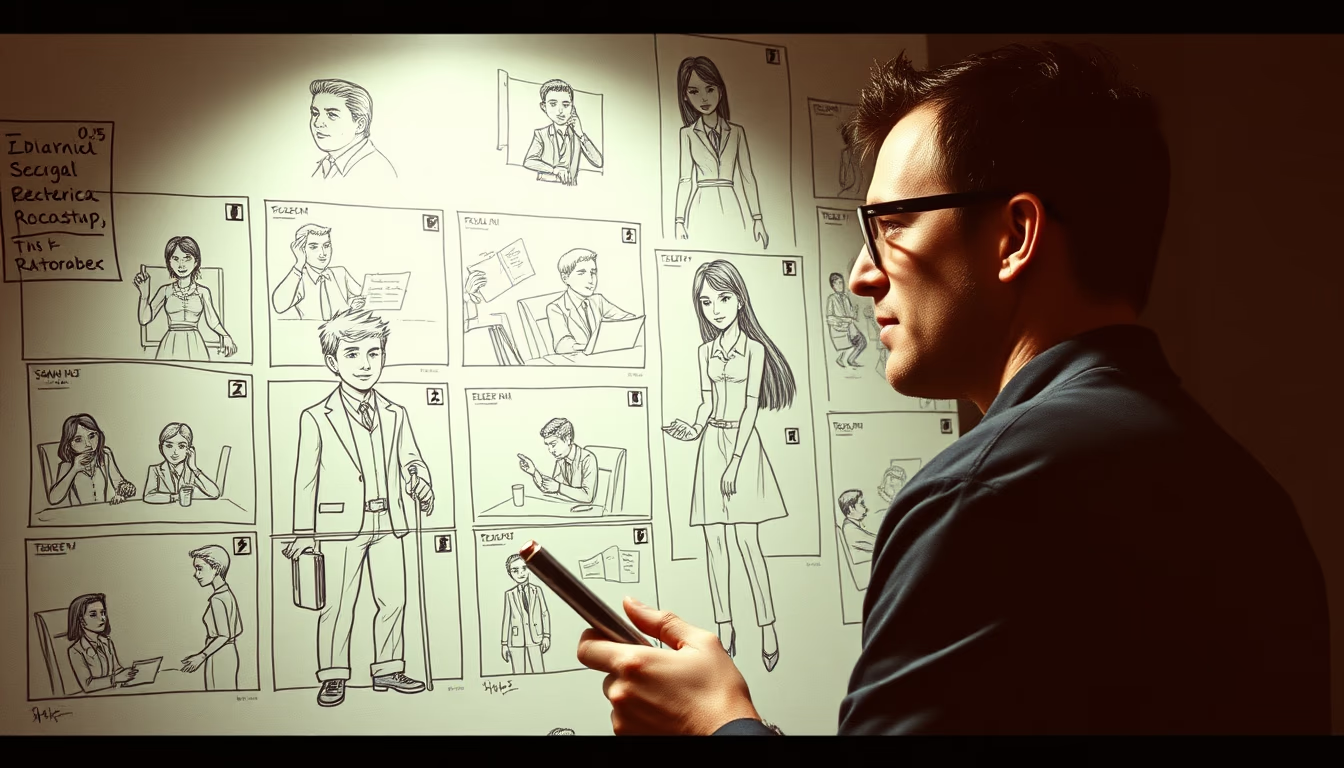
Storyboard sketches are a fundamental pre-production tool for any visual narrative, whether in film, animation, or advertising. They consist of a series of illustrated panels representing key moments of a scene, including framing, camera movement, and character positioning. In architecture, storyboards are used to visualize user experience within a space, showing pathways and interactions with the built environment.
The practice of storyboarding was popularized by Walt Disney in the 1930s, but its roots trace back to sequential paintings and illustrated scripts from early silent cinema. Directors like Alfred Hitchcock used detailed storyboards to plan every shot, ensuring precision in visual storytelling. Today, artists use everything from pencil and paper to graphics tablets, with software such as Toon Boom Storyboard Pro and Adobe Photoshop.
In Brazil, storyboard usage has grown with the animation industry and national cinema. Studios like TV PinGuim and Copa Studio produce storyboards for series and feature films. Additionally, in architectural projects, storyboards help communicate design intent to clients and construction teams, showing the sequence of views and spatial experience.
A curious fact: the storyboard for the classic "Psycho" (1960), drawn by Saul Bass, is so accurate that the panels align perfectly with the final film. This demonstrates that storyboard sketches are not just rough drafts but time and resource-saving tools, preventing costly mistakes during filming or construction.
Frequently Asked Questions
What is the difference between a storyboard and an animatic?
A storyboard is a sequence of static drawings, while an animatic is an edited version of the storyboard with audio and timing, simulating the rhythm of the animation or film.
Who created the first storyboard?
The first modern storyboard is credited to Walt Disney and his animator Webb Smith, who in the 1930s used drawing panels to plan the short film "The Three Little Pigs."
Are storyboards only used in film?
No. They are also widely used in video games, architecture, user experience (UX) design, advertising, and even comic book scripts.
Direct URL
https://pub-c7d6a6ea828543ac903a74a341ccb2e1.r2.dev/imagens/storyboard-sketches-architectural-photography-fresh16.avifHow to credit
Include a visible link back to UtilizAí. Copy one of the snippets below:
<a href="https://xn--utiliza-eza.com/en/midia/imagens/storyboard-sketches-architectural-photography-fresh16">Storyboard sketches</a> by <a href="https://xn--utiliza-eza.com">UtilizAí</a>, licensed under <a href="https://creativecommons.org/licenses/by/4.0/">CC BY 4.0</a>.
[Storyboard sketches](https://xn--utiliza-eza.com/en/midia/imagens/storyboard-sketches-architectural-photography-fresh16) by [UtilizAí](https://xn--utiliza-eza.com), CC BY 4.0
License: CC-BY-4.0