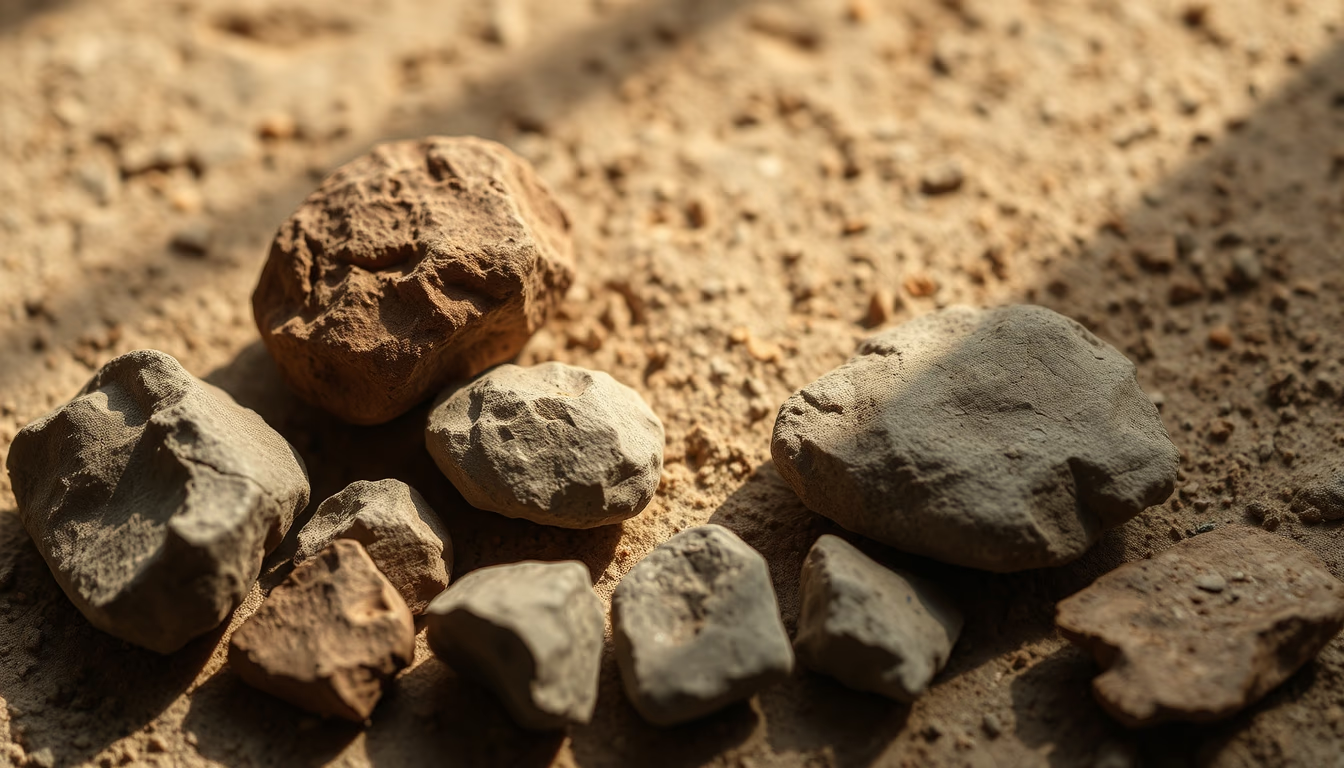
Stone tools paleolithic
1344×768 · AVIF · CC BY 4.0
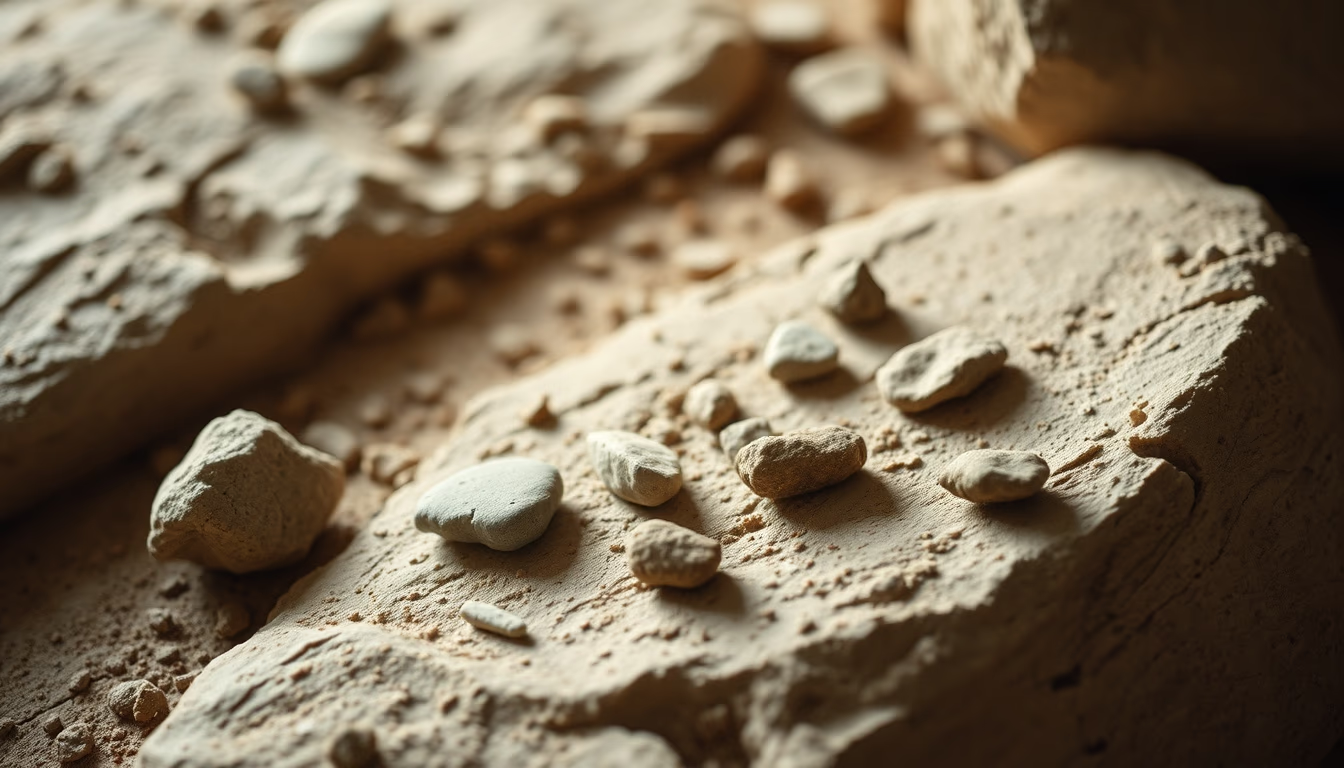
Paleolithic stone tools represent the earliest human technologies, dating back 2.5 million years and crucial for evolution.
About this subject
Paleolithic stone tools are the oldest artifacts produced by hominids, marking the dawn of human technology. They emerged around 2.5 million years ago in Africa with the Oldowan industry, linked to Homo habilis. These early tools were simple flakes and cores, used for cutting meat, breaking bones, and processing plants. Over time, more advanced techniques developed, such as the bifacial Acheulean industry, which produced symmetrical handaxes characteristic of Homo erectus. In the Middle Paleolithic, the Levallois technique allowed greater control over flake shape, typical of Neanderthals. Raw materials varied: flint, quartzite, obsidian, and basalt, chosen for their hardness and controlled fracturing. Manufacturing involved direct percussion, indirect percussion, and pressure flaking, requiring skill and geological knowledge. These tools not only aided survival but also reflected cognitive development, such as planning and abstraction. Interestingly, the oldest archaeological sites, like Lomekwi 3 in Kenya, reveal tools 3.3 million years old, predating the genus Homo. The transition to the Upper Paleolithic brought greater specialization, with blades, burins, and projectile points associated with Homo sapiens. Thus, studying these tools is essential for understanding human evolution and global dispersal.
Frequently Asked Questions
What are the main types of Paleolithic stone tools?
The main types include flakes, cores, handaxes (bifaces), scrapers, burins, and projectile points. Each type varies by period: Oldowan (simple flakes), Acheulean (symmetrical bifaces), Mousterian (Levallois tools), and Upper Paleolithic (blades and specialized points).
How were Paleolithic stone tools made?
They were made by direct percussion (striking one stone against another), indirect percussion (using a bone or wood hammer), and pressure flaking. The Levallois technique involved preparing a core to produce flakes of predetermined shape.
What is the importance of stone tools for human evolution?
They enabled access to new foods (meat, marrow), facilitated plant processing and the manufacture of other tools. Additionally, they indicate cognitive development such as planning and fine motor skills, and are linked to the expansion of hominins out of Africa.
Direct URL
https://pub-c7d6a6ea828543ac903a74a341ccb2e1.r2.dev/imagens/stone-tools-paleolithic-documentary-photography-p4.avifHow to credit
Include a visible link back to UtilizAí. Copy one of the snippets below:
<a href="https://xn--utiliza-eza.com/en/midia/imagens/stone-tools-paleolithic-documentary-photography-p4">Stone tools paleolithic</a> by <a href="https://xn--utiliza-eza.com">UtilizAí</a>, licensed under <a href="https://creativecommons.org/licenses/by/4.0/">CC BY 4.0</a>.
[Stone tools paleolithic](https://xn--utiliza-eza.com/en/midia/imagens/stone-tools-paleolithic-documentary-photography-p4) by [UtilizAí](https://xn--utiliza-eza.com), CC BY 4.0
License: CC-BY-4.0