Starfield night clear sky
1344×768 · AVIF · CC BY 4.0
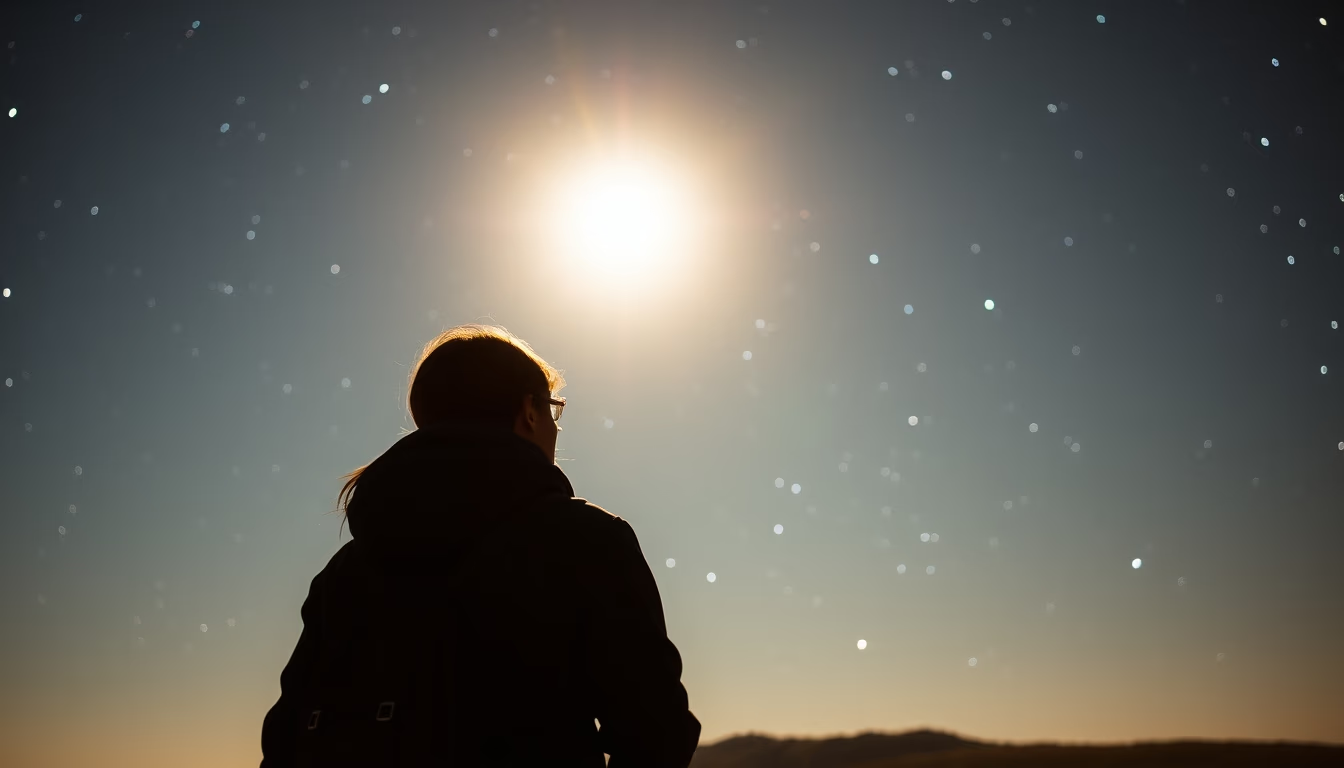
The starry night sky is one of nature's most fascinating spectacles, revealing galaxies, constellations, and planets to the naked eye.
About this subject
A clear, star-filled night sky is an invitation to contemplate the universe. In places with low light pollution, such as the Atacama Desert in Chile or Death Valley National Park in the United States, the Milky Way can be seen in all its glory. These locations are known as Dark Sky Sanctuaries, certified by organizations like the International Dark-Sky Association, which promote the preservation of the night environment.
Stargazing, or astrotourism, has grown globally. Countries like New Zealand, Namibia, and Brazil (especially in the Bahia hinterland) offer exceptional conditions for sky observation. Meteor showers, such as the Perseids and Geminids, occur at specific times of the year and attract travelers from around the world.
Beyond its visual appeal, the starry sky carries deep cultural significance. Ancient civilizations, including the Maya, Greeks, and Polynesians, used stars for navigation, agriculture, and mythology. Today, astrophotography allows us to capture these moments, but the naked-eye experience remains irreplaceable.
Fun fact: under ideal dark sky conditions, a person can see up to 2,500 stars with the naked eye. Light pollution reduces that number to a few hundred in cities. Therefore, preserving dark areas is vital for science and humanity's cultural heritage.
Frequently Asked Questions
What is a Dark Sky Sanctuary?
These are areas certified by the International Dark-Sky Association for having low light pollution and promoting the preservation of the night environment, ideal for astronomical observation.
What is the best time to observe the Milky Way in Brazil?
The Milky Way is most visible during winter (June to August) in low-latitude regions, such as the northeastern hinterland, on moonless nights.
Why does light pollution hinder stargazing?
Artificial light scatters in the atmosphere, reducing the contrast between the sky and celestial objects. This decreases the number of visible stars and hampers astronomical research.
Direct URL
https://pub-c7d6a6ea828543ac903a74a341ccb2e1.r2.dev/imagens/starfield-night-clear-sky-travel-photography-p3.avifHow to credit
Include a visible link back to UtilizAí. Copy one of the snippets below:
<a href="https://xn--utiliza-eza.com/en/midia/imagens/starfield-night-clear-sky-travel-photography-p3">Starfield night clear sky</a> by <a href="https://xn--utiliza-eza.com">UtilizAí</a>, licensed under <a href="https://creativecommons.org/licenses/by/4.0/">CC BY 4.0</a>.
[Starfield night clear sky](https://xn--utiliza-eza.com/en/midia/imagens/starfield-night-clear-sky-travel-photography-p3) by [UtilizAí](https://xn--utiliza-eza.com), CC BY 4.0
License: CC-BY-4.0