Ssd nvme stick
1344×768 · AVIF · CC BY 4.0
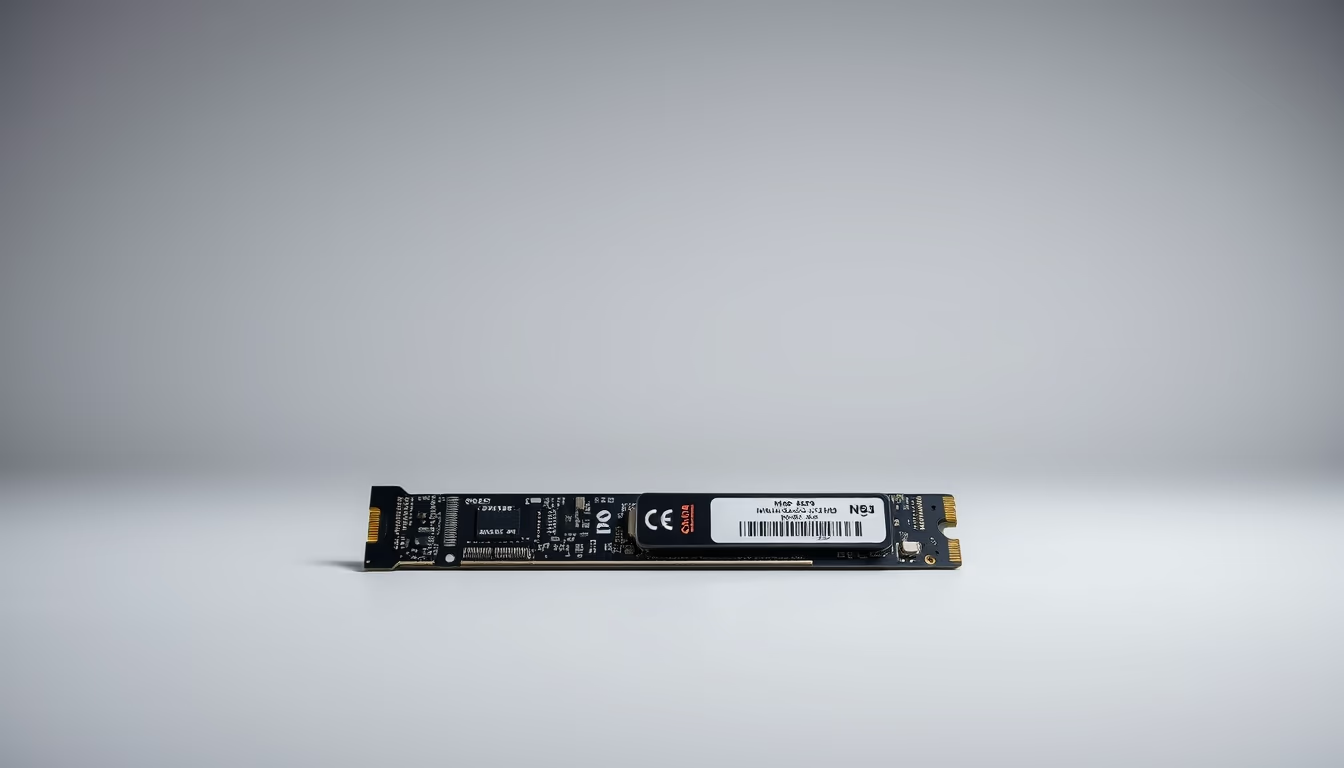
Solid-state drive in M.2 form factor with PCIe NVMe interface, offering much higher read and write speeds than traditional SATA SSDs.
About this subject
The NVMe (Non-Volatile Memory Express) SSD is a solid-state storage device that uses the PCI Express bus to communicate directly with the CPU, eliminating the bottleneck of SATA controllers. Unlike SATA SSDs, which achieve around 550 MB/s, NVMe drives can exceed 7,000 MB/s sequential read in PCIe 4.0 versions, and over 10,000 MB/s in recent PCIe 5.0 iterations. This technology is essential for tasks requiring high throughput, such as 4K/8K video editing, faster game load times, and heavy database operations.
The most common form factor is M.2 2280 (22 mm wide, 80 mm long), resembling a stick of gum, but smaller variants like 2242 and 2260 also exist. With no moving parts, NVMe drives consume less power and generate less heat than HDDs, though they can warm up under heavy loads, many models include heatsinks. The interface may be keyed as M-Key or B+M-Key, so compatibility with the motherboard must be checked.
The popularization of NVMe SSDs has transformed the PC market: ultra-thin laptops feature M.2 slots for compact storage, and manufacturers offer capacities up to 4 TB on a single stick. The technology continues to evolve with support for NVMe over Fabrics and form factors like U.2 for data centers. In global markets, the cost per GB has steadily declined, making NVMe the recommended choice for new systems.
Frequently Asked Questions
What is the difference between NVMe SSD and SATA SSD?
NVMe SSD uses the PCIe bus to communicate directly with the CPU, while SATA relies on a slower controller. In practice, NVMe can be 5 to 10 times faster, with read speeds exceeding 3,500 MB/s (PCIe 3.0) or over 7,000 MB/s (PCIe 4.0).
Can I use an NVMe SSD on any motherboard?
No. The motherboard must have an M.2 slot that supports NVMe and has an M key. Also, the chipset or CPU must supply enough PCIe lanes. Older boards may only support SATA on the M.2 slot, requiring a SATA-based M.2 drive.
What is the lifespan of an NVMe SSD?
Lifespan is measured in TBW (Total Bytes Written). A typical consumer NVMe SSD offers 300 to 600 TBW, equating to years of normal use. Professional or datacenter models can reach 1,000 TBW or more, but NAND Flash technology means many users never hit that limit before upgrading.
Direct URL
https://pub-c7d6a6ea828543ac903a74a341ccb2e1.r2.dev/imagens/ssd-nvme-stick-studio-still-life-p3.avifHow to credit
Include a visible link back to UtilizAí. Copy one of the snippets below:
<a href="https://xn--utiliza-eza.com/en/midia/imagens/ssd-nvme-stick-studio-still-life-p3">Ssd nvme stick</a> by <a href="https://xn--utiliza-eza.com">UtilizAí</a>, licensed under <a href="https://creativecommons.org/licenses/by/4.0/">CC BY 4.0</a>.
[Ssd nvme stick](https://xn--utiliza-eza.com/en/midia/imagens/ssd-nvme-stick-studio-still-life-p3) by [UtilizAí](https://xn--utiliza-eza.com), CC BY 4.0
License: CC-BY-4.0