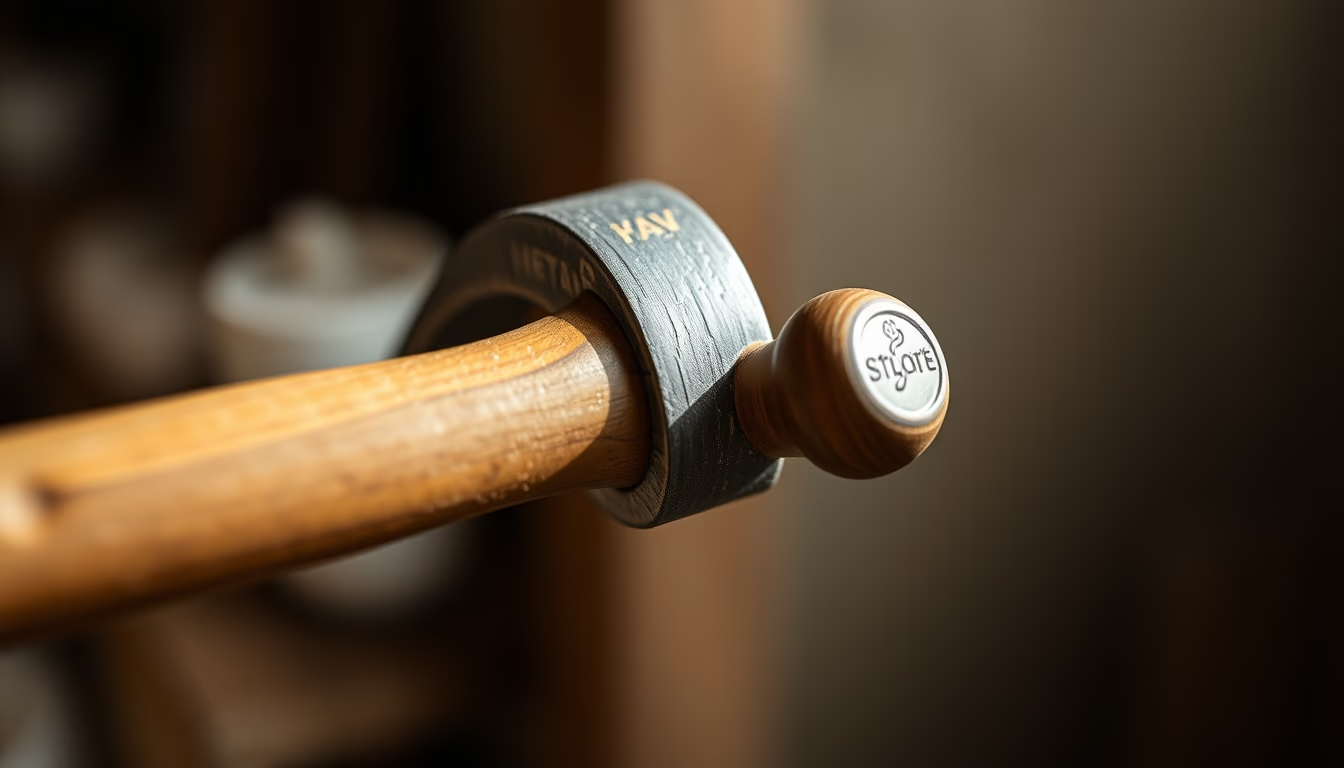
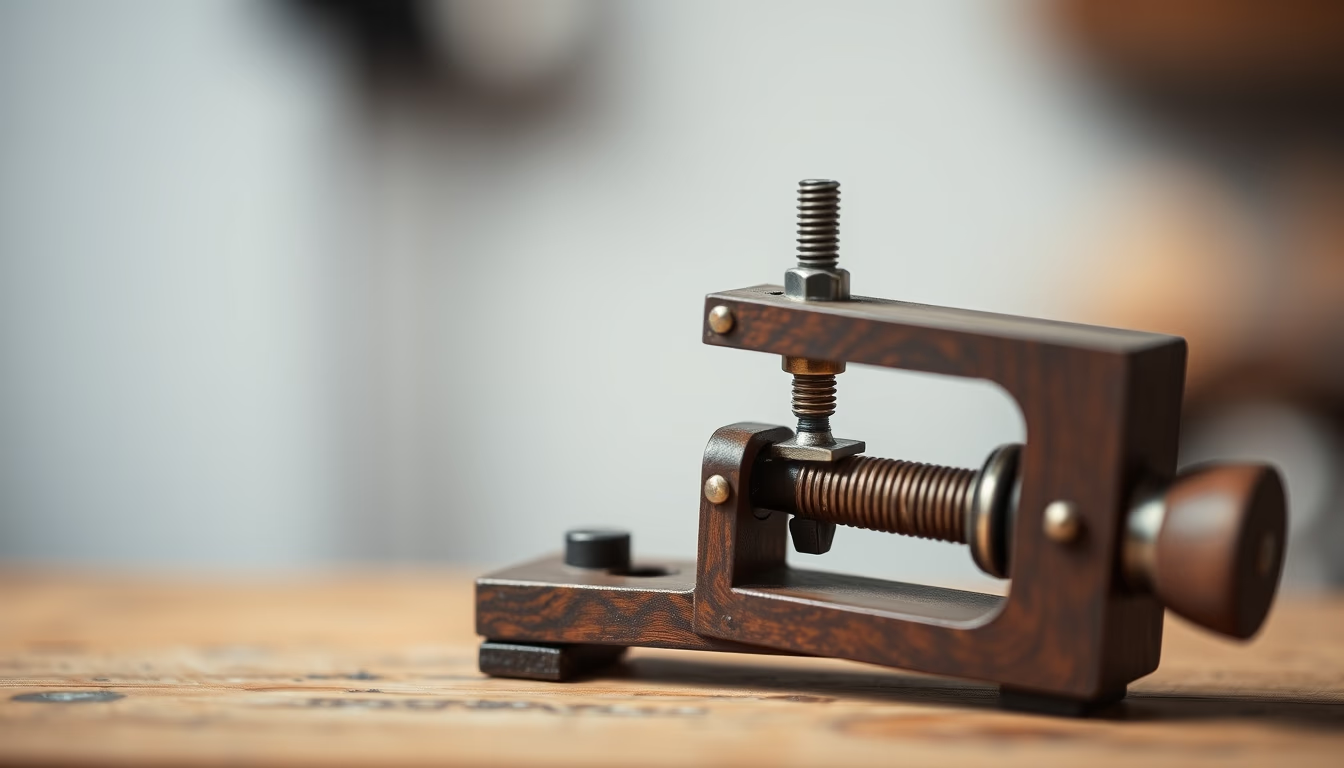
Square machinist
1344×768 · AVIF · CC BY 4.0

The machinist square, a precision tool used in metalworking, has over 2.000 years of history and remains indispensable.
About this subject
The machinist square, also known as an engineer's square or steel square, is a precision measuring and marking tool used to check right angles in metalworking and woodworking. It consists of a thin blade set at a perfect 90-degree angle to a thicker stock. Professional squares achieve accuracy within 0.01 mm per centimeter, essential for aligning machine parts and ensuring tight tolerances.
Historically, squares date back to ancient Egypt, where similar tools made of wood or bronze helped build monumental structures. During the Industrial Revolution, hardened steel became standard, and mass production demanded interchangeable parts, driving the development of highly accurate squares. Today, squares comply with international standards such as DIN 875 and ISO 2768, which define tolerance classes.
In practice, a machinist places the square against a workpiece and checks for light leakage between the blade and surface. It is also used to scribe perpendicular lines with a scriber. Variants include the combination square, which adds a ruler and protractor. Maintenance involves protecting the tool from falls and rust, typically stored in a case with light oil.
An interesting fact: in the 18th and 19th centuries, squares were handmade by specialized blacksmiths, making each piece unique. Modern manufacturing uses grinding and laser cutting for consistent precision, but antique squares are still prized by collectors and craftsmen.
Frequently Asked Questions
What is the difference between a machinist square and a carpenter's square?
A machinist square is made of hardened steel with high precision (tolerances in hundredths of a millimeter), used in metalworking. A carpenter's square, often wood or simple metal, is used in woodworking for quick layout, with lower accuracy.
How do you calibrate a machinist square?
Draw a straight line, flip the square (180°) and draw another line along the same edge. If the lines are parallel, the angle is 90°. Alternatively, use a certified standard or a granite surface plate with a dial indicator.
What are the slots or holes on some machinist squares for?
The slots allow clamping the square to a reference surface or workpiece, enabling repeatable measurements and precise scribing of parallel lines.
Direct URL
https://pub-c7d6a6ea828543ac903a74a341ccb2e1.r2.dev/imagens/square-machinist-lo-fi-disposable-camera-fresh7.avifHow to credit
Include a visible link back to UtilizAí. Copy one of the snippets below:
<a href="https://xn--utiliza-eza.com/en/midia/imagens/square-machinist-lo-fi-disposable-camera-fresh7">Square machinist</a> by <a href="https://xn--utiliza-eza.com">UtilizAí</a>, licensed under <a href="https://creativecommons.org/licenses/by/4.0/">CC BY 4.0</a>.
[Square machinist](https://xn--utiliza-eza.com/en/midia/imagens/square-machinist-lo-fi-disposable-camera-fresh7) by [UtilizAí](https://xn--utiliza-eza.com), CC BY 4.0
License: CC-BY-4.0