Square machinist
1344×768 · AVIF · CC BY 4.0

The machinist square is a precision tool used to check right angles in machined parts, essential in the metalworking industry since the 19th century.
About this subject
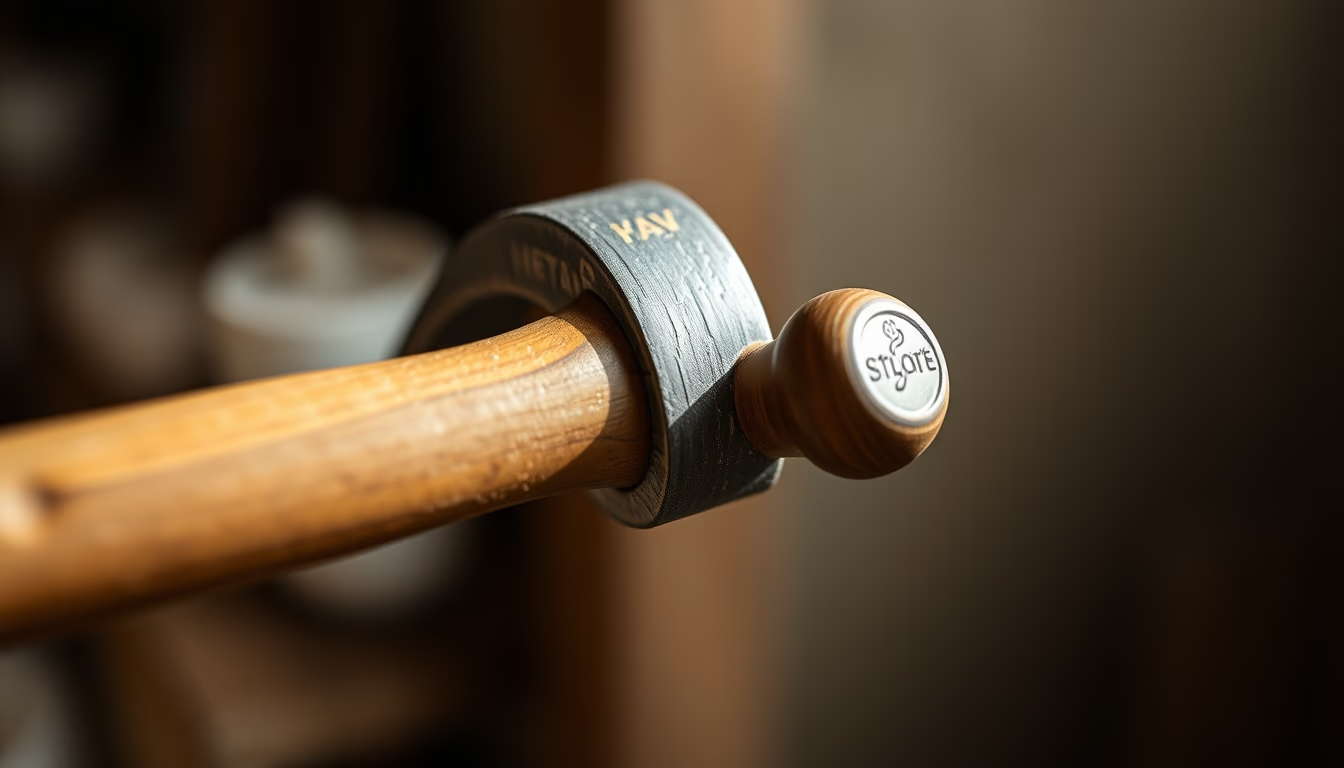
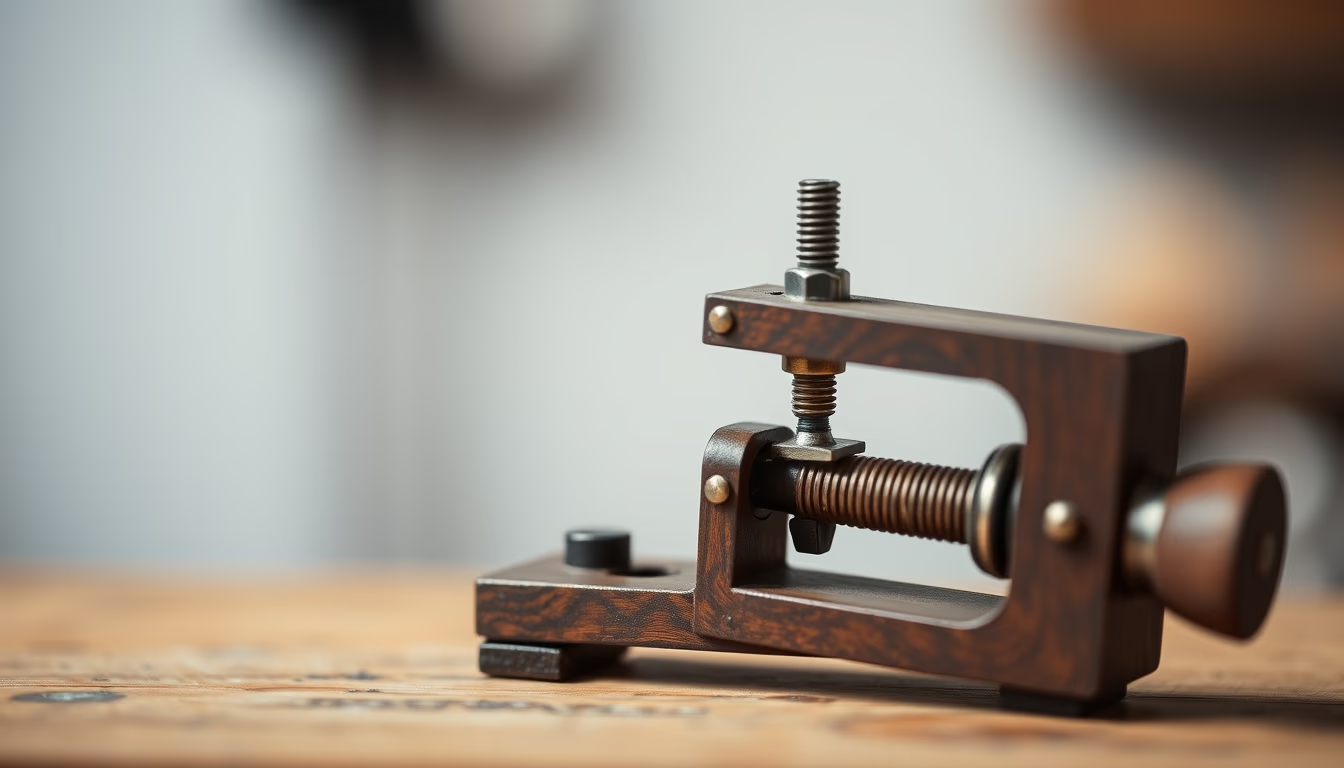
The machinist square, also known as a steel square or precision square, is an angular measurement instrument used to check the perpendicularity between two surfaces. Its origins trace back to the development of industrial machinery in the 19th century, when the need for interchangeable parts demanded tight tolerances. Unlike wooden squares used in carpentry, the machinist square is made of hardened steel or cast iron, with ground faces to ensure flatness and an exact 90-degree angle.
In practice, the machinist rests the base of the square against one face of the workpiece and slides the blade until it touches the other face. The presence of light between the blade and the workpiece indicates angular deviation. This technique, called the “light test,” can detect errors as small as 0.01 mm in high-precision models. Tools like the machinist square are fundamental in setting up lathes, milling machines, and grinders, as well as in final inspection of mechanical components.
There are several variants: the simple square with a fixed blade, the combination square that includes a ruler and protractor, and the cylinder square used to check angles on cylindrical parts. ISO 2768 establishes tolerance classes for these instruments, with Class 0 being the most precise. Collectors and restorers of antique tools value early 20th-century squares, often engraved with brands like Starrett, Brown & Sharpe, or Mitutoyo.
Despite the advancement of digital instruments, the machinist square remains indispensable in machine shops due to its simplicity, durability, and reliability. It does not rely on batteries or electronic calibration, serving as a standard reference for calibrating other measuring devices. Its presence on workbenches symbolizes the tradition of precision metalworking, blending manual skill with engineering.
Frequently Asked Questions
What is a machinist square used for?
A machinist square is used to check if two surfaces are at a right angle (90 degrees). It is employed in machining metal parts to ensure perpendicularity and dimensional accuracy.
How to use a machinist square correctly?
Place the base of the square against one face of the workpiece and bring the blade close to the other face. Observe if light passes between the blade and the workpiece; if so, the angle is not exact. Always clean surfaces before use to avoid false readings.
What is the difference between a machinist square and a carpenter square?
A machinist square is made of steel or cast iron with ground faces for high precision, while a carpenter square is usually made of wood or less precise metal. The machinist square is used in metalworking with tolerances smaller than 0.1 mm.
Direct URL
https://pub-c7d6a6ea828543ac903a74a341ccb2e1.r2.dev/imagens/square-machinist-high-fashion-editorial-fresh4.avifHow to credit
Include a visible link back to UtilizAí. Copy one of the snippets below:
<a href="https://xn--utiliza-eza.com/en/midia/imagens/square-machinist-high-fashion-editorial-fresh4">Square machinist</a> by <a href="https://xn--utiliza-eza.com">UtilizAí</a>, licensed under <a href="https://creativecommons.org/licenses/by/4.0/">CC BY 4.0</a>.
[Square machinist](https://xn--utiliza-eza.com/en/midia/imagens/square-machinist-high-fashion-editorial-fresh4) by [UtilizAí](https://xn--utiliza-eza.com), CC BY 4.0
License: CC-BY-4.0