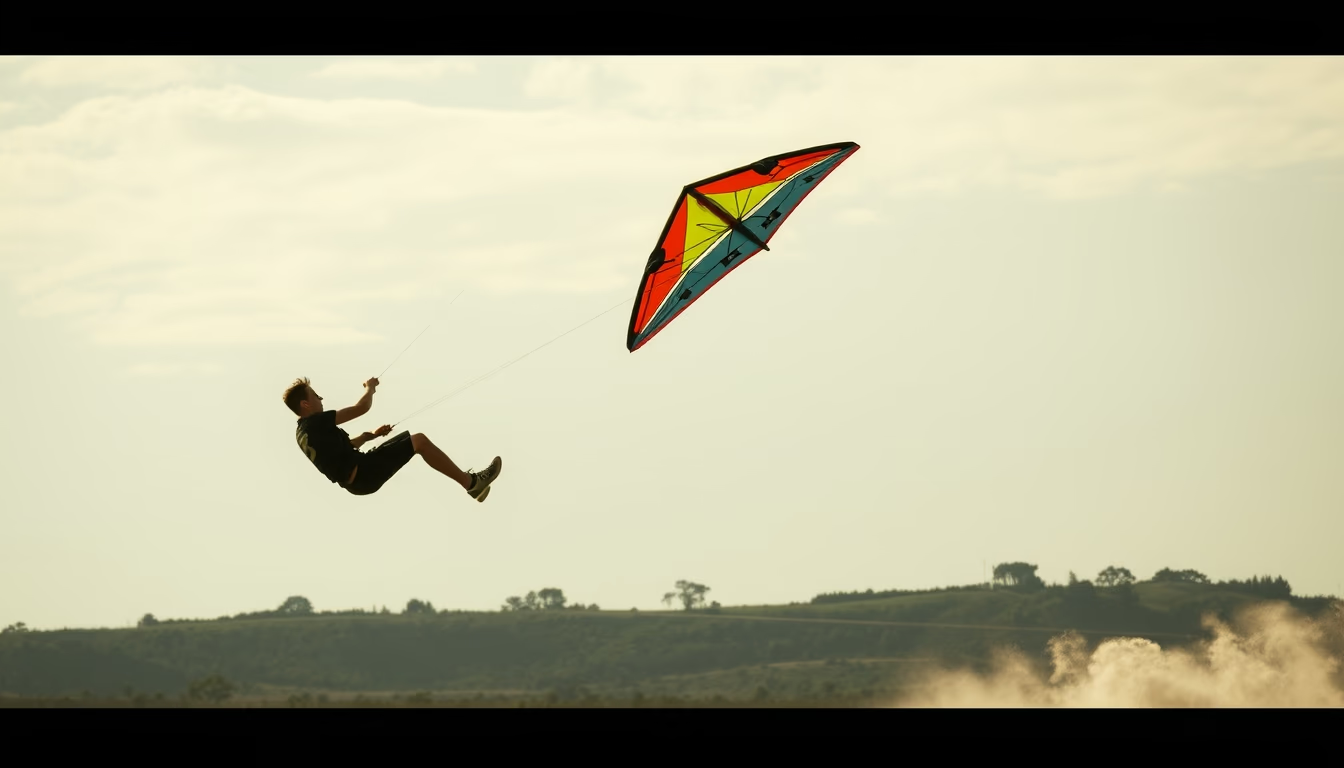
Sport kite stunt
1344×768 · AVIF · CC BY 4.0

Sport stunt kites combine technique and art in aerial maneuvers controlled by two or four lines, popular in competitions and freestyle routines.
About this subject
Sport stunt kites are designed for precise and rapid aerial maneuvers, using two or four control lines instead of the traditional single line. This allows pilots to execute loops, dives, spins, and sudden stops with high accuracy. The kite's aerodynamic shape, often delta or box kites, and lightweight materials like ripstop nylon and carbon fiber provide durability and responsiveness.
The modern stunt kite originated in the 1970s, notably with Peter Powell's two-line kite invention. Since then, the sport has developed into organized competitions, such as the World Stunt Kite Championship hosted by the American Kite Association (AKA). Pilots are judged on precision, complexity of tricks, and synchronization in team routines (pairs or quartets).
Beyond competitions, stunt kites have entered popular culture and high-fashion editorial photography. The vibrant colors against the sky create striking visual contrasts, often used in fashion spreads to evoke freedom and dynamism. This reflects the kite's dual nature as both a sport tool and an artistic prop.
Beginners should start with two-line kites in light winds, practicing basic figures like the horizontal eight. Advanced maneuvers include the axel, backspin, and slot machine. The sport enhances motor coordination, focus, and wind-reading abilities, making it suitable for all ages.
Frequently Asked Questions
What is the difference between a stunt kite and a regular kite?
A stunt kite uses two or four control lines for precise maneuvers, whereas a regular kite has a single line and flies stably. Stunt kites are more agile and require pilot skill.
What are common stunt kite tricks?
Basic tricks include the horizontal eight, loops, and dives. Advanced moves like axel (fast spin) and backspin (reverse rotation) require practice. Competitions feature sequences of figures.
Do you need strong wind to fly a stunt kite?
No, beginners are advised to fly in winds of 8 to 25 km/h. Strong winds can damage the kite, while light winds make control difficult. There are specific kites for different wind conditions.
Direct URL
https://pub-c7d6a6ea828543ac903a74a341ccb2e1.r2.dev/imagens/sport-kite-stunt-high-fashion-editorial-fresh7.avifHow to credit
Include a visible link back to UtilizAí. Copy one of the snippets below:
<a href="https://xn--utiliza-eza.com/en/midia/imagens/sport-kite-stunt-high-fashion-editorial-fresh7">Sport kite stunt</a> by <a href="https://xn--utiliza-eza.com">UtilizAí</a>, licensed under <a href="https://creativecommons.org/licenses/by/4.0/">CC BY 4.0</a>.
[Sport kite stunt](https://xn--utiliza-eza.com/en/midia/imagens/sport-kite-stunt-high-fashion-editorial-fresh7) by [UtilizAí](https://xn--utiliza-eza.com), CC BY 4.0
License: CC-BY-4.0