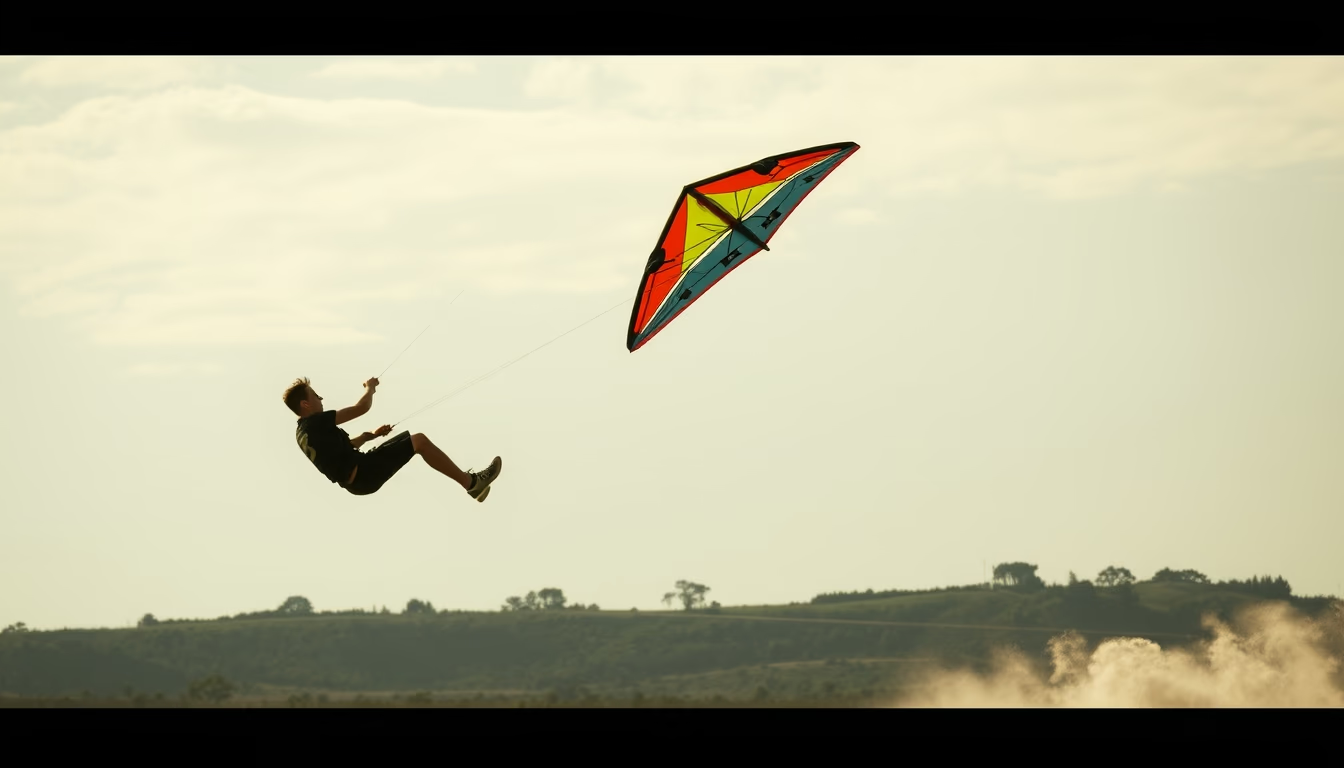
Sport kite stunt
1344×768 · AVIF · CC BY 4.0
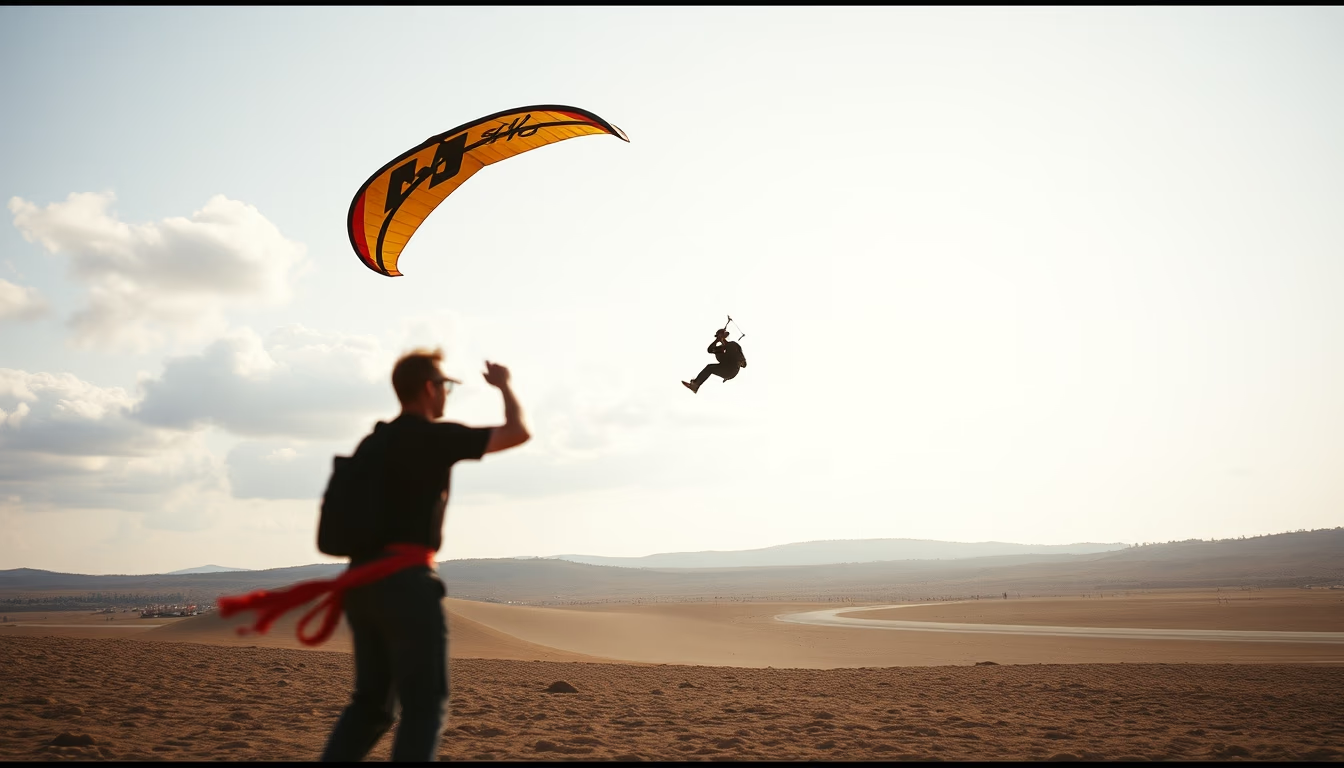
Sport kite stunt are acrobatic kites with two or four lines, designed for precise maneuvers like loops and stalls in competitions and festivals worldwide.
About this subject
Sport kite stunt, also known as acrobatic kites or stunt kites, are a type of kite controlled by multiple lines, usually two or four, allowing the pilot to perform complex maneuvers such as loops, dives, stalls, and choreographed routines in the sky. They differ from traditional single-line kites, which only fly with the wind without directional control.
Originating in the 1970s, the first modern two-line kite was invented by Englishman Peter Powell in 1972, revolutionizing the sport. Since then, the practice has expanded globally, with official competitions organized by entities like the American Kitefliers Association (AKA) and renowned festivals such as the Berkeley International Kite Festival in California. In Brazil, stunt kite communities gather on beaches with steady winds, such as Praia do Futuro in Fortaleza and Ipanema Beach in Rio de Janeiro, where groups hold training sessions and demonstrations.
Technically, stunt kites are built with lightweight, durable materials like carbon fiber for the spars and ripstop nylon for the sail, ensuring quick response to commands. Well-known tricks include the axel (rapid spin on the axis), cascade (linked series of axels), fade (temporary hover), and backflip. Experienced pilots can perform entire routines set to music, creating aerial dances.
Notable records include the longest continuous flight of a stunt kite, lasting over 100 hours, set by Ray Bethell in 2005. Stunt kites are also used in training paraglider pilots due to similar aerodynamic principles. Additionally, the sport has inspired traction kites used in kitesurfing, though for different purposes.
Frequently Asked Questions
What makes a sport kite stunt different from a regular kite?
A sport kite stunt has two or four lines, enabling full directional control and the ability to perform acrobatic maneuvers, unlike a regular kite which has one line and flies freely in the wind.
What are the main tricks in stunt kite flying?
Common tricks include the axel (rapid spin), cascade (series of axels), fade (brief hover), backflip, and hovering. Advanced maneuvers include multi-axels and synchronized combinations.
Where can I learn to fly a stunt kite?
It's best to start on beaches with steady wind and open space, such as those in Fortaleza or Rio de Janeiro. Local groups and online tutorials are available, along with workshops at kite festivals.
Direct URL
https://pub-c7d6a6ea828543ac903a74a341ccb2e1.r2.dev/imagens/sport-kite-stunt-film-grain-authentic-fresh9.avifHow to credit
Include a visible link back to UtilizAí. Copy one of the snippets below:
<a href="https://xn--utiliza-eza.com/en/midia/imagens/sport-kite-stunt-film-grain-authentic-fresh9">Sport kite stunt</a> by <a href="https://xn--utiliza-eza.com">UtilizAí</a>, licensed under <a href="https://creativecommons.org/licenses/by/4.0/">CC BY 4.0</a>.
[Sport kite stunt](https://xn--utiliza-eza.com/en/midia/imagens/sport-kite-stunt-film-grain-authentic-fresh9) by [UtilizAí](https://xn--utiliza-eza.com), CC BY 4.0
License: CC-BY-4.0