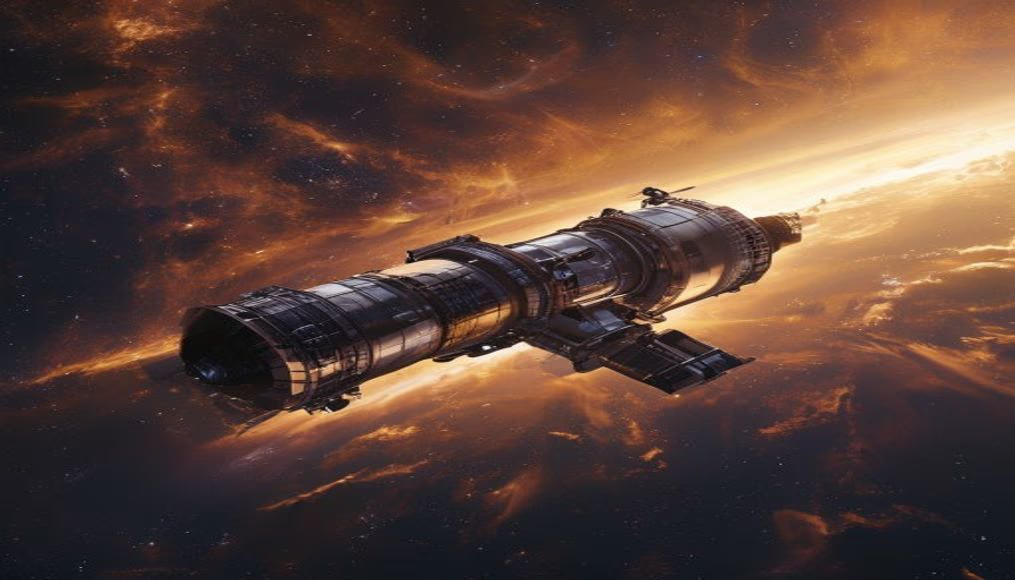
Space telescope hubble
1344×768 · AVIF · CC BY 4.0
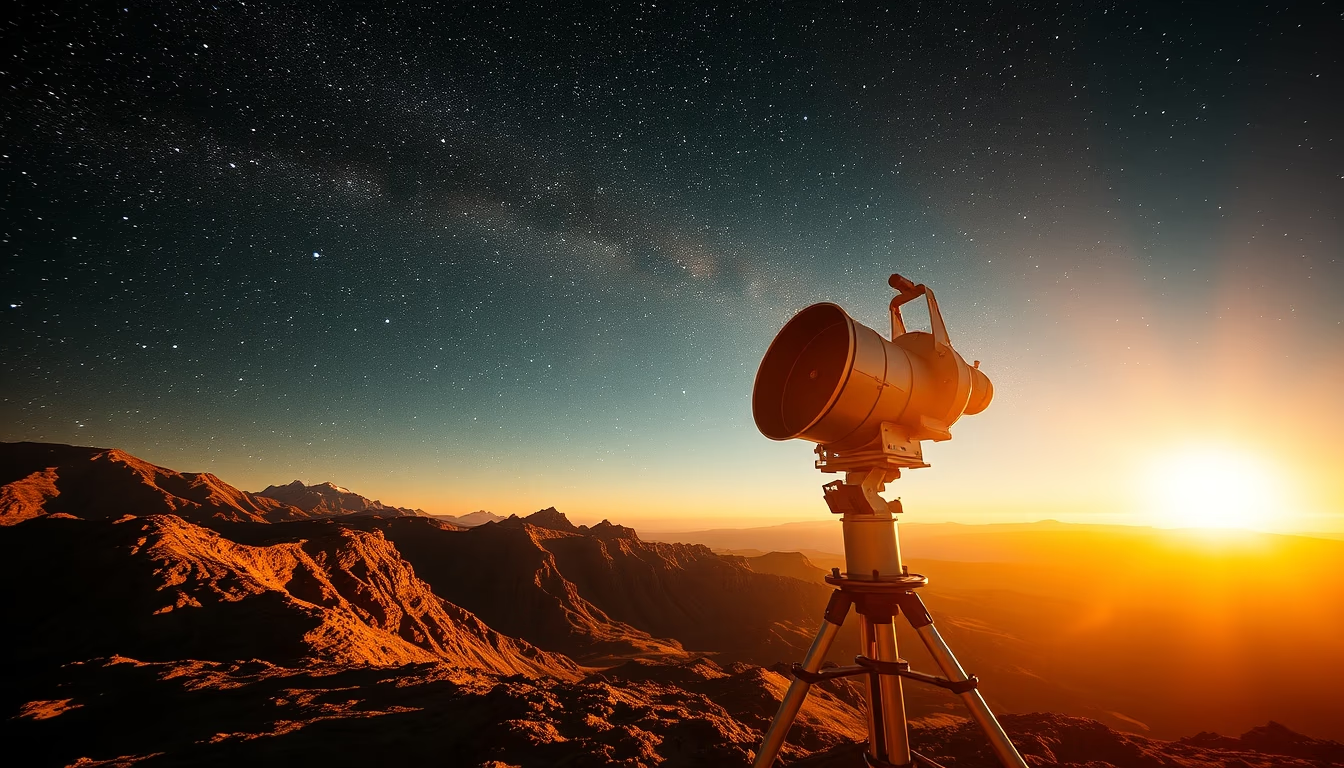
The Hubble Space Telescope, launched in 1990, revolutionized astronomy with deep space images, revealing galaxies, nebulae, and exoplanets.
About this subject
The Hubble Space Telescope is an orbital observatory operating from ultraviolet to near-infrared wavelengths. Launched on April 24, 1990, aboard Space Shuttle Discovery (mission STS-31), it has provided some of the most detailed images of the universe, such as the Hubble Deep Fields, which reveal thousands of galaxies billions of light-years away. Hubble orbits Earth at about 547 km altitude, completing one orbit every 97 minutes.
The telescope is 13.2 meters long with a primary mirror 2.4 meters in diameter. Its location above the atmosphere avoids distortion from atmospheric turbulence, allowing angular resolution of 0.05 arcseconds. Key discoveries include measuring the universe's expansion rate (Hubble constant), confirming supermassive black holes at galaxy centers, and directly observing exoplanets.
Hubble has undergone five servicing missions by astronauts, replacing instruments like the Advanced Camera for Surveys (ACS) and the Cosmic Origins Spectrograph (COS). The last mission, STS-125 in 2009, extended its lifespan to at least 2020. Currently, Hubble remains operational, complementing observations from the James Webb Space Telescope launched in 2021, which focuses on infrared.
A fun fact: Hubble is named after astronomer Edwin Hubble, who discovered the universe's expansion in the 1920s. The telescope has made over 1.5 million observations and generated data for more than 18,000 scientific papers. Its most famous image, the "Pillars of Creation" (part of the Eagle Nebula), captured in 1995, is a cultural icon of space exploration.
Frequently Asked Questions
What is the difference between Hubble and the James Webb Telescope?
Hubble observes mainly visible and ultraviolet light, while James Webb focuses on infrared. Webb has a larger mirror (6.5 meters) and is positioned farther from Earth, at the L2 Lagrange point, to avoid thermal interference.
How many images has Hubble taken?
As of 2023, Hubble has made over 1.5 million observations, generating a vast archive of data used by astronomers worldwide.
Is Hubble still working?
Yes, Hubble remains operational. Its orbit decays slowly, but it is expected to function until the mid-2030s or longer, depending on component health.
Direct URL
https://pub-c7d6a6ea828543ac903a74a341ccb2e1.r2.dev/imagens/space-telescope-hubble-travel-photography.avifHow to credit
Include a visible link back to UtilizAí. Copy one of the snippets below:
<a href="https://xn--utiliza-eza.com/en/midia/imagens/space-telescope-hubble-travel-photography">Space telescope hubble</a> by <a href="https://xn--utiliza-eza.com">UtilizAí</a>, licensed under <a href="https://creativecommons.org/licenses/by/4.0/">CC BY 4.0</a>.
[Space telescope hubble](https://xn--utiliza-eza.com/en/midia/imagens/space-telescope-hubble-travel-photography) by [UtilizAí](https://xn--utiliza-eza.com), CC BY 4.0
License: CC-BY-4.0