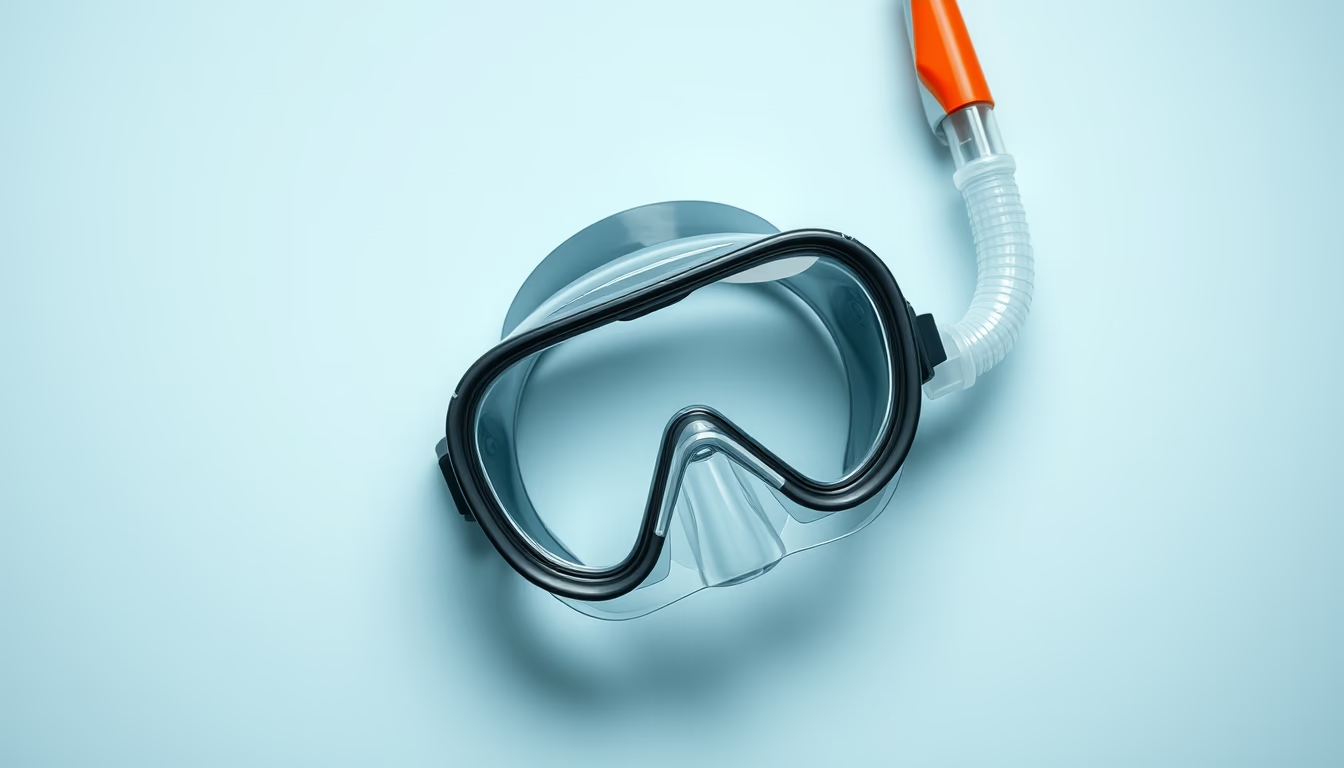
Snorkel mask glass
1344×768 · AVIF · CC BY 4.0
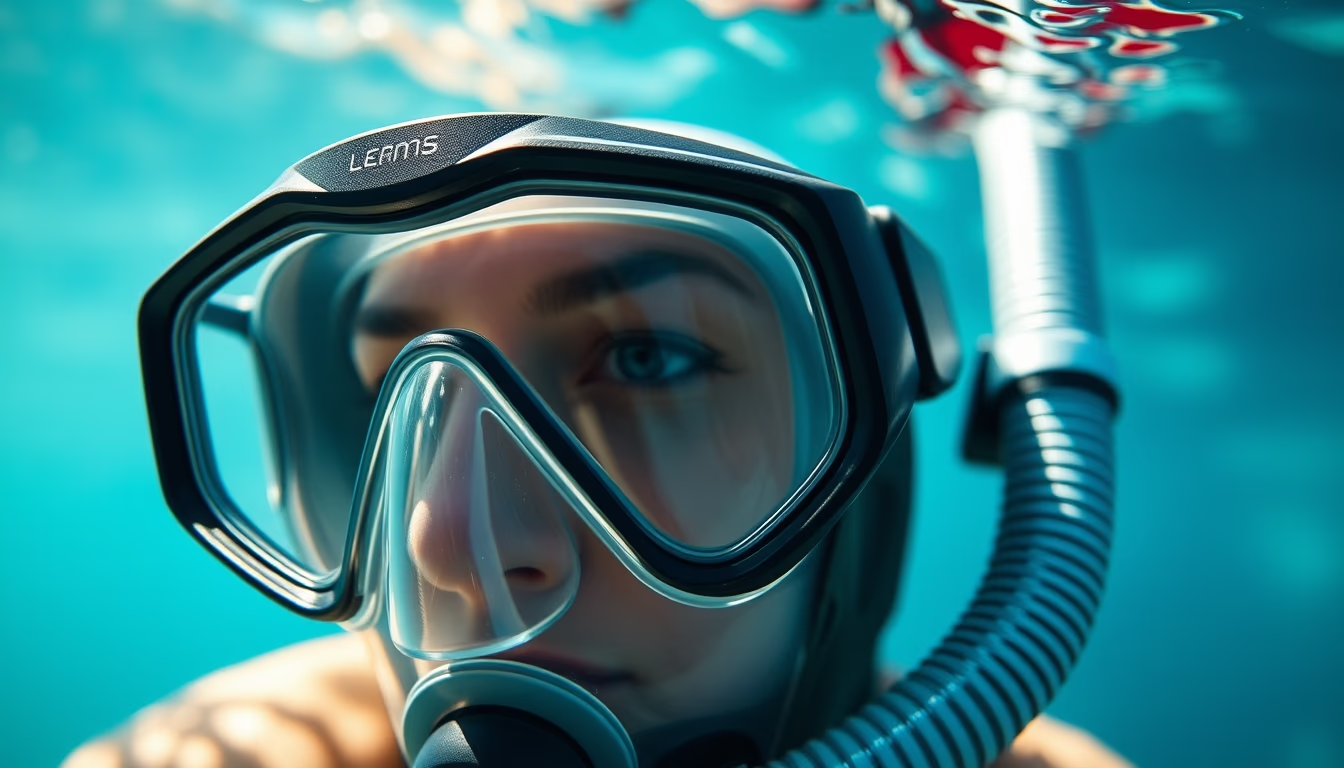
Tempered glass in snorkel masks provides underwater safety and clarity, essential for divers.
About this subject
Snorkel masks feature lenses made primarily of tempered glass or polycarbonate. Tempered glass undergoes thermal treatment that makes it four to five times stronger than ordinary glass. If broken, it shatters into small, blunt fragments, reducing injury risk. This material is preferred by professional divers for its scratch resistance and superior optical clarity.
Polycarbonate lenses are lighter and impact-resistant, but scratch easily. Therefore, most recreational diving masks use tempered glass. To prevent fogging, lenses receive an anti-fog coating or can be prepared with toothpaste or commercial products. Prescription lenses can be fitted in models with interchangeable frames.
Historically, the first modern diving masks appeared in the 1950s with simple glass. The shift to tempered glass occurred in the 1970s, driven by safety standards such as ANSI Z87.1 (USA) and EN 166 (Europe). Today, brands like Cressi, Mares, and Seac offer lenses with anti-reflective, mirrored, or photochromic coatings that darken in sunlight.
Proper maintenance extends glass life: rinse with fresh water after use, avoid prolonged sun exposure, and do not use abrasive cleaners. In saltwater, residues can corrode frame edges. For cold water dives, dual-glass (thermal) lenses help prevent internal condensation.
Frequently Asked Questions
How to clean snorkel mask glass without scratching?
Use fresh water and a soft microfiber cloth. Avoid towels or paper towels, which can cause scratches. Rinse immediately after diving to remove salt deposits.
Why does mask glass fog up and what to do?
Fogging is caused by temperature and humidity differences. Apply a commercial anti-fog solution or a drop of mild dish soap, spread it, and rinse lightly before use.
Tempered glass vs polycarbonate: which is better for diving?
Tempered glass is more scratch-resistant and offers superior optical clarity, making it the standard for diving. Polycarbonate is lighter and impact-resistant but scratches easily, commonly used in children's or budget masks.
Direct URL
https://pub-c7d6a6ea828543ac903a74a341ccb2e1.r2.dev/imagens/snorkel-mask-glass-magazine-editorial-fresh9.avifHow to credit
Include a visible link back to UtilizAí. Copy one of the snippets below:
<a href="https://xn--utiliza-eza.com/en/midia/imagens/snorkel-mask-glass-magazine-editorial-fresh9">Snorkel mask glass</a> by <a href="https://xn--utiliza-eza.com">UtilizAí</a>, licensed under <a href="https://creativecommons.org/licenses/by/4.0/">CC BY 4.0</a>.
[Snorkel mask glass](https://xn--utiliza-eza.com/en/midia/imagens/snorkel-mask-glass-magazine-editorial-fresh9) by [UtilizAí](https://xn--utiliza-eza.com), CC BY 4.0
License: CC-BY-4.0