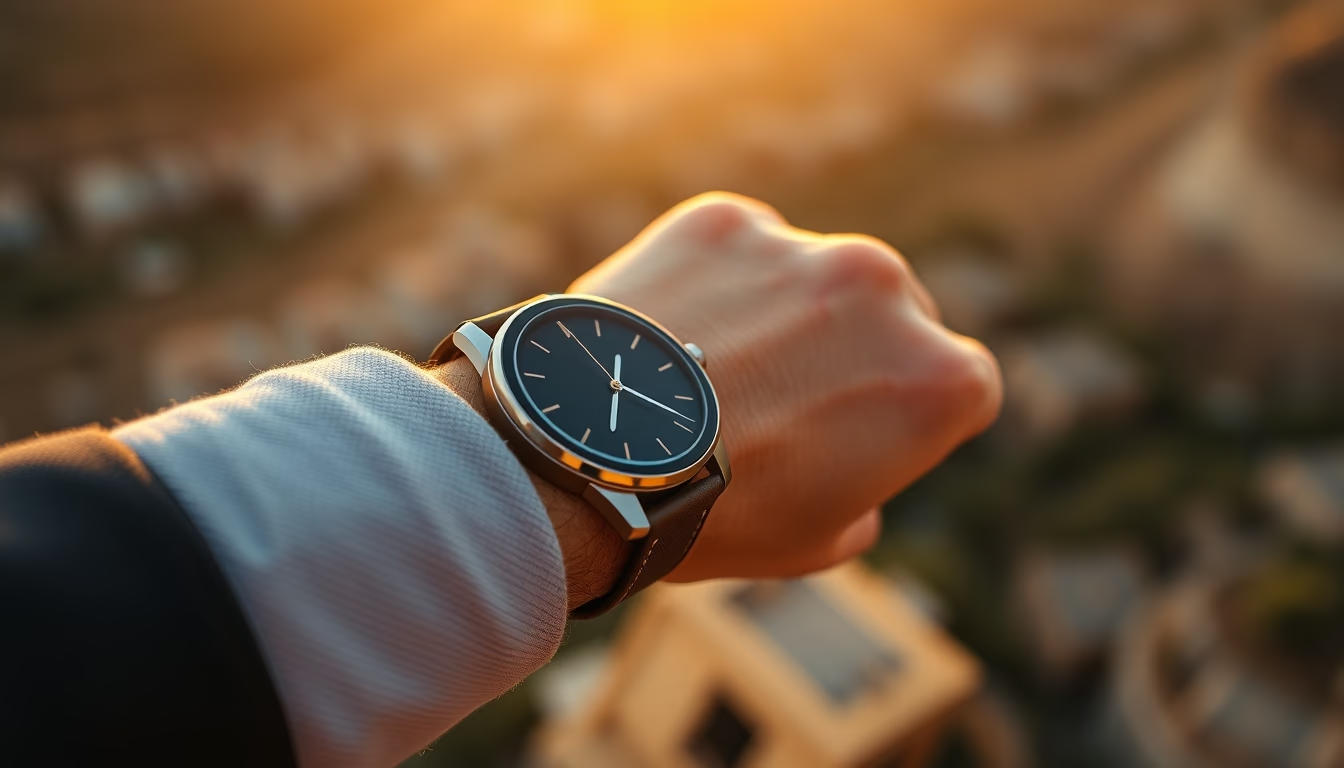
Smart watch on wrist closeup
1344×768 · AVIF · CC BY 4.0

The smart watch is a wearable device that combines watch and smartphone functions, monitoring health and notifications in real time.
About this subject
The smart watch has evolved from a simple timepiece into a personal monitoring hub. Equipped with sensors such as accelerometer, gyroscope, heart rate monitor, and even pulse oximeter, it continuously collects data on physical activity, sleep, and stress. Global adoption surged after 2020, driven by a focus on wellness and constant connectivity. Leading models include the Apple Watch, Galaxy Watch, and Wear OS devices from Google, with prices ranging from $200 to over $1,000.
Integration with virtual assistants enables calls, messages, and control of smart home devices directly from the wrist. Battery life remains a critical factor: many devices require daily charging, but advances in energy efficiency and solar panels are emerging. In 2023, global smart watch sales exceeded 100 million units, with forecasts surpassing 150 million by 2026, according to IDC.
Beyond personal use, smart watches have professional applications in sports, occupational safety, and remote patient monitoring. Data privacy concerns spark regulatory debates, especially in Europe and the US. In Brazil, the General Data Protection Law (LGPD) governs how manufacturers handle user data.
The minimalist design trend seen in the image reflects current aesthetics: always-on displays, metal or silicone bands, and customizable watch faces. Functionality expands without increasing bulk, keeping the device discreet and elegant. Integrated 5G and eSIM make the smart watch independent of a smartphone, strengthening its role as a central device in the digital ecosystem.
Frequently Asked Questions
What is the average battery life of a smart watch?
It ranges from 1 to 14 days, depending on the model and usage. Devices with AMOLED displays and heavy features (GPS, LTE) last 1-2 days. Brands focusing on efficiency, like Garmin and Huawei, can reach two weeks.
Does a smart watch need its own data plan?
Models with eSIM allow an independent virtual line requiring a carrier plan. Bluetooth-only versions rely on the smartphone for calls and internet.
Are smart watches water-resistant for swimming?
Most have IP68 or 5 ATM ratings, withstanding immersion up to 50 meters. Check the manual, as water resistance may degrade over time and saltwater requires rinsing afterward.
Direct URL
https://pub-c7d6a6ea828543ac903a74a341ccb2e1.r2.dev/imagens/smart-watch-on-wrist-closeup-minimalist-composition-p2.avifHow to credit
Include a visible link back to UtilizAí. Copy one of the snippets below:
<a href="https://xn--utiliza-eza.com/en/midia/imagens/smart-watch-on-wrist-closeup-minimalist-composition-p2">Smart watch on wrist closeup</a> by <a href="https://xn--utiliza-eza.com">UtilizAí</a>, licensed under <a href="https://creativecommons.org/licenses/by/4.0/">CC BY 4.0</a>.
[Smart watch on wrist closeup](https://xn--utiliza-eza.com/en/midia/imagens/smart-watch-on-wrist-closeup-minimalist-composition-p2) by [UtilizAí](https://xn--utiliza-eza.com), CC BY 4.0
License: CC-BY-4.0