Small family farmer tending to organic vegetables
1344×768 · AVIF · CC BY 4.0
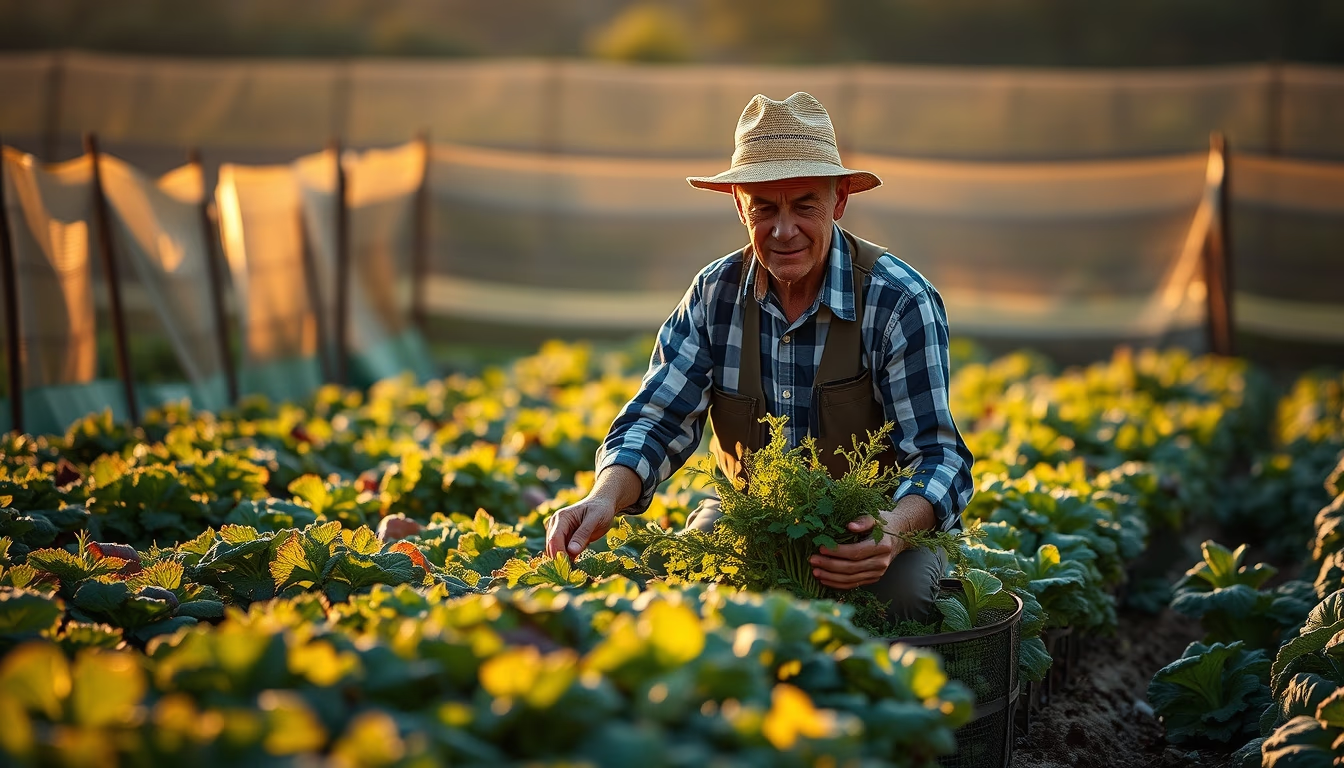
Small family farmer tends organic vegetables on a small rural property, a practice that strengthens food security and the local economy.
About this subject
Family farming is responsible for about 70% of the food consumed in Brazil, according to IBGE data. This production model, based on small properties and family labor, contrasts with large-scale agribusiness by prioritizing crop diversity and sustainability. In organic production specifically, the farmer avoids synthetic pesticides and fertilizers, adopting techniques such as crop rotation, composting, and biological pest control. These practices not only produce healthier food but also preserve soil biodiversity and local ecosystems.
In Brazil, organic family farming is encouraged by public policies such as the National School Feeding Program (PNAE), which allocates 30% of its budget to direct purchases from family farmers, prioritizing organic products. Many of these farmers sell at farmers' markets, home delivery boxes, or cooperatives, building trust with consumers. The image captures a typical late afternoon moment, when fieldwork intensifies to take advantage of cooler hours and prepare the harvest for the next day.
Small-scale organic production faces challenges, such as costly and bureaucratic certification, limited access to credit, and competition from cheaper conventional products. However, the growing demand for healthy food and the rise of conscious consumption have opened new opportunities. The organic family farmer is a guardian of traditional knowledge, combining empirical wisdom with agroecological innovations to ensure the food sovereignty of their community.
Frequently Asked Questions
What is the difference between family farming and agribusiness?
Family farming is characterized by small properties, primarily family labor, and crop diversification. Agribusiness operates on a large scale with monocultures and intensive use of technology and external inputs.
How can a family farmer obtain organic certification?
In Brazil, certification follows Law 10.831/2003. The farmer can choose third-party certification (accredited bodies), participatory certification (with social control), or for direct sales, the OCS (Social Control Organization) seal, which does not require formal certification.
What are the main benefits of organic food?
Organic foods are free from synthetic pesticides and fertilizers, benefiting consumer health and the environment. They also tend to have higher antioxidant and nutrient content, and support local economies and biodiversity.
Direct URL
https://pub-c7d6a6ea828543ac903a74a341ccb2e1.r2.dev/imagens/small-family-farmer-tending-to-organic-vegetables-wide-late-afternoon.avifHow to credit
Include a visible link back to UtilizAí. Copy one of the snippets below:
<a href="https://xn--utiliza-eza.com/en/midia/imagens/small-family-farmer-tending-to-organic-vegetables-wide-late-afternoon">Small family farmer tending to organic vegetables</a> by <a href="https://xn--utiliza-eza.com">UtilizAí</a>, licensed under <a href="https://creativecommons.org/licenses/by/4.0/">CC BY 4.0</a>.
[Small family farmer tending to organic vegetables](https://xn--utiliza-eza.com/en/midia/imagens/small-family-farmer-tending-to-organic-vegetables-wide-late-afternoon) by [UtilizAí](https://xn--utiliza-eza.com), CC BY 4.0
License: CC-BY-4.0