Small family farmer tending to organic vegetables
1344×768 · AVIF · CC BY 4.0
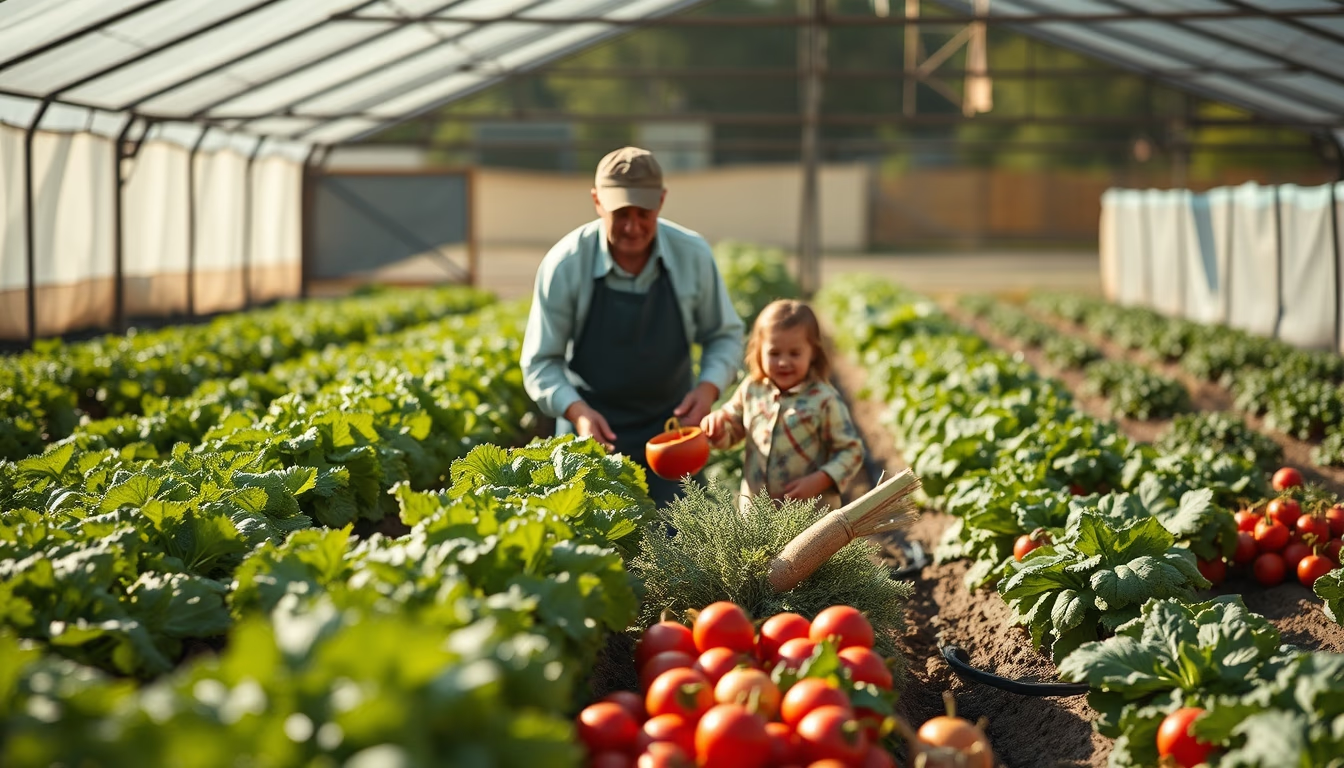
A small family farmer cultivates organic vegetables on a rural property in Brazil, a practice that strengthens food security and the local economy.
About this subject
Family farming is responsible for about 70% of the food consumed in Brazil, according to IBGE data. Small producers, like the one depicted, grow organic vegetables on areas that usually do not exceed 50 hectares, using sustainable techniques such as crop rotation, green manure, and biological pest control. These practices preserve soil biodiversity and reduce dependence on chemical inputs.
Organic cultivation of vegetables like lettuce, tomatoes, and carrots follows strict certification standards in Brazil, regulated by Law 10.831/2003. Organic family production has gained momentum in recent decades, driven by growing demand for healthy food and the appreciation of short marketing circuits, such as farmers' markets and direct-to-consumer delivery baskets.
Family properties dedicated to organic vegetable farming often employ family labor, passing traditional knowledge between generations. This form of agriculture contributes to rural settlement and income generation in regions like the South and Southeast of Brazil, where much of the national organic production is concentrated. Moreover, crop diversification reduces economic risks and improves the food security of the families involved.
The image, captured under intense midday light, highlights the symmetry of well-tended beds, evidencing the farmer's planning and dedication. Manual work, such as weeding and selective harvesting, is characteristic of organic family farming, which prioritizes quality over scale. It is estimated that there are over 4 million family farming establishments in Brazil, many of which adopt agroecological systems.
Frequently Asked Questions
What is the difference between family farming and agribusiness?
Family farming is characterized by family management, predominantly family labor, and limited area (up to 4 fiscal modules). Agribusiness involves large land extensions, high mechanization, and production mainly for export.
How to obtain organic certification for vegetables in Brazil?
Producers must follow Law 10.831/2003 and can opt for third-party audit certification, Participatory Guarantee Systems (PGS), or social control for direct sales (without formal certificate).
Which organic vegetables are most grown by small farmers in Brazil?
Lettuce, tomatoes, carrots, beets, kale, and broccoli are among the most common. The choice depends on regional climate and local demand.
Direct URL
https://pub-c7d6a6ea828543ac903a74a341ccb2e1.r2.dev/imagens/small-family-farmer-tending-to-organic-vegetables-symmetric-bright-midday-2.avifHow to credit
Include a visible link back to UtilizAí. Copy one of the snippets below:
<a href="https://xn--utiliza-eza.com/en/midia/imagens/small-family-farmer-tending-to-organic-vegetables-symmetric-bright-midday-2">Small family farmer tending to organic vegetables</a> by <a href="https://xn--utiliza-eza.com">UtilizAí</a>, licensed under <a href="https://creativecommons.org/licenses/by/4.0/">CC BY 4.0</a>.
[Small family farmer tending to organic vegetables](https://xn--utiliza-eza.com/en/midia/imagens/small-family-farmer-tending-to-organic-vegetables-symmetric-bright-midday-2) by [UtilizAí](https://xn--utiliza-eza.com), CC BY 4.0
License: CC-BY-4.0