Small family farmer tending to organic vegetables
1344×768 · AVIF · CC BY 4.0
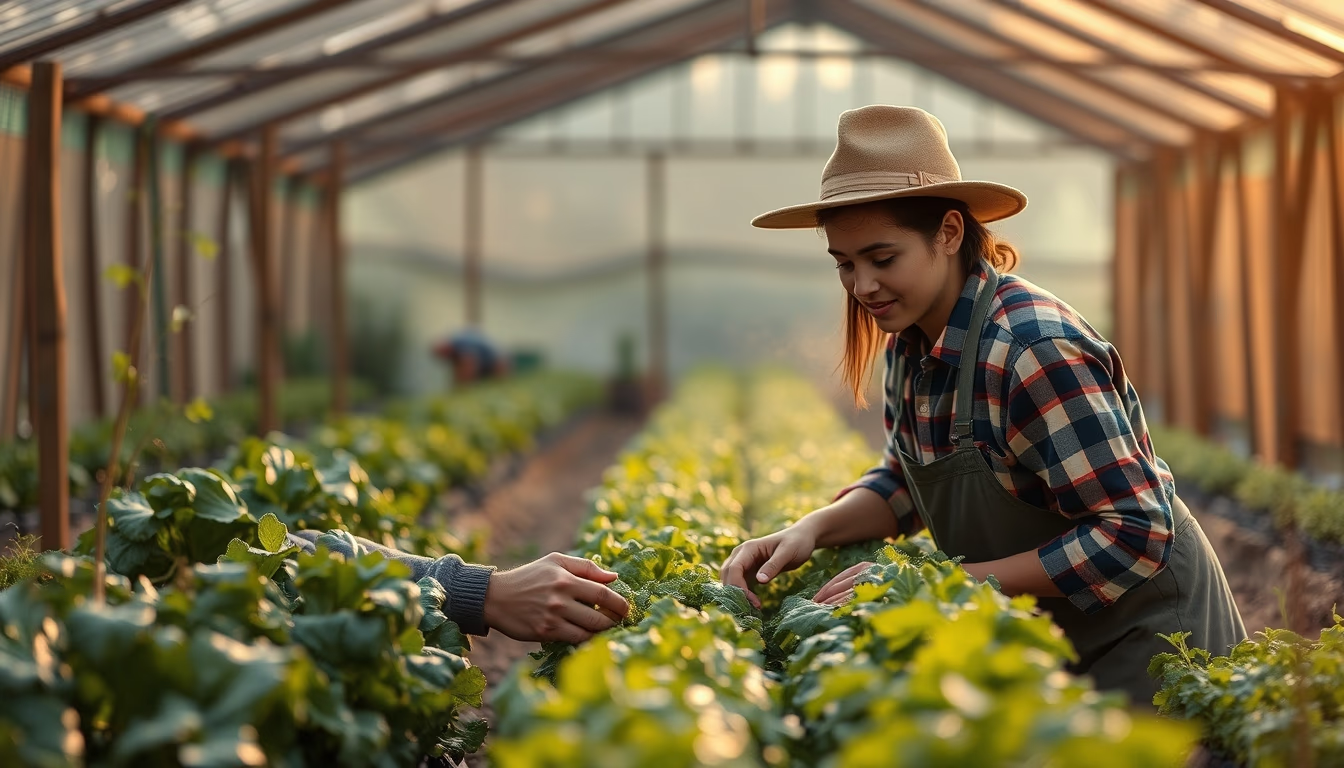
Small family farmer tends organic vegetables on a Brazilian smallholding.
About this subject
Family farming accounts for about 70% of the food consumed in Brazil, according to IBGE. Organic cultivation is gaining ground as a sustainable and healthy alternative. Small producers, such as the one depicted, adopt practices like crop rotation, green manure, and biological pest control to maintain soil fertility without synthetic pesticides. Typical family farms have less than 50 hectares and rely primarily on family labor. The farmer in the image likely grows vegetables like lettuce, kale, and carrots, common in organic markets. Overcast daytime weather is favorable for fieldwork, reducing evaporation and water stress on plants. Certified organic production follows Brazilian Law 10.831/2003, requiring specific management practices and registration with the Ministry of Agriculture. Direct sales to consumers, whether at fairs or through subscription boxes, strengthen local economies and reduce waste. Embrapa data shows that organic family farming can be up to 30% more profitable than conventional when well planned. Brazil has over 4 million family farming establishments, many transitioning to agroecological systems.
Frequently Asked Questions
What is the difference between organic farming and agroecology?
Organic farming is a production system that follows specific technical standards, such as Brazilian Law 10.831/2003, focusing on the absence of synthetic pesticides and fertilizers. Agroecology is a broader concept that integrates social, economic, and ecological aspects, promoting sustainability throughout the food system.
How does a family farmer obtain organic certification?
The producer must register with the Ministry of Agriculture, follow the practices required by law, and undergo an audit by an accredited certification body. There are also participatory guarantee systems where farmers organize themselves into trust networks.
What are the main challenges of organic family farming in Brazil?
Challenges include access to specific rural credit, specialized technical assistance, distribution logistics, and competition with cheaper conventional products. However, programs like PAA (Food Acquisition Program) and PNAE (National School Feeding Program) help market the produce.
Direct URL
https://pub-c7d6a6ea828543ac903a74a341ccb2e1.r2.dev/imagens/small-family-farmer-tending-to-organic-vegetables-editorial-overcast-daytime-4.avifHow to credit
Include a visible link back to UtilizAí. Copy one of the snippets below:
<a href="https://xn--utiliza-eza.com/en/midia/imagens/small-family-farmer-tending-to-organic-vegetables-editorial-overcast-daytime-4">Small family farmer tending to organic vegetables</a> by <a href="https://xn--utiliza-eza.com">UtilizAí</a>, licensed under <a href="https://creativecommons.org/licenses/by/4.0/">CC BY 4.0</a>.
[Small family farmer tending to organic vegetables](https://xn--utiliza-eza.com/en/midia/imagens/small-family-farmer-tending-to-organic-vegetables-editorial-overcast-daytime-4) by [UtilizAí](https://xn--utiliza-eza.com), CC BY 4.0
License: CC-BY-4.0