Small family farmer tending to organic vegetables
1344×768 · AVIF · CC BY 4.0
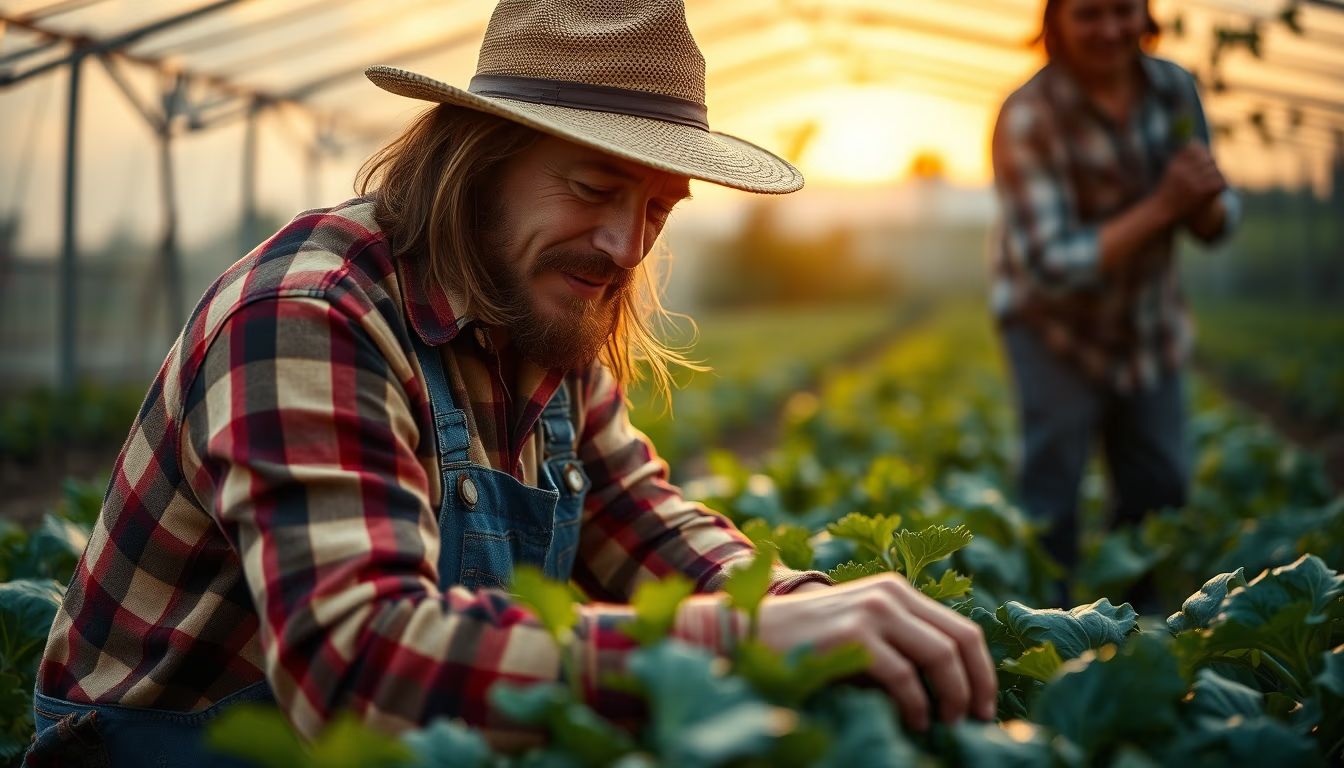
A small family farmer handles organic vegetables at dusk, a practice that strengthens food security and local economies.
About this subject
Family farming accounts for about 70% of the food consumed in Brazil, according to IBGE. In the countryside at dusk, a small farmer tends to organic vegetables grown without pesticides or synthetic fertilizers. This ecological management model preserves soil biodiversity and reduces groundwater contamination. Unlike large-scale agribusiness, family farming employs practices such as crop rotation and green manure to maintain natural soil fertility.
Organic cultivation on small properties gained momentum in Brazil from the 1990s onward, driven by agroecological movements and rising demand for healthier food. Today, the country has over 4.4 million family farming establishments, many certified as organic producers. Proximity to urban centers allows these farmers to sell directly to consumers at street markets or through delivery schemes, shortening the logistics chain and ensuring freshness.
The twilight harvest is not just aesthetic: picking vegetables in the late afternoon avoids prolonged sun exposure, preserving nutrients and extending post-harvest shelf life. Manual labor allows selecting each lettuce or arugula head at peak ripeness, something machines cannot replicate. This attention to detail explains why organic vegetables from family farms often have a more intense flavor and higher vitamin content.
Despite the benefits, family farmers face challenges such as limited access to credit and technical assistance. Programs like PNAE (National School Feeding Program) and PAA (Food Acquisition Program) are public policies that attempt to level the playing field by guaranteeing markets for these producers. The image of a farmer handling greens at dusk symbolizes the resilience of a sector that feeds the country with environmental and social responsibility.
Frequently Asked Questions
What is the difference between family farming and agribusiness?
Family farming is characterized by the family's own labor on the property, with predominantly family workforce and shared management. Agribusiness involves large land areas, high mechanization, and a focus on export commodities. Family farming produces diversified food for the domestic market, while agribusiness prioritizes monocultures like soybeans and corn.
Why are organic vegetables more expensive?
Organic cultivation requires more manual labor, such as weeding and biological pest control, and has lower productivity per area compared to conventional farming. Certification also incurs costs. However, the price reflects the absence of pesticides and higher nutrient content, as well as support for the local economy.
How can I identify an organic product from family farming?
Look for the seal of the Brazilian Organic Conformity Assessment System (SisOrg) or certification from an accredited body. At markets, talk to the farmer: many sell without a seal but follow organic practices and can explain their methods. Another tip is to check if the packaging includes the farmer's name and property.
Direct URL
https://pub-c7d6a6ea828543ac903a74a341ccb2e1.r2.dev/imagens/small-family-farmer-tending-to-organic-vegetables-closeup-twilight-5.avifHow to credit
Include a visible link back to UtilizAí. Copy one of the snippets below:
<a href="https://xn--utiliza-eza.com/en/midia/imagens/small-family-farmer-tending-to-organic-vegetables-closeup-twilight-5">Small family farmer tending to organic vegetables</a> by <a href="https://xn--utiliza-eza.com">UtilizAí</a>, licensed under <a href="https://creativecommons.org/licenses/by/4.0/">CC BY 4.0</a>.
[Small family farmer tending to organic vegetables](https://xn--utiliza-eza.com/en/midia/imagens/small-family-farmer-tending-to-organic-vegetables-closeup-twilight-5) by [UtilizAí](https://xn--utiliza-eza.com), CC BY 4.0
License: CC-BY-4.0